Here’s what Lower Merion’s commissioners want to focus on this year, from firefighter recruitment to low-cost traffic calming
The board of commissioners outlined wide-ranging goals at its annual priority-setting meeting last month. Priorities will be ranked by the commissioners and will help guide upcoming policy decisions.
What do Lower Merion’s commissioners want to get done this year?
At their annual priority-setting meeting late last month, Lower Merion’s commissioners laid out their priorities for 2026, from protecting the township’s aging tree canopy to strengthening enforcement of driving violations.
No policies were drafted, nor were decisions made. Rather, Board President Todd Sinai said, the meeting was an opportunity to lay out “big-picture objectives” for the 14-member board, which oversees 64,000 residents across 24 square miles (Lower Merion is Montgomery County’s largest and most populous municipality).
The commissioners put forth goals during the meeting and scored them by priority level afterward. An aggregated ranking of the board’s priorities will be made public and will help direct limited township resources toward the most important issues for the coming year, Sinai said.
Here are the topics on the table.
Affordable housing
“It’s no secret that affordable housing or attainable housing … is a nationwide problem, and it is an issue just as well in Lower Merion Township, and rather a serious issue,” said Commissioner Gilda Kramer, speaking on behalf of the ad hoc affordable housing committee.
The committee shared two main priorities for the coming year. The first is to make recommendations to expand accessory dwelling units (like in-law suites). Overly strict regulation of ADUs limits the township’s ability to create entry-level housing units without making major changes to its landscape, Kramer said.
The second is to explore partnerships with the school district and county around Act 58, a state statute that allows local taxing authorities to provide tax exemptions to incentivize the construction of affordable housing in deteriorated areas.
Building and planning
The building and planning committee is “treading lightly” on work for its staff this year, Commissioner Sean Whalen said, as a number of new developments crop up across the township.
Township staff will conduct a review of zoning density incentives, including bonuses given to developers who build affordable housing. The building and planning committee also hopes to review the code enforcement process, standardizing the actions that lead up to a court case over a building or planning violation.
Circulation
The ad hoc circulation committee is the successor to the township’s traffic calming committee. The committee hopes to finish ongoing updates to the township’s traffic calming policy and present a draft to the board for adoption.
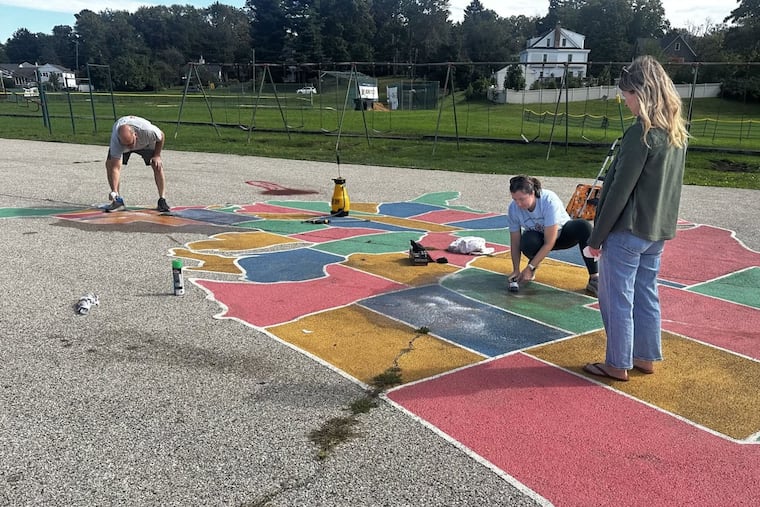
The committee also plans to assist with the completion of the Montgomery Avenue Traffic Study with Narberth and to pilot low-cost, flexible traffic calming solutions. Using inexpensive tools like paint or rubber speed humps can help test ways to slow traffic without making pricey roadwork investments, Commissioner Craig Timberlake said.
Economic development
Last year, the economic development committee put forth seven specific priorities. It made progress on some, like coming up with a parking plan for Ardmore and developing plans for the redesign of Schauffele Plaza. On others, it fell short, Kramer said.
Rather than set individual, community-focused goals, the committee this year hopes to “focus on the big picture” and follow two overarching priorities, Kramer said. The first is to develop and implement strategies to create “vibrant, connected, and amenity-rich business districts.” The second is to develop strategies to attract, grow, and maintain business and development.
Finance
Lower Merion’s triple-A bond credit rating, the highest mark for economic management doled out by Moody’s and S&P, is “very important for the township,” Commissioner V. Scott Zelov said. The finance committee this year plans to review the township’s fund balance policy following changes in how credit rating agencies evaluate fund balances.
The committee also plans to recommend a single fee-setting policy for both township pool facilities to limit confusion.
Fire
There are six fire companies that serve Lower Merion (and a seventh that serves Narberth), staffed with both career and volunteer firefighters. The fire committee hopes to improve the departments’ recruitment and retention efforts, including expanding a property tax relief program for volunteer firefighters. The committee also hopes to approve a fire apparatus policy, which Commissioner Daniel Bernheim said would help the township better understand what equipment it needs to buy as prices continue to rise.
A third priority is to curb false alarm calls. Of the approximately 1,000 calls the fire departments get per year, more than half are false alarms, Bernheim said, and existing efforts to curb them are “not working.”
Grants and community development
The grants and community development committee has one major goal: expand the township’s federally funded Community Development Block Grant (CDBG) programs, Timberlake said.
Health
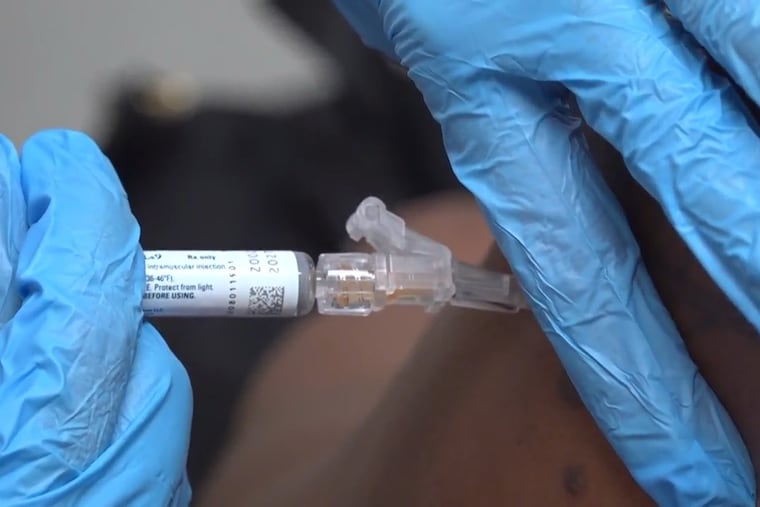
Lower Merion’s health committee meets regularly with a health advisory council made up of two physicians, four Ph.D.s, and one master’s mental health professional. Commissioner Chris McGuire outlined four health committee priorities, all focused on disseminating up-to-date public health information. Topics include the dangers of kratom, an addictive substance that is sold over the counter at gas stations and vape shops; updated recommendations for childhood vaccines; protocols for helmets, child seats, and infant equipment; and pedestrian, bicycle, and scooter safety.
Some commissioners raised the possibility of limiting or barring kratom sales to minors. The township recently passed zoning changes that require all vape and smoke shops to be at least 1,000 feet away from schools.
Intergovernmental relations
The intergovernmental relations committee plans to continue working with the Narberth Borough Council and the Lower Merion School District, specifically in regard to enhancing walkability to Lower Merion’s schools, McGuire said. This could mean employing crossing guards, encouraging bus ridership, and limiting parking and driving near schools, efforts that will require the cooperation of both the township and the school district.
The committee also hopes to better serve individuals living on the boundary between Lower Merion and other neighboring communities.
Legal affairs
Bernheim laid out two priorities for the legal affairs committee: code enforcement and reporting. The committee hopes to get more streamlined reporting on the township’s ongoing legal matters and to follow how local codes and ordinances are enforced.
Library
It was a strong year for the Lower Merion Library System, with all six local libraries outpacing their fundraising goals, McGuire said. This year, the library board expects to finalize a policy around artificial intelligence. The committee also hopes to enhance the library system’s fundraising capabilities, develop a new strategic plan, and increase staff proficiency in emerging library technology.
Parks and recreation
As more people own dogs, the parks and recreation committee wants to prioritize updating park ordinances around animals, Commissioner Michael Daly said. That might include building more fenced-in dog runs and clearer rules about where dogs can be, to protect those who might be scared or allergic.
The committee also hopes to improve connectivity for the township’s green spaces, specifically in areas where parks may be broken up by a road with no safe crosswalk. The committee will also look at adding a skate park and indoor amenities (like a pool or gymnasium) to the township’s parks portfolio, depending on residents’ interest.
Police
McGuire outlined four priorities for the police committee: increasing enforcement of driving violations; reducing theft from and of cars and establishing an anti-crime unit to focus on those incidents; establishing a group to address retail theft; and enhancing community-oriented policing with bicycle and foot patrols.
Public works
The public works committee hopes to upgrade the Robert J. Koegel Public Works Complex, specifically to allow for more electric vehicle charging stations. Expanding charging capabilities could help “future-proof” the building as electric vehicle design continues to improve, according to Commissioner Maggie Harper Epstein.
Sidewalks
Lower Merion created an ad hoc sidewalk committee in 2020 to recommend strategies for improving pedestrian infrastructure. The committee, Sinai said, plans to continue overseeing sidewalk construction and upgrades. The committee also plans to prioritize low-cost, high-impact repairs for existing sidewalks, Sinai said.
Sustainability
Lower Merion has embarked on a long-range plan to convert the township’s facilities to non-fossil fuel energy sources by 2035. Its first solar project, at Penn Wynne Library, is set to be finished this year, Commissioner Ray Courtney said. Top of mind for the sustainability committee is finding a second solar location (it could be Bryn Mawr’s Ludington Library, the township administration building, or another township property, according to Courtney).
The sustainability committee is also prioritizing expanding its composting program and proposing an ordinance around energy benchmarking (the process of measuring buildings’ energy usage to find opportunities for greater efficiency).
Commissioner Jeremiah Woodring, the board’s vice president, said the committee is also considering an effort to pursue LEED certification through the U.S. Green Building Council.
Commissioner-proposed priorities
In addition to the committee-driven priorities, Sinai suggested the commissioners develop policies that would preserve and manage the township’s tree canopy, a “generational resource” that Lower Merion has “started to take for granted.”
Kramer added the suggestion to reassess and come up with a more equitable solid waste fee schedule. The current solid waste fees do not weigh manpower and equipment in their cost structures and burden lower-income residents, she said.

Inquirer Lower Merion
This suburban content is produced with support from the Leslie Miller and Richard Worley Foundation and The Lenfest Institute for Journalism. Editorial content is created independently of the project donors. Gifts to support The Inquirer’s high-impact journalism can be made at inquirer.com/donate. A list of Lenfest Institute donors can be found at lenfestinstitute.org/supporters.