Amid flagging finances, deep cutbacks at Girard College
Girard College, which has been operating as a free private boarding school for poor children in North Philadelphia since 1848, plans to temporarily end its residential and high school programs in the fall of 2014.
Girard College, which has been operating as a free private boarding school for poor children in North Philadelphia since 1848, plans to temporarily end its residential and high school programs in the fall of 2014.
The Board of Directors of City Trusts - which oversees Girard - voted Monday morning to ask Philadelphia Orphans' Court for permission to make the changes so it can cut operating costs and replenish the school's shrinking reserves.
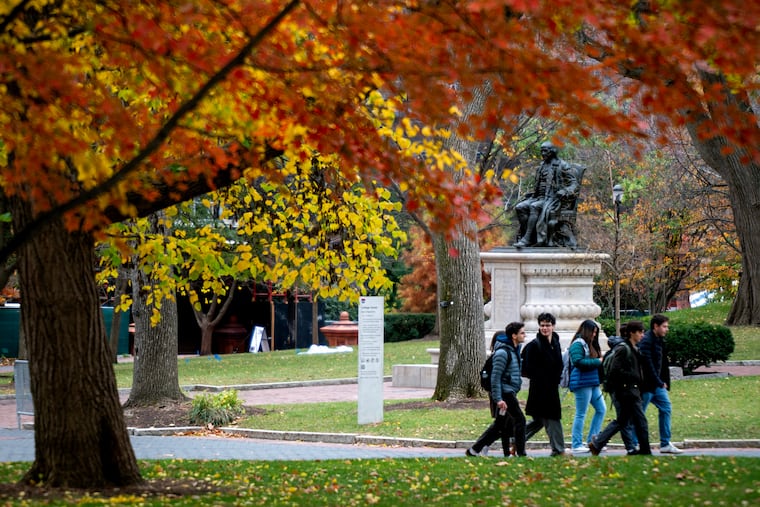
Officials from Girard and the board announced the decision at a news conference on Girard's leafy, 43-acre campus in Fairmount. They said the actions were necessary to ensure the longterm survival of the school that Stephen Girard, the 19th-century merchant banker, founded for poor children from single parent families.
If Girard does not make such drastic moves to rein in spending now, officials said, its funds could be exhausted in 25 years, and the school would be forced to close.
"This is not a recommendation or a decision that was reached lightly," Bernard Smalley, chairman of the Board of City Trusts Girard College Committee, said in an interview. He was also a member of the steering committee that spent two years studying the school's finances and academics before making the recommendation to the board.
The proposed changes could directly affect more than a third of Girard's 405 students and nearly half its 180-member staff as the school eliminates its residential program and scales back operations to a handful of elementary school buildings at the lower end of the campus and mothballs other aging stuctures.
"These are extraordinarily painful decisions that impact the lives of our students, their families, and the many people who work at Girard College and are part of the Girard family," Ronald Donatucci, president of the Board of City Trusts, said in a statement.
"We have concluded that by addressing Girard's financial and infrastructure challenges today, we can ensure the long-term viability of this institution while strengthening the educational program of the school. Mr. Girard wanted this school to benefit children in perpetuity, and we are confident that these changes will allow Girard College to survive and thrive for generations to come," he said.
The board's plan calls for operating an extended-day progam with more rigorous academics for 425 students in first through eighth grades in the the fall of 2014.
Officials stressed that Girard's longterm goal was to restore the residential and secondary programs once finances have improved. However, they said they were not sure when that might happen. The petition that will be submitted to Orphans' Court will include specific financial benchmarks toward reaching that goal.
"The only way that the committee could make recommendations about scaling back Girard's operations is by agreeing that these changes are temporary in nature," Smalley said.
Girard spends $42,500 per student annually to provide a college-prep education and 24-hour care five days a week.
The investments that fund Girard were battered by the 2009 recession, with the trust that subsidizes the school losing nearly a third of its value. The Girard Residuary Fund fell from a high of $333 million in September 2007 to $210 million in June 2009 and now stands at approximately $230 million, records show.
Since then, the school has laid off staff, ended its residential program on weekends, and reduced admissions. As recently as three years ago, the school enrolled 645 students. A total of 405 first through 12th graders attend now.
The school will continue to operate its residential program with high school classes in the fall.
As that program comes to an end, school officials pledged to provide transition services and work with students and their families to help them find new schools, if necesary, for the following year.
Girard College President Clarence D. Armbrister said the changes would most directly impact 50 students who live out of state and displace 154 students in seventh through tenth grades who would not be able to complete high school at Girard.
"Every person who is at Girard is going to be affected," said Armbrister, Mayor Nutter's former chief of staff who was named president last year.
He said he was most troubled by the fact many students who have benefitted greatly from Girard's educational programs may have to leave before earning their diplomas.
"That is where it hits me," Armbrister said in an interview.
The recommendations the board approved Monday came from a steering committee that has spent the past two years conducting an intensive study of Girard College's finances, facilities and academics.
The process included public forums on campus, letters to members of Girard's extensive alumni community and an updates on a "Girard Futures" website. Despite all of those measures,the action is likely to upset many.
"In general, we are all disappointed that the situation has come to this," said Peter Shoemaker, a 1960 Girard alum who is chairman of the Girard College Board of Managers and co-chair of the steering committee. "I think we all have recognized that no matter what the decision and no matter what the direction, each option we weighed was painful."
The private school and its walled campus are funded by income from the estate of Stephen Girard, who left a detailed vision for the school in his will.
The Orphans' Court of Philadelphia will have to give its approval before Girard College can remake itself as a day school for students in grades first through eighth grades.
Officials said the school's attorneys would draft a petition to be submitted to the court.
In addition to shrinking resources and difficulty covering operating costs, consultants who conducted a structural review of the Girard campus found many of its historic buildings need extensive renovations to prolong their life. The projected price tag for the longterm work is a daunting $111 million.
One project alone, repairing faulty roofs on several key buildings is expected to cost $500,000 a year for the next decade.
"The infrastructure issues are a tremendous challenge that impacts every facet of the Girard program," said Joseph S. Martz, executive director of the Girard Estate.
The steering committee considered several possible options for cutting expenses to keep Girard from financial ruin, including closing the school entirely for two years; providing boarding for only half its students; operating a day program for 225 students in grades 1-5; operating day programs for 425 students in 1-8 or 9-12 or offering an extended day program with enrichment activities for 425 students in 1-8.
The committee concluded that providing an extended day program for 425 students in grades 1-8 made the most sense financially and educationally. Not only would that approach reduce operating costs and allow Girard to postpone a $22.5 million renovation of the high school building, it also would allow the school to focus on youngers students and offer them eight years of education.
"If we must temporarily scale back Girard's operations, we can have a greater impact on children's lives if we can reach them at a younger age," Smalley said.
And even before Girard makes the proposed switch to a day school, the school plans to begin an academic overhaul in the fall with a new, more robust curriculum that meets new core academic standards being adopted across the country.
"Our students do well, and they could do better," said Lynette Brown-Sow, a board member who served on the steering committee. "We want to be able to give them a strong academic foundation."
As part of the academic review, consultants found that although 98 percent of Girard graduates are accepted to college, 74 percent enroll. And only 33 percent of Girard's grads complete four-year degree programs in six years, and a mere 15 percent meet national benchmarks for college readiness, according to documents obtained by The Inquirer.
"I think this is an opportunity for us to come up with a more rigorous, more comprehensive program," Brown-Sow said. "It is an academic program, but it is about life and about being able to make decisions and think critically."