Benita Valente, revered Philadelphia soprano with Met Opera and one of America’s great lieder artists, has died at 91
She was one half of a classical music power couple based in Philadelphia.
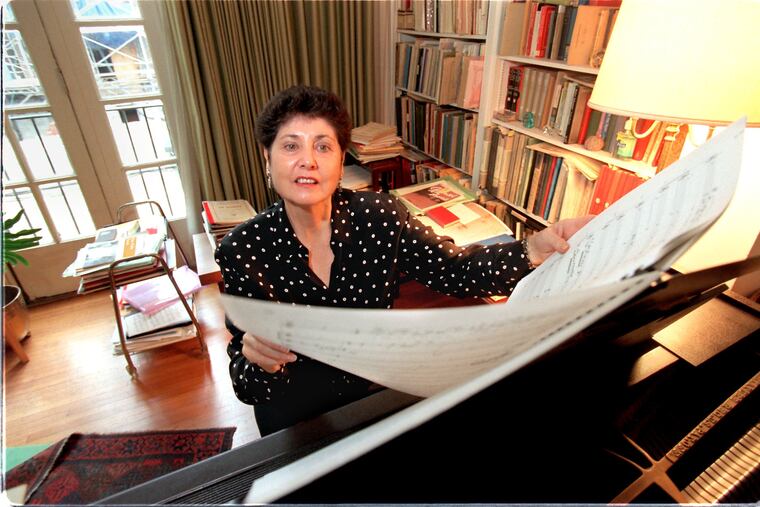
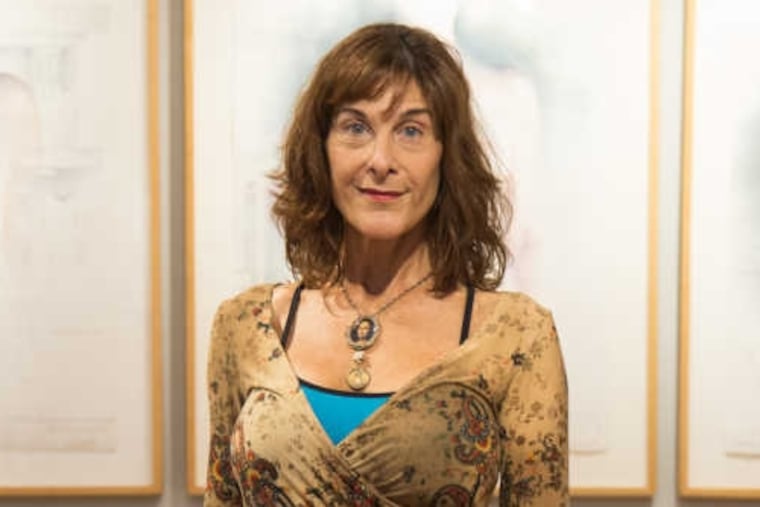
Benita Valente, 91, a revered lyric soprano whose voice thrilled listeners with its purity and seeming effortlessness, died Friday night at home in Philadelphia, said her son, Pete Checchia. In a remarkable four-decade career, she appeared on the opera stage, in chamber music, and with orchestras.
In the intimate genre of lieder — especially songs by Schubert and Brahms — she was considered one of America’s great recitalists.
Even during an era of towering, individualistic voices, Ms. Valente stood out as something special. With pinpoint-precise technique, she deployed no vocal cheats or affectations. Her recognizable sound and honest approach were adored by aficionados.
“She is as gifted a singer as we have today, worldwide,” wrote John Rockwell in the New York Times in 1983.
Her voice had a natural quality, said pianist Richard Goode, who recalled that it was Ms. Valente who introduced him to the lieder repertoire. “There was an extraordinary distinctive sweetness of the timbre. Very clear pitch. Very focused,” said Goode, who recorded with her. ”And a kind of natural charm that came through in everything that she sang.”
A longtime resident of Rittenhouse Square, Ms. Valente sang in the opera houses of San Francisco, Santa Fe, N.M., Germany, and Italy, and the Teatro Colón in Buenos Aires. She appeared with the Metropolitan Opera more than 70 times between 1960 and 1992 — as Pamina in Die Zauberflöte, Almirena in Handel’s Rinaldo, Gilda in Rigoletto, Susanna in Le Nozze di Figaro, and others.
With the Juilliard String Quartet, she gave the world premiere of Ginastera’s String Quartet No. 3 in 1974, and was the voice for the Juilliard’s recording of Schoenberg’s String Quartet No. 2 in a collection that won a 1978 Grammy Award.
In 1999, she became the first vocalist to win Chamber Music America’s Richard J. Bogomolny National Service Award.
Critics pronounced her voice “incomparable” and “almost miraculously lovely.”
She had something more: “that special projection of personality that distinguishes the great artist,” the Times wrote.
The artist had her beginnings as a self-described shy tomboy growing up on her uncle’s farm in California’s San Joaquin Valley. Ms. Valente was born Oct. 19, 1934, in Delano, Calif., the daughter of an Italian father and a Swiss mother. A high school teacher noticed her gifts and recommended her to Lotte Lehmann, and as a teenager she traveled from home to Santa Barbara to study with the celebrated soprano and Lehmann’s brother, vocal coach Fritz Lehmann.
“She didn’t know what to do with me,” Ms. Valente told The Inquirer. “I’d sing something she thought was very touching, and then there were lapses where I was as green as all get-out. She finally said, ‘I have contacts in Hollywood, I could get you to a screen test. I think you’d do very well.’ But I wanted to go into opera.”
It was Fritz Lehmann who suggested that she audition for the Curtis Institute of Music with Mozart, and she got in. Ms. Valente attended Curtis from 1955 to 1960, where her primary teacher was French baritone Martial Singher, and later studied with Wagnerian soprano/mezzo-soprano Margaret Harshaw. She was still a student when she won a Philadelphia Orchestra student competition that brought a 1958 debut with the orchestra.
The next year she married Anthony P. Checchia, a bassoonist she met at the Marlboro Music Festival who would go on to lead both Marlboro and the Philadelphia Chamber Music Society. They became one of classical music’s power couples, and had a special understanding because of their modest backgrounds — he from Tacony, she from a farm — said their son. “I remember my dad pulling over on Lombard Street once when she was on the radio. He was more nervous than she was,” Pete Checchia said. Anthony Checchia died in 2024.
Ms. Valente became a regular soloist with the Philadelphia Orchestra, appearing with the ensemble 60 times — in core repertoire of Mozart and Beethoven, but also in contemporary works. She gave the world premiere in 1981 of David del Tredici’s All in the Golden Afternoon from Child Alice, Part II, with Eugene Ormandy conducting the Philadelphians.
The work was in an ecstatic, neo-romantic musical language, thickly orchestrated with amplified soprano. Ms. Valente’s performance was “an essay in vocal purity,” wrote Inquirer music critic Daniel Webster.
For the Academy of Music 130th Anniversary Concert in 1987, she sang an evening of Puccini arias with the Philadelphia Orchestra led by legendary conductor Klaus Tennstedt. ‘’O mio babbino caro" from Gianni Schicchi seemed an ideal choice, Webster wrote, “in which her sun-filled voice illuminated the joyous text.”
Ms. Valente was soloist the previous season for one of the orchestra’s most notorious programs. She was Mélisande in a concert version of Debussy’s Pelléas et Mélisande at which an unusual number of listeners, apparently unimpressed with one of Western civilization’s great achievements, walked out. One man in the Academy of Music’s second row stretched out a newspaper and was asked to leave, she recalled.
“It has too much mystery, that Pelléas,” Ms. Valente told The Inquirer years later, pointing out that the audience seemed similarly disenchanted with the work at a Metropolitan Opera performance she attended.
Ms. Valente was never a household name, which often confounded critics. Some put it down to her lack of diva-ness. But it was perhaps more the fact that Ms. Valente was never a careerist. She was known to turn down prestigious opportunities — like a chance to sing Berg’s Altenberglieder with the Boston Symphony Orchestra — when she felt the part was not right for her voice.
She retired from singing in 2000 and was awarded an honorary degree from Curtis in 2001.
Ms. Valente taught and mentored young singers.
“She was so meticulous about connecting the vowels and would listen in between the notes to how you got from one note to the next,” said soprano Sarah Shafer, who studied with Ms. Valente at Marlboro and in Philadelphia. “That trained my ear and my voice to pay attention to those things and brought me to a different level of detail.”
Her knowledge of the repertoire was vast, said pianist Lydia Brown, with whom Ms. Valente worked in vocal coachings at Marlboro and the Met. “Every rehearsal she came to was a piece she had sung many times, or she commissioned it or premiered it. There were so few pieces that Benita didn’t have active performing knowledge of.”
In recordings she is particularly renowned for a collection of Handel and Mozart duets with soprano Tatiana Troyanos; Haydn’s The Seven Last Words of Christ with the Juilliard String Quartet; and two discs in Bridge Records’ “Great Singers of the 20th Century” series, including a classic recording of Schubert’s “The Shepherd on the Rock” with pianist Rudolf Serkin and clarinetist Harold Wright.
“She was in the old-school style of singing, where the singer is just a vessel for the music. Not selfish, not about herself, she was just delivering the music in as clear and undistorted a way as possible,” said Shafer, who learned “The Shepherd on the Rock” from Ms. Valente and has made it a calling card of her own.
”The result is this sparkly, silver jewel of her voice that you hear in these recordings. There’s just no singing like it now.”
In addition to her son, the Philadelphia photographer Pete Checchia, Ms. Valente is survived by her “daughter by choice,” Eliza Batlle, Checchia said. A memorial concert is planned for a later date.