Philadelphia has long been home to the matriarchs of Black ballet. Now a mural will honor that history
A Grays Ferry mural will pay tribute to the likes of Essie Marie Dorsey, Sydney King, Marion Cuyjet, and Philadelphia Dance Company founder Joan Myers Brown, all trailblazers who inspired generations
Karen Warrington used to be a lead dancer and choreographer with the Arthur Hall Afro-American Dance Ensemble, right from the company’s founding in 1967. The North Philly native grew up in the 1950s idolizing ballet dancers like Essie Marie Dorsey, Sydney King, Marion Cuyjet, and Philadelphia Dance Company founder Joan Myers Brown.
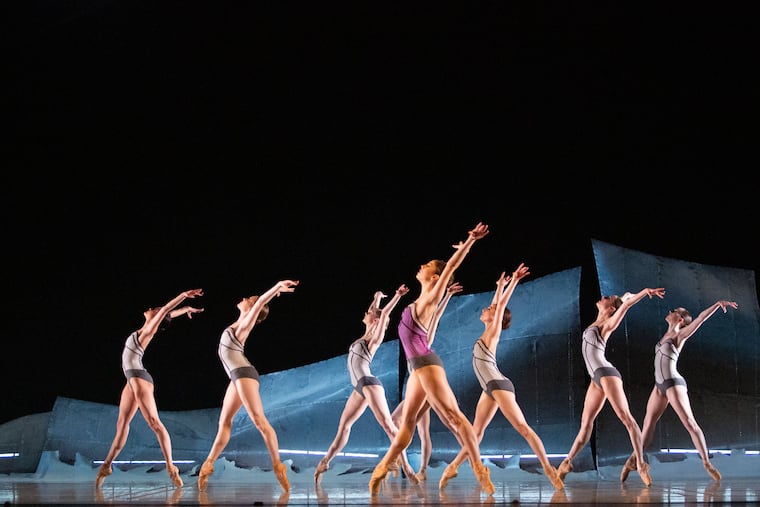
Each of those women infused African, Caribbean, and modern dance rhythms into traditional ballet practices and was integral in shaping Philadelphia’s dance community. They inspired young Black girls who faced immense gatekeeping when attending racially segregated ballet institutions, including a young Warrington.
A memorial to Black dance
Now, after years of trying, Warrington is working on a mural that will honor the legacy of Philadelphia’s radical Black dance teachers.
“Before 1960, Black [dancers] were largely not welcome into white dancing schools in Philadelphia,” she said. “In a sense, [Dorsey, King, Cuyjet, Brown] opened a pathway to instruction in dance, including ballet, that wouldn’t have been there for so many young Black people who were interested in dance.”
Born in 1893, Dorsey passed as a white woman to attend classical ballet training. In 1926, she went door to door recruiting students for the Essie Marie Dorsey School of Dance, which she opened in her Southwest Philly home. where she offered dance lessons to young Black dancers for 50 cents per class.
Among her pupils were ballet, tap, and modern dancer John Hines, as well as King, Cuyjet, and later Brown. Each went on to develop groundbreaking dance schools of their own, not just teaching the mainstream Eurocentric dance, but also movements inspired by African rhythms.
Brown, now 95, is the artistic adviser and guiding light of Philadanco.
Warrington, who studied under King, said the dance schools the women started provided a safe space for young Black performers.
“For Black people, so often the message we get from society is, ‘No, you can’t do this. No, you’re too dark, You’re too heavy. You don’t fit the bill.’ Black dancing schools said, ‘Yes,’ to you,” she said.
When Dorsey, King, and Cuyjet died, Warrington penned their obituaries. For the last 15 years, she has been seeking to create a permanent tribute that illuminates their stories, and inspires new generations of Black children.
The mural, a collaboration with Mural Arts Philadelphia in Grays Ferry, seeks to do just that.
“This is a bigger issue than just the mural,” Warrington said. “It’s really a conversation about Black dance … all phases of Black dance, whether it’s Santeria, West African, Afro Cuban dance, or ballet. We want to give our children the opportunity to experience as many of those different dance genres as they can, and make it a great experience.”
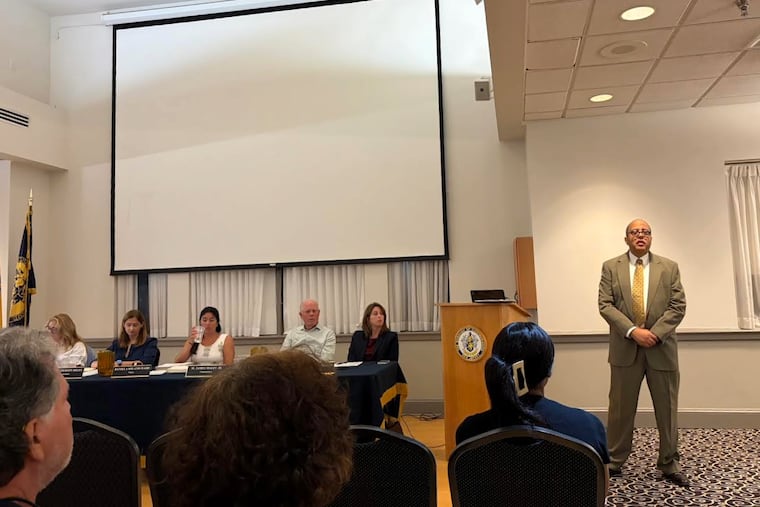
During a ceremony at the Free Library of Philadelphia’s Parkway Central Library recently, Warrington, Africana studies and social work professor Patricia Reid-Merritt, and theater and dance professor Lynette Young Overby unveiled the rendering of the mural.
‘That represents me, my journey, and my power’
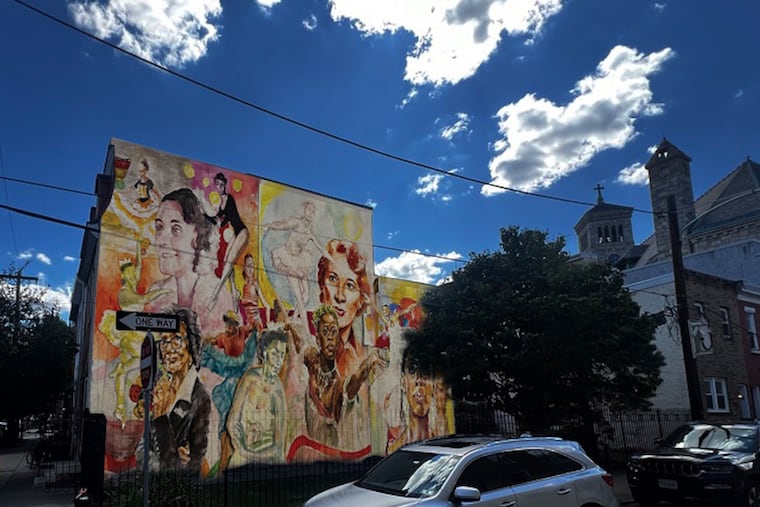
Crafted by visual artist and spoken word performer Bernard Collins Jr, the Black Dance Legacy Mural features the faces of Dorsey, King, Cuyjet, and Brown soaked in vibrant hues, surrounded by images of their bodies in striking arabesques, relevés, and other elegant poses.
There are images of African hand drums, a reference to the dancers’ blending of French technique and the rhythmic complexity of African and Afro Cuban styles.
The mural also pays tribute to Judith Jamison, a student of Cuyjet’s who rose to prominence as the director of the Alvin Ailey Dance Theater; and to Michaela DePrince, a Sierra Leone-born prodigy who trained in Philadelphia and rose to international acclaim.
When designing the mural, Collins said he wanted to capture the color and liveliness often reflected on performance stages.
“One thing that’s clear is that dancers transform when they hit the stage, so it was an element that needed to be captured,” Collins said. “It had to be dynamic. It had to be colorful.”
As a “dance dad,” he said there was added significance with this work. He has witnessed the barriers his daughter, who now studies dance at Rutgers University-New Brunswick, had to navigate in a world that feels “overwhelmingly exclusive.”
He said he hopes this mural affirms young Black girls of their abilities and their place in a community that figures like Dorsey, Brown, Cuyjet, and King helped define.
“As a father of young ladies, or queens-in-training, it feels good to empower them,” Collins said. “I think this mural is gong to do that. I want someone look up at it and say, ‘That represents me, my journey, and my power.’ And if that’s done, I think I’m doing a worthwhile job.”
An intentional location
The location of the artwork is also an ode to another pioneer of Black performance and celebration.
The Black Dance Legacy Mural will be located in Grays Ferry on a wall that’s part of the house that belongs to Victoria Fernandez, the sister of Odunde Festival founder Lois Fernandez.
Warrington said its placement, just above Fernandez’s home garden of African violets and other bountiful blooms, will give these legendary dancers and choreographers their flowers, both literally and symbolically.
“We are so thankful that Fernandez gave us her wall,” Warrington said. “She has a pristine house and pristine wall, surrounded by a beautiful grassy area. And that unveiling is going to be incredible.”
“I think murals serve as beacons of neighborhoods, and visual markers of history, legacy, remembrance, and longevity,” said Mural Arts project manager Donnell Powell. “To know this mural will be in plain view for years to come is why this partnership was so fruitful.”
Work on the mural is estimated to begin in late May. It will then be unveiled during a dedication in June. Along with the mural’s unveiling, a complementary event series, “Black Dance Collab,” will take place throughout Philadelphia.
The series, co-convened by Warrington and Jovida Hill, senior advisor to Unerased Black Women Speak, will magnify the stories of the women who appear in the mural.
Warrington said these events will also provide added visibility and resources for current and aspiring dance artists, who are too often overlooked.
This work, Warrington said, will ensure future generations of young, Black dancers have greater resources and a wider sense of what’s possible.
“I love Beyoncé, but there’s more than Beyoncé,” she said. “We need to look critically at the arts.”
The article has been updated with Jovida Hill’s professional credentials and the correct name for the event series.