The Paoli couple who just restored 200 of the rarest comic books in the country
Emily and Matt Meyers' work has garnered praise from collectors. Their work is sometimes so good that grading companies have accused them of fraud.
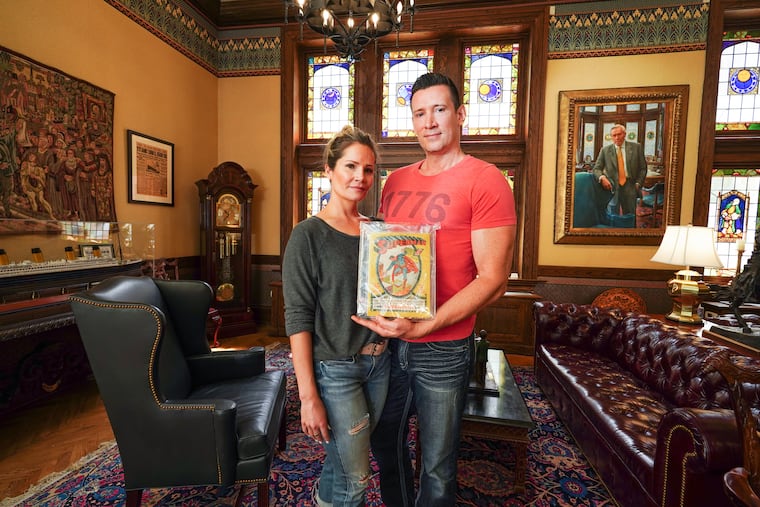
Paoli’s Matt Meyers discovered the world of comic restoration when he started selling his own collection of comic books. In 2013, he and his wife, Emily, started restoring the books themselves.
Last month, they took on the task of restoring the True North Collection — 200 comics from a once-private collection of rare first appearance and first edition comics — at the behest of an unnamed collector in Canada. The collection comes from the “Golden Age” of comics — published between 1930 and 1940.
“Everyone was all abuzz about this early Batman comic and how beautiful this restoration was. I had never seen a Golden Age book that nice,” the seller, who requested to remain anonymous, said, praising the work of the couple.
What exactly is comics restoration? A lot of it has to do with a process called “leaf casting.” This essentially adds “back paper” to an older and potentially weakened piece of paper. The Meyerses start by submerging each page in water and bringing water pulp forward. When it dries, the pulp adds bulk to an old comic book page. They use Japanese tissue, because, Emily Meyers said, it’s the most well-regarded tissue used for any sort of paper restoration.
From there, Meyers said, “The process of restoration is to bring the book back to the way it may have originally looked — as close as possible — by repairing damage to the structural integrity and artwork using archival materials and methods.” “Archival,” she added, refers to materials and methods that won’t destroy the paper during the restoration process, keeping it safe from further damage.
After that, the couple tries to find high-definition photos of the comic book’s original state and uses acrylic paint to restore the details of each comic book’s art.
“Are we always perfect? No. We are restorers, not magicians,” Meyers said. “It can be extremely maddening trying to get all the tiny details and nuances correct, but that’s the job. There’s more than one book out there that actually has my own personal tears on the cover!”
The couple seeks out comics that have already been restored by somebody else, so they can basically “undo” that work and start fresh. Why? “There’s a general negativity toward restoration,” she said, “That way people know we aren’t messing with unrestored books.”
“To keep the books as light and natural looking and feeling as possible,” removal of previous restorations is necessary for their work, Meyers said. “We remove the previous restoration so that we aren’t piling on top. Oftentimes, there are structural issues that were not repaired well and ultimately cause problems with the book like wrinkles and warping.”
Whether they’re brightening faded panels or working to reconstruct torn pages, restoring comics that were first printed nearly a century ago is no easy feat.
It all started when Matt Meyers wanted to sell books from his collection. When they came back from grading, some had received “a purple or ‘restored’ label,” Emily Meyers said, referring to a commonly used comics grading scale to determine how “mint,” or perfect, an edition is. “In the course of his research, he realized that you could take a lower grade restored book, make it look nicer, thereby increasing the grade, and you could make money on the spread.”
When asked if there’s a project that the couple is particularly proud of, Emily Meyers couldn’t pick one. “I think it’s the mastery of the different aspects of restoration, and when we can apply those hard-won techniques to a book and have a beautiful outcome … you feel beyond proud,” she said. “Proud of the work and proud of the book. These books are so beloved by collectors that it brings us immense happiness when someone looks at one of our books and says — ‘Wow. That’s beautiful.’”
But nothing came easy.
“There was skepticism early on about the high grades our books would achieve since that was fairly uncommon in the industry,” Meyers said. “Our books achieve the high grades because we work on them until they are as perfect as we can possibly make them.”
Their restoration work has gotten so accurate that Certified Guaranty Co., the world’s largest and most influential comic book grading company, accused the Meyerses of faking their work. In 2024, the couple won $10 million in a defamation case against the company.
Industry professionals have also praised the Meyerses’ work, including Vincent Zurzolo, CEO of ComicConnect, a major online retail center for comic books. “I have seen many restoration experts with varying degrees of skills and specialties, but I’ve never seen anybody with the skill, talent, technique, and artistry that Emily and Matt possess,” Zurzolo said.
The process of restoration holds a deep personal importance for Emily Meyers.
In 2003, she was involved in an accident while traveling in a cab. She was thrown into the cab’s Plexiglas divider, leading to serious injuries. After plastic and oral surgeries over the course of two years, and a full decade of recovery later, Meyers has a beautiful take on her journey.
“The purpose of restoration is to return the item to as close to its original state as possible,” she said. “Good restoration addresses structural and cosmetic damage. This is a concept Matt and I know very well as I was actually our first restoration.”
The commitment, passion, and care that they put into her recovery translates into their work today. “And the comic books deserve no less of our time and drive to give them back their beloved faces,” Meyers said. “When I want to scream and give up because I’ve been doing dots under a microscope for three days and I can’t seem to get it right, I think: Matt and our family members and the doctors didn’t give up on me, so I’m not giving up on this book. Period.”