Some of the best of Griff Davis’ 55,000 historic black-and-white photos are on display at Lincoln University
The exhibit showcases photographs of and correspondence with four of the HBCU’s most well-known alumni: Langston Hughes, Thurgood Marshall, Nnamdi Azikiwe, and Kwame Nkrumah.

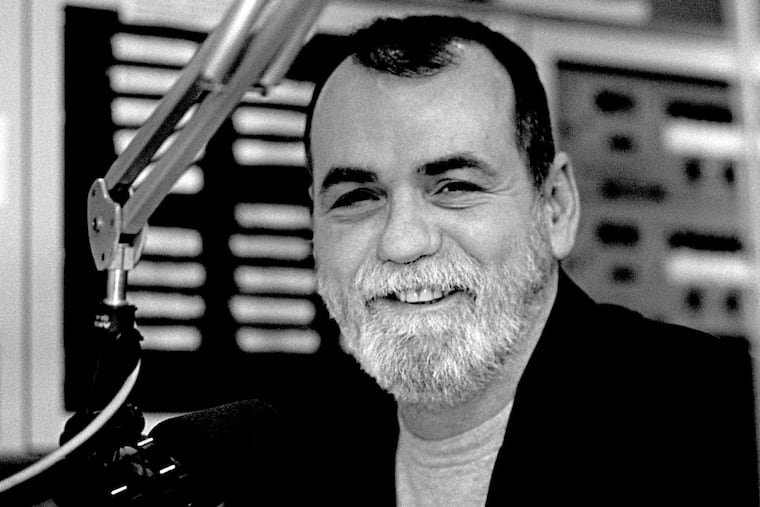
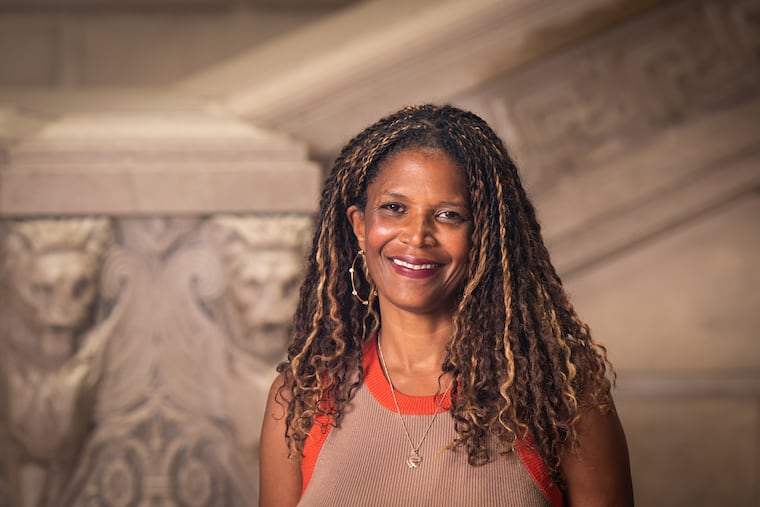
International photojournalist and foreign service officer Griff Davis died in 1993. Since then, his daughter, Dorothy M. Davis, has been on a fierce mission to keep his memory from fading.
Davis left behind a legacy of 55,000 historic black-and-white images documenting some of the most significant people of the U.S. civil rights and African independence movements. His daughter has spent the past three decades archiving the photographs and curating exhibitions of his work, including “Lincoln University: Through the Lens of Griff Davis,” which is open through May 3 at the university’s main campus in Chester County.
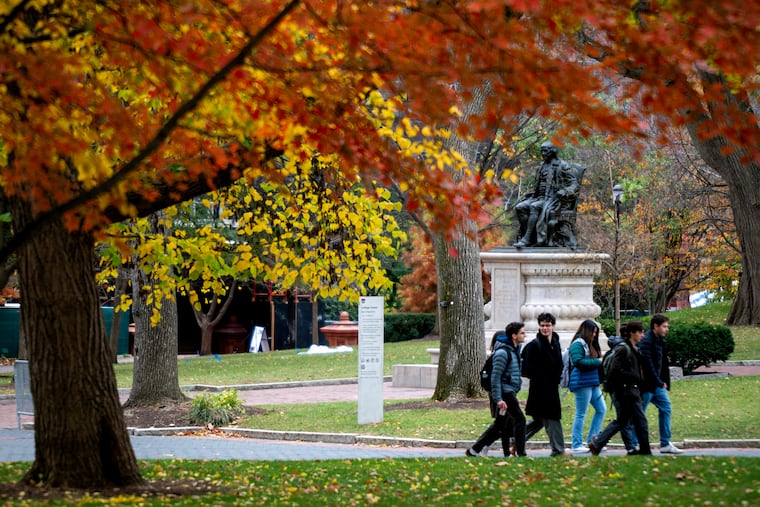
The exhibit showcases Davis’ photographs of and correspondence with four of Lincoln University’s most well-known alumni: Langston Hughes, Thurgood Marshall, Nnamdi Azikiwe, and Kwame Nkrumah. Lincoln, the nation’s first degree-granting Historically Black College and University (HBCU), was started in 1854.
‘History provides a sense of purpose’
Davis captured behind-the-scenes photos of Hughes, a leading voice of the Harlem Renaissance, and a young Marshall, who was the first Black U.S. Supreme Court justice. His international subjects included Nkrumah, the first president of Ghana, and Azikiwe, the first president of Nigeria.
“These men were in touch with each other and supporting each other,” Dorothy Davis said. “My dad knew them as people. Through his photographs and letters, he supported them.”
“I was inspired as a student of Lincoln to know I had matriculated at a place where Langston Hughes, Thurgood Marshall, Kwame Nkrumah, and Nnamdi Azikiwe matriculated,” said Gordon Linton, a 1970 Lincoln University graduate and former state representative from Philadelphia who was a catalyst for bringing the exhibit to the school.
“That sense of history provides a sense of purpose that the university holds for its students,” he said.
Davis was a campus photographer at Morehouse College in Atlanta as a student. A military stint during World War II interrupted his education, but he returned to Morehouse upon discharge. In 1947, during his final semester, he took a creative writing course with Hughes, who was teaching at nearby Atlanta University.
That launched a 20-year friendship that lasted until Hughes’ death in 1967. After Davis’ graduation, Hughes helped him obtain his first photography job as Ebony magazine’s inaugural roving editor and encouraged him to attend Columbia University’s Graduate School of Journalism. There, Davis was the only Black American student in the class of 1949.
From photojournalism to foreign service
After his graduation from Columbia, Davis worked as an international photojournalist for the newly formed Black Star Publishing Company, the country’s first privately owned picture agency, founded by three Jewish émigrés who fled Nazi Germany. Davis, their first Black photographer, was often hailed for bringing dignity to his subjects.
“I think my father would say he saw himself as a photographer first and a journalist/writer was close second,” Dorothy Davis said. “He could communicate more accurately with his photos.”
Her father switched hats and joined the U.S. Foreign Service in 1952. His first assignment took him and his new bride to Liberia as the first information officer and audio/visual adviser for the U.S. embassy. Davis worked in many capacities in the Foreign Service for USAID and retired in 1985. Throughout it all, he continued documenting stories with his camera.
Dorothy Davis was born in Liberia, unaware of what it meant to be American or Black. It was a deliberate move by her parents, who wanted to shield her from the virulent racism of the U.S. and provide her with a multicultural perspective.
“He was in the present but always aware of the future,” she recalled. “I saw him always turning a moment into a teaching about something.”
“Lincoln University: Through the Lens of Griff Davis” is open from 8 a.m. to 4:30 p.m. Monday-Friday through May 3 in the Special Collections and Archives department of the Langston Hughes Memorial Library on Lincoln University’s main campus, 1570 Baltimore Pike.