The renovated Highmark Mann has reopened and the vibe is national-park chic. A 195 foot-long digital wall is its new star.
The president and CEO wants people to say "Oh my God, look at what we have in Philadelphia. This is world class." The reopening comes 50 years and one day after the opening concert.
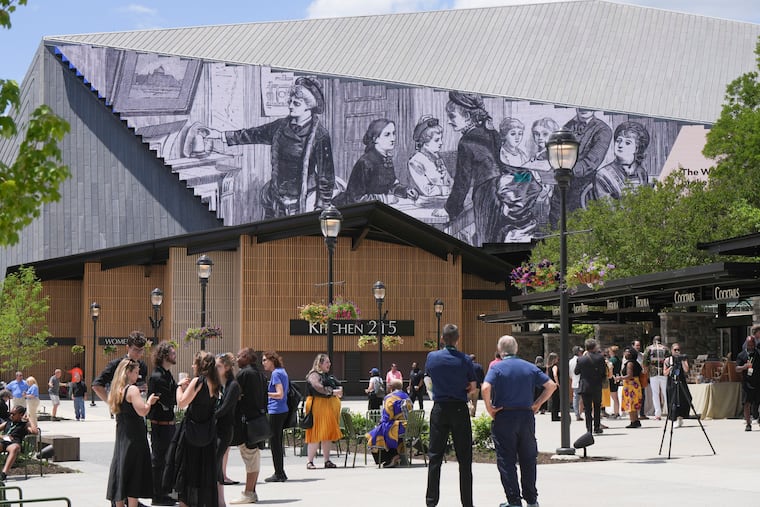
Greener and roomier with a chic naturalistic look, the Highmark Mann Center officially reopened Monday after the final phase of a yearslong renovation.
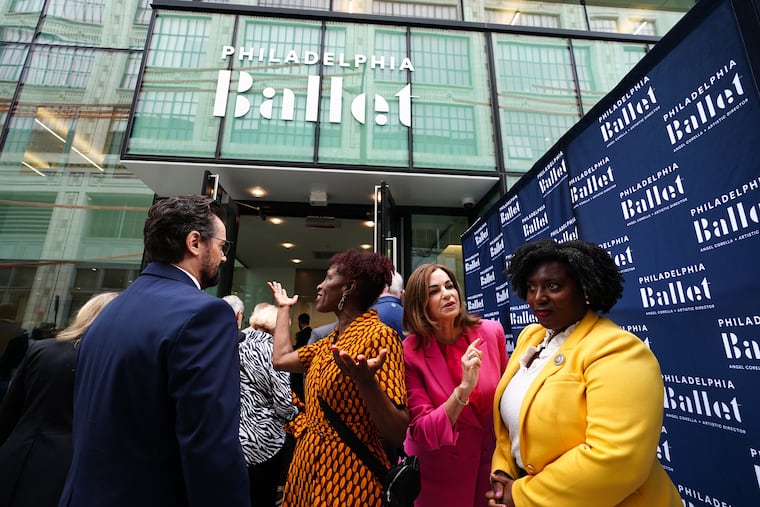
Construction at Philadelphia’s outdoor arts center in Fairmount Park went not just down to the wire, but a few weeks beyond it, delayed by this past winter’s stretch of snow, ice and subfreezing temperatures. In early June, dance fans arriving for BalletX performances found the main entrance and other parts of the campus still under construction.
But on Monday, amid speeches and the cutting of a long golden ribbon, the Highmark Mann emerged polished and substantially changed from its appearance after closing for the season last October.
Stevie Wonder said it best, said Highmark Mann president and CEO Catherine M. Cahill to a crowd of dignitaries gathered at the center’s entrance Monday.
“Music is a world within itself with a language we all understand,” she said, quoting the lyrics to Wonder’s “Sir Duke” from 1976, the year the center opened. “Music offers a release from the ordinary, and today we celebrate exactly that. This new space was designed to transport us from our everyday lives into a magical, musical, immersive experience that begins with the moment you arrive.”
Monday’s relaunch came 50 years and one day after the center’s opening concert.
The Highmark Mann has raised $68.6 million toward its $70 million goal in this campaign — a sum going toward operations, endowment and cash reserves, artistic and 50th anniversary projects, as well as paying for the last several years of construction projects.
The renovations unveiled Monday, designed by architecture firm EwingCole, include a redesigned plaza three times the size of the previous one, and a substantial new gateway entrance structure.
A “Hollywood”-style “Highmark Mann” sign now stands planted in the lawn, ready to serve as backdrop for selfies. A new sound system promises a truer musical experience tailored to each performance.
“If there’s a country artist, you’re going to want a slightly different response than if you are hearing R&B or classical,” said Highmark Mann vice president and general manager Evan Rogers.
Promising young plantings and a new welcome center and other structures faced in wood and stone might echo the surrounding park — Cahill calls the aesthetic a “timeless national park look” — but the centerpiece of the renovation is more like something out of Times Square.
A spectacular digital screen now bedazzles the main concert shed, greeting visitors with a stream of video art and programming rendered in images vivid and saturated even in bright sunlight.
The Satell Centennial Wall East on the side of TD Pavilion won’t carry advertising, Mann leaders vow, but sequences on culture, history and the like. On Monday, it displayed a feature on the 1876 Centennial Exposition in Fairmount Park and photo montages.
“It’s purely artistic content, which is super exciting,” said Brad Baer, digital experience/innovation adviser of the screen, which runs 195 feet on its longest side.
The Highmark Mann opened five decades ago as the Robin Hood Dell West, the local summer retreat for the Philadelphia Orchestra, and it has evolved into a bona fide arts center that feels both sylvan and city. The orchestra today is a small part of the Highmark Mann identity; this summer only six of an announced 45 presentations involve the ensemble. Pop music predominates.
Other recent changes include a second major performance space, the Skyline Stage, opened with a permanent structure in 2023 and a capacity up to 7,500 patrons standing; and a stylish remaking in 2024 of dressing rooms and other backstage areas whose displays of archival photographs and other materials remind visiting musicians of the center’s formidable artistic history.
The goal is to communicate that the center is “not static,” says Cahill, “whether it’s world premiere commissions, or new sound systems to engage lawn patrons who hopefully will become seated patrons at some point in their life cycle.”
All this is part of a conscious campaign of institution-building. Once considered something like an annual but ephemeral summer bloom on the edge of Philadelphia’s arts and culture community, the Highmark Mann has grown its budget and built out programs beyond concerts, like a summer arts institute for classical and jazz student and an entertainment industry apprenticeship program.
It even has aspirations to increase its number of operational months, if not to year-round, then at least well beyond summer.
It is also now telling its own story. The center commissioned a book — A Century of Music Under the Stars, by historian Jack McCarthy — that covers music in Fairmount Park even before the Philadelphia Orchestra organized its concert series on the other (east) side of the Schuylkill in 1930.
And it is mining its own archives for the potential release of recordings of historic pop and orchestral performances that have taken place there over decades.
Concertgoers can now experience some of the center’s history in the welcome center, where an interactive video jukebox quizzes visitors with trivia about artists who have performed. Merch is for sale, and the names of musicians glide by on electronic tickers crawling up the walls to the ceiling.
Said Cahill:
“With this transformation of this campus and celebrating the 50th anniversary, this is where we thought we could bring it all together and tell the history and the incredible legacy through all this technology, which is what people in the 21st century are used to engaging with.”
In the past, the center has often relied on tents to house certain amenities. Now, there are fewer tents and more buildings.
The effect is symbolic as well as practical.
“One of the things that you hate about the tents is, they go away. But all of this building, the gardens, the infrastructure — all of this sends a different message that it’s not going away when the Highmark Mann closes down at the end of the summer.”
Cahill wants to imbue visitors with a feeling that they were “someplace that mattered” and wants them to be able to say, “‘I was a part of it.’
“The Highmark Mann has a lot of people who love us,” she said. “We want to become their premier destination, for them to come here and bring family and friends and say, ‘Oh my God, look at what we have in Philadelphia. This is world class.’”