There’s a bit of Philly everywhere, even in Milan’s La Scala
Teatro alla Scala is one of the world's most famous opera houses in the world. Here's why it may look a bit familiar to Philadelphians.
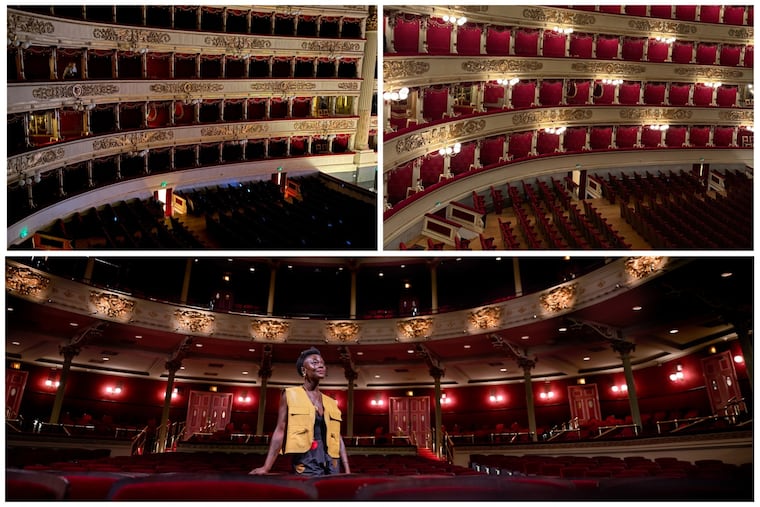
MILAN, Italy — A popular stop for Winter Olympics spectators when they’re not at a sporting venue is an opera house.
Teatro alla Scala, better known as La Scala, is one of the most famous ones in the world. Maria Callas rose to fame there; Franz Liszt’s piano is in its museum. The opera house, which opened in 1778, is the heart of Italian opera.
And it may feel especially familiar to visitors from Philadelphia: La Scala was the inspiration for the city’s Academy of Music.
In 1854, a building committee invited architects to submit plans for an opera house in Philadelphia, John Francis Marion wrote in his book, Within These Walls: A History of the Academy of Music. The next year, the committee chose Napoleon LeBrun and Gustav Rungé to design what would become the Academy. LeBrun was sent to Milan to sketch La Scala just four months before ground would be broken on Broad Street.
From the outside, the two buildings look very different.
La Scala is somewhat modest because there were originally homes across the street that a grander building would overwhelm. The Academy of Music was also designed humbly, in the Rundbogenstil (round arch style), inspired by Runge’s German roots, reserving most of the budget for the interior.
Inside both buildings, a red-and-gold-tiered jewel box of an auditorium awaits.
“It’s kind of like an event to go to La Scala,” said Philadelphia Ballet artistic director Angel Corella, who famously danced Romeo and Juliet with Alessandra Ferri in that opera house in 2000. (Their performance was filmed for TV and is available on YouTube.)
“People would go just to see anything, pretty much [at La Scala] because it’s not only the event to go to see ballet or hear opera and see opera,” Corella said, “but it’s also the fact that you’re going to an opera house that has so much history in it.”
Francine Garino, a La Scala tour guide who coaches opera singers in French pronunciation, agrees.
“Some people don’t know anything about opera or ballet. They don’t mind. They want to live this experience.” Sometimes they will leave after the first intermission, saying they feel fulfilled just having experienced the theater.
Philly’s version, which opened in 1857, is equally beautiful but less imposing.
“The great thing about the Academy of Music is that it’s still a big opera house,” Corella said, “but it feels very intimate and close to you when you’re on stage. So it’s a perfect theater.”
Horseshoe shapes and other similarities
The similarities between the two theaters lie “in the position of the theater, the position of the seats, the acoustics,” Corella said.
LeBrun and Rungé replicated La Scala’s horseshoe-shaped seating areas, but they closed it up more for better sight lines.
Like the Academy, La Scala has a huge central chandelier. But the Italian theater is a neoclassical design and somewhat grander than the Philly version. It has six levels above the orchestra to the Academy’s four.
The Academy has more seats (2,800 in Philadelphia and 2,030 in Milan), thanks to its full mezzanine and balconies with boxes on the sides.
At La Scala, the first four levels above the orchestra are made up of lots of small individual boxes that were originally purchased by members of the aristocracy.
They were said to be more expensive than buying an apartment and owners would decorate the boxes as they wished. They’d bring in servants and could come any time they wanted. Here, they’d take business meetings, eat dinner, and go down to where the orchestra seats are now and dance to the music.
“If you owned a box,” Garino said, “it was home for you.”
» READ MORE: The Academy of Music balconies were falling apart. Here’s how they were fixed.
Today all seats are individually sold as in any theater, with prices going from €10 to €300. Fans stalk the website to buy tickets as soon as they go on sale. They sell out extremely quickly.
La Scala was damaged when it was bombed during World War II.
Rake vs. no rake
At the time the Academy of Music was built, there were similar academies in other American cities.
“There was an Academy of Music in New York that predated the Metropolitan Opera. The Brooklyn Academy of Music was something that was founded in 1859, inspired by what we had done,” said Ryan Fleur, president and CEO of the Philadelphia Orchestra and Ensemble Arts, which runsthe Academy of Music.
Brooklyn Academy of Music’s original building burned down and was replaced by a Broadway-style theater.
Because of that, “the Academy of Music is truly unique,” Fleur said. “As far as I know, it not only is an oldest continuously operating Opera House [in the country], but it’s the only opera house that still has this configuration of spaces.”
For American dancers, La Scala, and most European opera houses, are a challenge, because they have raked stages. The stage slopes downhill from back to the front, improving the view for audiences.
The Academy is “a perfect venue” for Philadelphia Ballet, said Corella. “Because all the ballets, especially the [older full-length ballets], fit incredibly well, because it’s almost like a continuation from the house into the stage.”

In the United States, he said, the rakes have been fixed and made flat.
“In Europe, there’s a lot of theaters that are still in rake. For the dancers, it’s great for jumping, because when you going down the hill, you feel like you’re flying … but it’s much harder for turning.”
La Scala Ballet étoile Nicoletta Manni thinks the opera house she regularly performs on is the best of both worlds.
“In La Scala, we have a good rake,” Manni said. “It’s not too much. It’s very good for jumps, because it’s helping us to jump even higher. You have to be careful with turns, because you might lose your balance, but you just need to get used to it.”
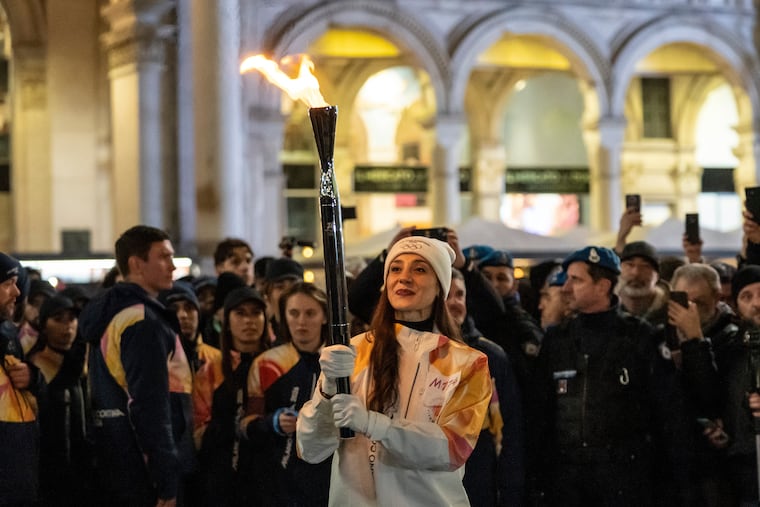
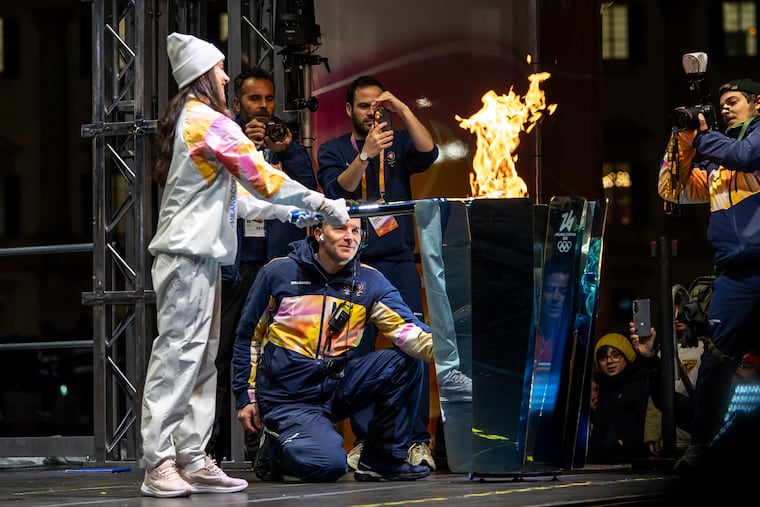
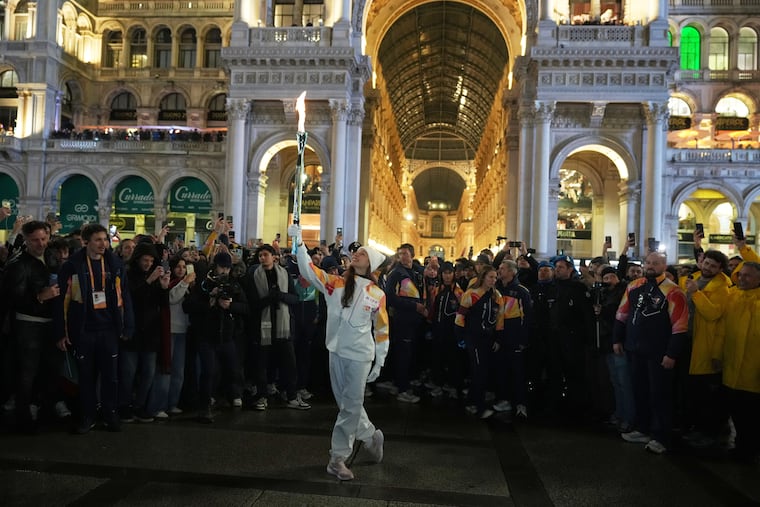
This month, Manni, 34,
was chosen to be an Olympic torch bearer. Then, she was told she would be the last one and would light the cauldron.
“It’s history, and so being there and have the privilege of doing that was very [much] something to remember. I will have it in my memory forever.”
Another thing she’d like to do is dance on our side of the Atlantic.
“It’s a dream to come to America,” she said.