The story of a museum that used to be a prison, as told by a 4-foot ceramic jar
Artist Roberto Lugo is creating a piece that charts the transformation of the “Pine Street Hotel” into what is now the Michener Art Museum.
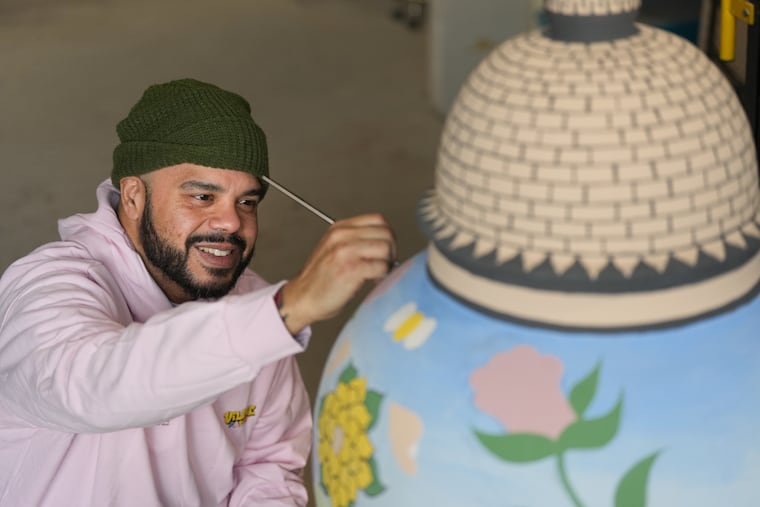
Ceramicist Roberto Lugo recalled spending the summer sitting by his studio window in Horsham, flipping through old copies of the Pine Street Express. He was struck by the personal essays, poems, and sketches he saw in the 50-year-old publication.
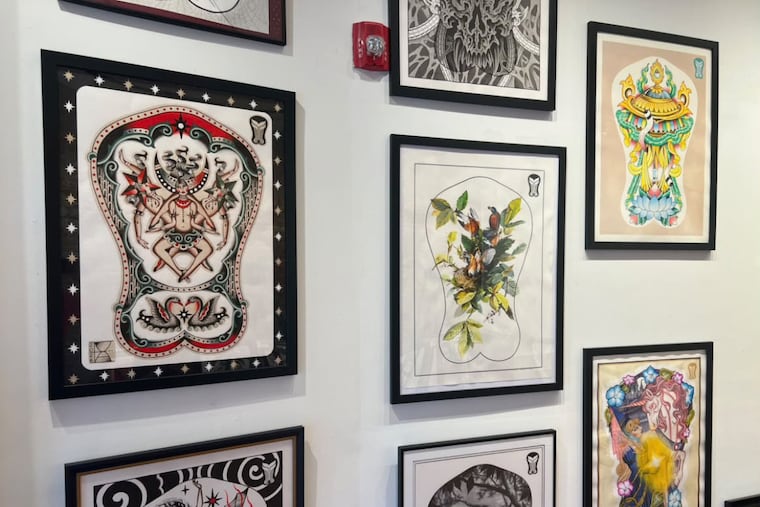
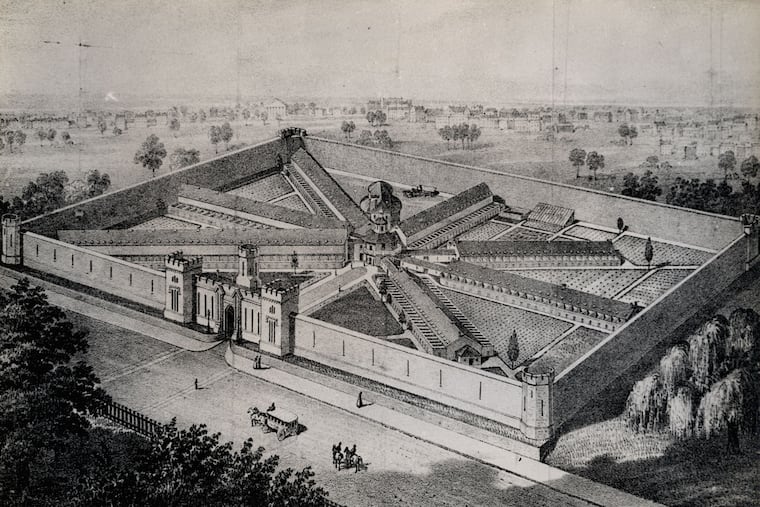
Hand-drawn images depicting the lush gardens, the Romanesque-style exterior, and the radial cell blocks held inside the building now known as the James A. Michener Art Museum.
The Michener Art Museum, named in honor of the Pulitzer Prize-winning writer and Doylestown resident, was founded in 1988 and houses thousands of paintings, sculptures, and paper works in its collection, along with a distinct history conveyed by the magazines Lugo sat reading.
Long before it was the Michener Art Museum, the Doylestown building was a Bucks County jail.
Inspired by Eastern State Penitentiary, it was a windowless, Quaker-designed prison. Its low cell doors forced inmates to bow their heads upon entry, which aligned with the Quakers’ belief in penitence and self-examination as a means of salvation.
The jail, later nicknamed the Pine Street Hotel by locals and those incarcerated, operated from 1884 until the outdated and overcrowded facility was closed in 1985. It was replaced by the Bucks County Correctional Facility the same year.
It’s believed the site was once a Native American settlement, later owned by two people formerly enslaved by Pennsylvania Supreme Court judge Jeremiah Langhorne, who willed them the property in 1842.
Years later, the county government acquired it and hired a Quaker architect to design the Bucks County Jail with its 40 small, windowless cells. When the jail closed, county officials tore down much of the old, gothic structure, which Michener described as a “place with which I wanted no contact.”
Visible reminders of the building’s carceral past live on in portions of the perimeter wall, the arched gateway, and the warden’s home, which is now the museum’s administrative headquarters.
It’s a history that fascinates Lugo, whose next project, titled “Permanence: We Were Here,” will explore the museum’s forgotten transformation from prison to arts institution. He intends to showcase the newly discovered artistic threads that bind him and the incarcerated writers and artists who produced the Pine Street Express.
Former George School teacher Ernestine Robinson started the publication as an initiative under VITA, the leading literacy agency in Bucks County.
Incarcerated writers and artists filled its pages with personal stories, sketches, and even critiques of the living conditions in the centuries-old carceral institution.
Lugo, whose work combines traditional European and Asian ceramic techniques with urban graffiti and modern portraiture, is adding elements of past Pine Street Express illustrations to a 4-foot-tall ancient Greek-style amphora.
The top half of the two-handled storage jar will include violet and pink florals, butterflies, and other vibrant imagery inspired by the covers of Pine Street Express issues, and others interpreted by Lugo. The bottom half will feature a sketch of Michener’s distinctive building, with stone wall patterns running through the artwork.
Michener Art Museum chief curator Laura Igoe said Lugo was a natural fit for the museum’s multiyear initiative, which aims to engage with the history of the museum and its grounds through a series of new installations.
“We thought he would be an ideal artist who responded to our history. Plus, he’s such a well-known artist in our region, and an artist I’ve always wanted to bring to the Michener,” Igoe said.
Lugo said working on his currently unnamed ceramic reminded him of his days teaching art classes at local juvenile detention centers. No matter what actions brought his teenage students to the facility, art was always an outlet for them to temporarily escape their confinement.
“Some of them had face tattoos, or were really close to fighting each other because somebody upset someone else. But then you handed them clay, and they started to make a rose for their girlfriend or a mug for their mom. Then you realize, these are just children who were put into tough circumstances,” Lugo said. “And I can imagine that’s not much different from the people who were in jail here.”
Given his teaching experience and the themes of poverty and entrapment embedded in his previous works, Lugo said the Michener collaboration feels like “fate.”
“So much of our history is told from certain lenses and perspectives that don’t really tell everybody’s full truth,” he said. “For me, this commission is really profound because it’s telling a truth, without trying to convince anybody of anything particular. I’m working more as an anthropologist would.”
Scheduled to be unveiled in May, Lugo’s ceramic work will be placed toward the front of the museum. He said it will likely draw some “dissonance,” with some visitors viewing it as a beautiful addition, and others seeing it as an incongruent piece in the Michener’s collection.
However it’s received, Lugo said, he hopes it opens pathways for future visitors and artists to see themselves in this history.
“It really takes institutions, curators, and everybody to do their part to make art accessible,” he said. “I think all of our cultures and communities are that much richer when we do that.”