Opera Philadelphia launches multimillion-dollar fundraising campaign. The goal is stability.
The money will also underwrite artistic projects, support the opera’s popular $11 ticket program, and create a cash reserve to weather any swings in the company’s fortunes.
Facing a fragile financial picture, Opera Philadelphia has undertaken a fundraising campaign that seeks to raise $33 million — an ambitious sum for a company of its size.
The money won’t go toward erecting a building or starting an endowment, but, essentially, to build an opera company. The aim of the campaign is to stabilize finances, underwrite artistic projects, support the opera’s popular $11 ticket program, and create a cash reserve to weather any swings in the company’s fortunes.
“There were many hair-raising moments in my first year when I didn’t know if we were going to make it to the next production or the next payroll,” said Anthony Roth Costanzo, the renowned countertenor and impresario who took over as general director and president of Opera Philadelphia 15 months ago. “What I want to do is create board-designated cash reserves. That means if one donation doesn’t go through or we go over budget, we’re not down to the bone.”
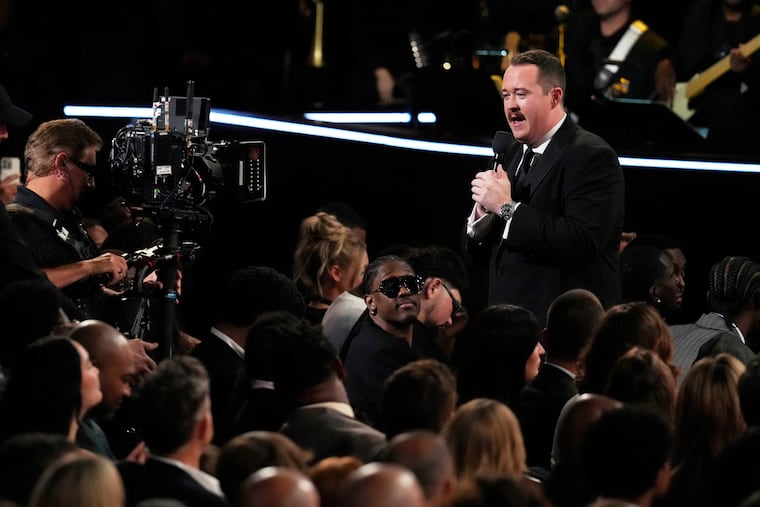
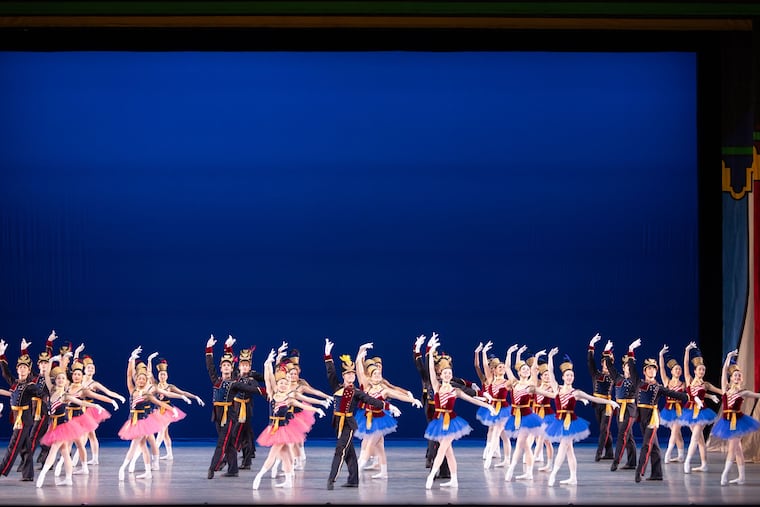
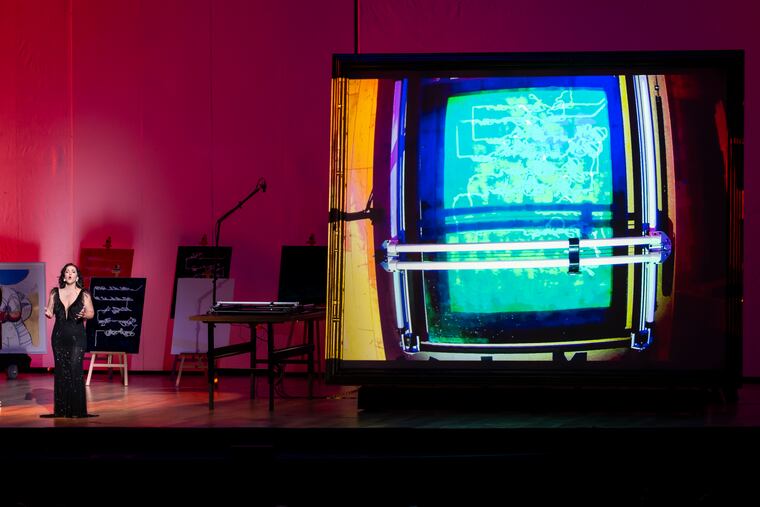
The campaign was announced Saturday night from the stage of the Academy of Music, where a gala performance by a half dozen opera personalities and other artists helped to celebrate the opening of Opera Philadelphia’s 50th anniversary season. Stephanie Blythe had a vocal presence so grand you could have counted it twice — both in her regular mezzo-soprano persona, and as her more hirsute alter-ego, tenor Blythely Oratonio.
Costanzo began fundraising immediately upon his arrival in June 2024, and it is from that point that the company is counting the beginning of the three-year campaign. Already, more than $18.7 million has been raised, which, Costanzo said, “for this kind of campaign, we’re incredibly excited about.”
Saturday night’s event added to the fundraising total, and though net proceeds have not yet been totaled, it was the company’s highest grossing gala on record, a spokesperson said. The evening, dubbed Vox Ex Machina, featured a partnership with Drexel University’s ExCITe Center and creative technologist Daniel Belquer. As singers sang and instrumentalists played, sounds were interpreted by a machine that produced artwork that was then auctioned off at an after-concert dinner at Reading Terminal Market.
The company has embraced the view that it can’t cut its way to viability — that in order to survive it must grow both artistically and financially. Just before Costanzo took over, the season consisted of three productions for a total of nine performances. He increased the schedule this season to five productions and 18 performances, and with it, the annual budget.
To support that level of activity, the company will seek to augment its philanthropy. The campaign calls for continuing the $7 million being raised each year as part of the regular annual giving program, while adding $4 million in special fundraising per year.
The math: $11 million raised over three years = $33 million.
“$33 million is the starting goal. I hope we surpass that,” said Costanzo.
Opera Philadelphia’s recent contraction and financial challenges are a far cry from its position just a few seasons ago, when it was the darling of the opera sector. Its annual Festival O, which launched in 2017 with 25 performances over 12 days, drew international praise and awards, and its practice of creating new, often genre-bending works was often hailed as an exciting new model for the opera sector.
But the company ultimately failed to build the base of philanthropy it needed to keep the model going; Festival O was put on hold and eventually canceled (2023 was its last year); and the season shrunk.
Costanzo hopes the new campaign will be a runway to higher levels of philanthropic support on an ongoing basis. His case rests on an artistic vision not unlike what came before, though this is the first time the company is being led by someone who is a practicing artist and entrepreneur, and one with a track record of doing both nationally and internationally.
“There’s not an easy way to put a formula to it,” he said of his programming approach. “What I do know I’m developing is an interesting philosophy — that an entry point of the listeners, though it’s new music, it’s also a story that feels somehow more palpable and more contemporary.”
The “$11 or pick-your-price” program is the big innovation to date of the Costanzo tenure. It makes every seat in the house available for $11 (or more, if the patron chooses). The initiative last season sold out performances (though “sold out” is something of a term of art, since seats with views partially obstructed behind poles are often excluded from total seat counts).
The pricing program led to a different kind of audience, Costanzo says.
“What was borne out from the numbers is that it diversified our audience across every demographic — age, race, income — and it also brought in a large portion of new first-time ticket buyers, and we saw those people coming back at much higher rates than the industry standard.”
Even with lower ticket prices, last season ended with a $2.4 million surplus (on a budget of $11.1 million).
Support for the company has also been replenished, he says.
“We added seven new board members since I have come along, which is pretty fast, in a little over a year, and we have had an influx of several seven-figure gifts from people who have not donated to Opera Philadelphia before.”
What are donors responding to?
“I think that people want to see a new path built for opera to move forward,” Costanzo said. “Whether it’s in the art that’s on stage or whether it’s in the audience that’s in the house or the business model for the organization, they want to see a new way forward because a lot of the old models don’t work.”
This season, Costanzo’s first in charge of programming, might suggest a direction favoring new works over traditional titles. Of the five programs, not one brings a top-20 opera title. The first production in the 2025-26 lineup opens Friday: Rossini’s rarely performed Il viaggio a Reims in a production by lauded Italian director Damiano Michieletto. Four new works comprise the rest of the season.
But 2025-26 was meant to be something unusual to celebrate the company’s 50th anniversary, and isn’t necessarily indicative of what the future repertoire mix will be.
Asked to say something encouraging to the opera fan who wants to hear Mozart, Puccini, or Verdi, Costanzo said:
“I think you might be very happy with what we’re thinking about for next season.”
Information: operaphila.org, 215-732-8400.