Painted Bride’s new executive director is an arts leader who, many years ago, interned at the arts organization
Germantown native and arts leader Risë Wilson previously led New York's Laundromat Project and has worked at MoMA, Robert Rauschenberg Foundation, and Parsons. But her career started at the Bride.
Nearly a year after longtime executive director Laurel Raczka announced she was stepping down from her post at Painted Bride Art Center, the arts organization has found a new leader.
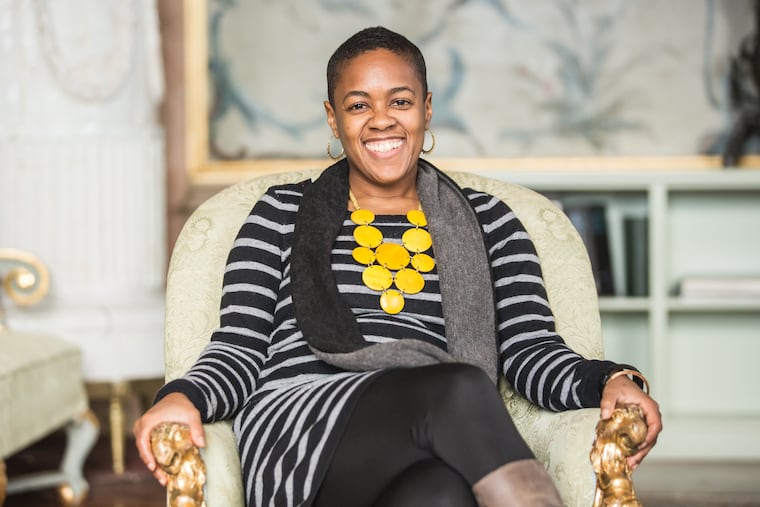
Risë Wilson is the organizations’s new executive director, succeeding Raczka, who led the Bride for 26 years.
With this appointment, Wilson, a Germantown native, will be returning to her hometown and the organization that kick-started her arts career nearly 30 years ago.
Wilson interned at the Bride under Raczka and former leader Gerry Givnish, who transformed the former cooperative gallery into an alternative performance space.
“That experience changed my life,” Wilson said in a statement, responding to questions from The Inquirer, “setting me on a course to develop my own socially-engaged artistic practice while championing fellow artists committed to community-based work.”
For the past two decades, Wilson has engaged with that work in Brooklyn, spearheading organizations such as the Laundromat Project, using art as a tool for community building and engagement.
Wilson’s career has spanned public engagement, artist development, strategic planning, and philanthropic practice. Her previous roles include being the inaugural director of philanthropy at the Robert Rauschenberg Foundation. She has also worked with the Ford Foundation, Parsons: The New School for Design, MoMA, and the International Center for Photography.
The community organizer and activist holds a bachelor of arts degree from Columbia University, where she was a Kluge Scholar, and a master of arts degree from New York University, where she was a MacCracken Fellow.
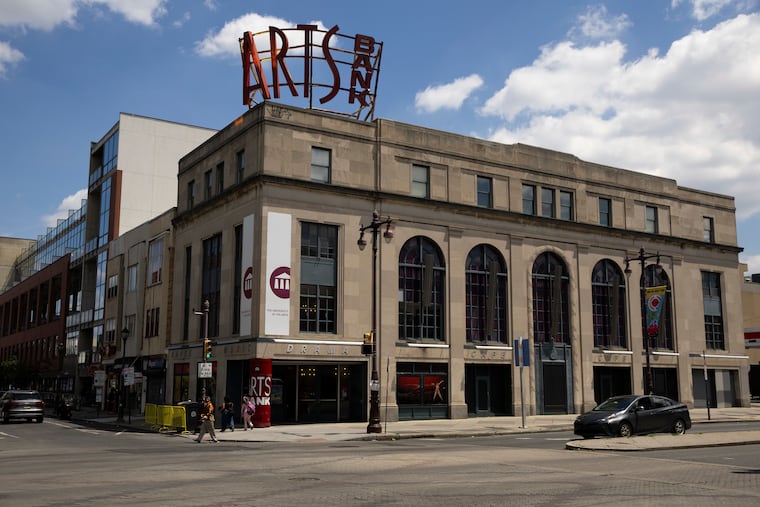
After years at 52nd and Market Streets, the Painted Bride recently moved to a 3,200-square-foot performance space in East Parkside. In her statement, Wilson said she’s stepping in at a time when “we all need to protect and exercise our imaginations.”
The Bride’s storied commitment to supporting artists and “culture-bearers” is one of many reasons the role resonated so strongly with her.
“I feel privileged to work for a cultural institution long committed to cultivating the conditions for artists to thrive, for dialogues to deepen, and for each of us to be the authors of our own story,” Wilson said in her statement.
As she transitions into her new role, Wilson is planning more artist-centered programming and “public-facing cultural dialogue,” which includes added workshops, public discussions, and collaborative projects.
She’s also working on strengthening collaboration between artists, neighborhood organizations, and the city’s cultural partners. These efforts, Wilson wrote, will firmly establish the Bride’s role as a “civic cultural space.”
Raczka said she’s confident the organization will continue to be a place for artist development and community engagement under Wilson.
“I’m excited to see [Wilson] bring her leadership and vision to this next chapter,” Raczka said. “Her work has long centered artists as essential contributors to civic life, and I believe the Bride will continue to grow as a vital cultural space under her stewardship.”