Philadelphia Ballet revisits two fiery Corella ballets in its season opener
"Carmen" and "Boléro" are interesting to see together. They have much in common. The two ballets also show off Corella’s development as a choreographer.

Philadelphia Ballet opened its 2025-26 season with passion and fire Thursday night with the revivals of artistic director Angel Corella’s Carmen and Boléro, at the Academy of Music.
It’s no coincidence that the Spanish Corella chose a program of Spanish classics to start the season. Carmen, which he made in 2023, was the ballet that made him realize he was a choreographer and not just someone who could brush up existing works. He shored up that new conviction last spring with Boléro.
» READ MORE: The best Philadelphia dance shows coming to Philadelphia this fall (and winter)
His work is bold, fiery, and often fun, while the classics he has reworked look mostly like the old masters’ choreography.
Carmen and Boléro are interesting to see together. They have much in common. Some bits of choreography are repeated in both (clapping sequences, taps of the pointe shoes, although both might be expected in ballet with a Spanish flair). There’s drama and heat, and not just because both are ballets that demand those things.
The two ballets also show off Corella’s development as a choreographer. He makes good use of all the dancers, not just the principals. Occasionally I found myself watching the corps more than those dancing in the center, because Corella gives everyone interesting steps, mini solos, or bits of choreography that ripple across the rows of dancers.
» READ MORE: Philadelphia Ballet premieres Angel Corella’s ‘Boléro’ in the director’s new choreographer era
Mayara Pineiro (in the title role), Ashton Roxander (as Don José), and Jack Thomas (as Escamillo) were excellent in Carmen. Based on the novella by Proper Mérimée, it is the story of a beautiful, seductive factory worker who leaves a string of broken hearts (and worse) in her wake.
Pineiro, in particular, is a good actress and a strong dancer. Her Carmen was sexy, bold, con(kniving) and loyal to no one but herself. Among the three principals, the knives (and sometimes guns) came out, from the strong technique to the softer bedroom scenes.
So Jung Shin was technically strong as Fernanda, a factory worker who gets in a fight with Carmen, but her face didn’t reveal the emotions her body suggested.
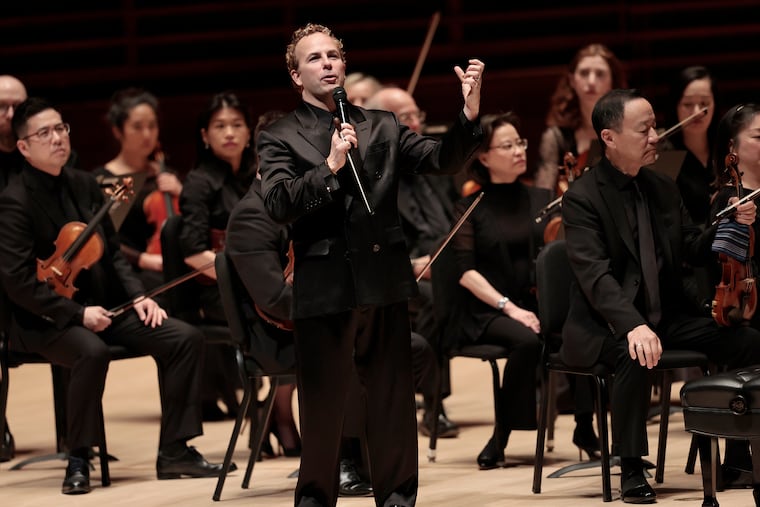
All this was set to the familiar Georges Bizet score, which music director and conductor Beatrice Jona Affron compiled and supplemented with some extra music she wrote.
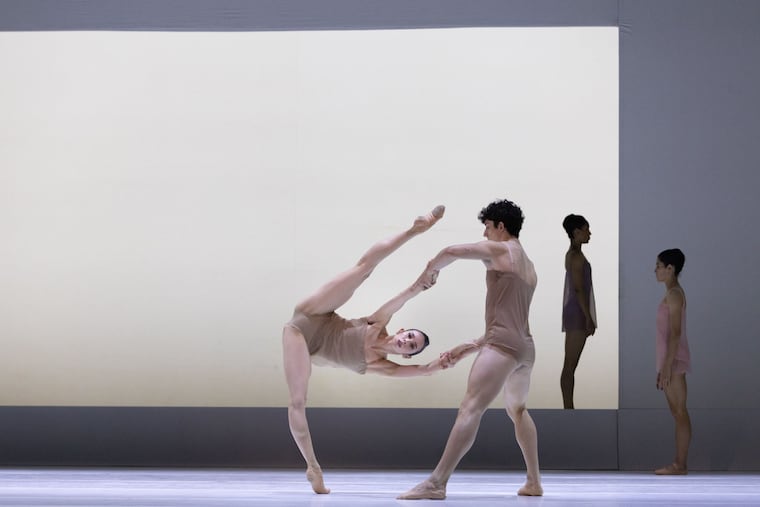
Boléro was a fun, sexy, and intense plotless ballet. Both men and women wear the same strappy leotards but with pointe shoes for the women and flat shoes for the men.
It can almost be seen as a highly elevated line dance, as rows of dancers repeat patterns several times. The piece begins with a single dancer and then adds more and more until the stage nearly vibrates with movement, all black costumes, white lights, and bare limbs.
But while the numbers intensify, the intensity of the movement and emotions don’t increase the same way Maurice Ravel’s music suggests.
It’s still an enjoyable work, though, that I’d like to see repeated in future seasons.
The evening opened with the orchestra playing John Philip Sousa’s Stars and Stripes Forever, in honor of the Navy and Marine Corps’ 250th anniversary celebration in Philadelphia. That was a revival as well, as Stars and Stripes Forever had its world premiere in 1897 at the Academy of Music.
If only Balanchine’s Stars and Stripes were back on the schedule for this season!
Philadelphia Ballet: “Carmen” and “Boléro”
📅 Fri 7:30 p.m.; Sat noon & 6 p.m.; Sun 2 & 7 p.m.,📍 Academy of Music, 240 S. Broad St., 💸 $20–$276, 📞 215-893-1999, 🌐 ensembleartsphilly.org