Philadelphia Ballet is now a partner of one of the most prestigious ballet competitions in the world
The Prix de Lausanne vaults students toward storied careers. It also brings schools and companies closer to the world’s more talented dancers.
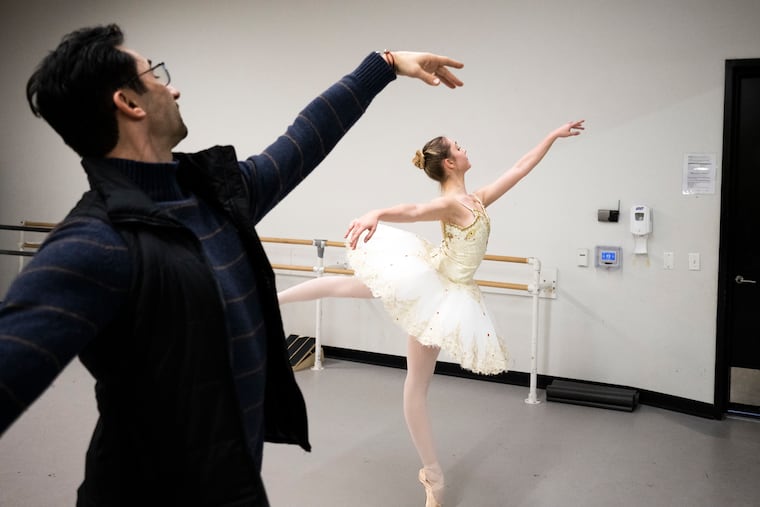
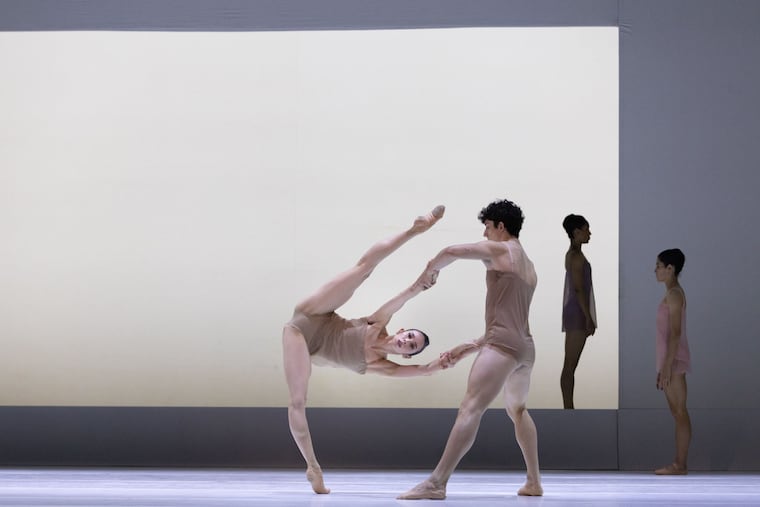
Philadelphia Ballet and the School of Philadelphia Ballet were named partners of the Prix de Lausanne last month, making the city a pipeline for some of the world’s top talent.
Ballet competitions are one way the best ballet students can be seen by top schools and companies, and the Prix de Lausanne, the competition held every winter in Switzerland, is the most prestigious. It gives students their moment in the spotlight, as well as a chance to be seen in classes and rehearsals. So not everything comes down to those few short minutes on stage.
This route can give dancers a leg up over those who only attend the larger, somewhat anonymous audition classes where it is harder to be noticed.
Competitions help schools and companies as well. Talent attracts talent, and schools that produce Prix competitors and winners are academies other dancers want to attend. Being a partner means Philadelphia Ballet can offer competitors a scholarship or perhaps even a professional contract.
All the talented dancers can eventually filter into the top ranks of the company.
The Prix sent an evaluator to Philly to check out the classes, performances, and school facilities. After more than a decade of waiting and wishing, the ballet’s new building on Broad Street is scheduled to open in September, although the move-in will begin this month. Along with studios and a black-box theater, it will have two wellness centers.
» READ MORE: Two Philadelphia dancers will be competing in ballet’s prestigious Prix de Lausanne
The Prix approved Philadelphia Ballet’s partnership after that visit.
“This is quite a full circle for me,” said Davit Karapetyan, who is the director of both the School of Philadelphia Ballet and Philadelphia Ballet II. He was a prize winner at the Prix in 1999.
“I left my country when I was about 16 and arrived in Switzerland [to attend a ballet school], and within about two and a half months they asked me to participate in the Prix de Lausanne,” said Karapetyan, who grew up in Armenia.
“That was one of my dreams as a young dancer, to be part of that incredible organization, to compete and that’s exactly what happened,” he said.
When Karapetyan was competing, about 400 students traveled to Switzerland. After one class, they dismissed loads of students in a move that “could be devastating,” he said.
In recent years, though, the Prix has switched to video auditions. Now, a smaller group is in Lausanne for a week.
Along with Philadelphia Ballet, the Rock School for Dance Education, has had luck at the Prix, with students competing in the Prix several times in recent years.
After his win, Karapetyan joined the Zurich Ballet and, while living in Europe, often came to the Prix as a spectator. Eventually he joined San Francisco Ballet, where he became a principal dancer.
Philadelphia Ballet chief executive officer Shelly Power met Karapetyan a few years ago. At the time, she was the artistic director and CEO of the Prix de Lausanne, and she invited Karapetyan and his wife, Vanessa Zahorian, to be part of the 2018 jury. Zahorian was pregnant and unable to travel, but Karapetyan was happy to accept and “go back home.”
“You bring really talented kids to the Prix de Lausanne, and they see other talented kids just like them,” Power said. “I saw kids that transformed themselves from coming from their cities onto that big stage. It’s really remarkable.”
Karapetyan and Power would meet again a few years later in Philadelphia.
» READ MORE: Philadelphia Ballet’s 2026-27 season brings the fireworks for America’s 250th birthday
Philadelphia Ballet artistic director Angel Corella has never participated in the Prix, but another ballet competition saved his career, he said.
He had been in a small company in his native Spain but was never getting opportunities on stage. He thought about quitting when a friend suggested that he try to get himself seen. Most of that year’s competitions had passed, but he was still able to enter the Concours International de Danse de Paris in 1994, where he won the gold medal and wound up with a soloist contract with American Ballet Theatre. This launched his career as an international star.
Ballet competitions are not everything, though. Some young dancers have a hard time making the transition between being in the spotlight to being the fourth swan on the left in the lowest ranks of a company.
“That’s why Lausanne is so good,” Corella said. “They actually spend time with the kids. They don’t only teach them variations, they also teach them different styles and they help them with getting into ballet companies. And they explain to them what it’s like being in a ballet company.
“It’s not just ‘I’m learning my variation. I rehearse it for, six, seven months, and then I do it perfectly, and then I join a company, and I have no idea what I’m doing,’” Corella said.
The Philadelphia Ballet team is excited about the opportunity, and there is already a student who competed this year who will be coming to Philly this summer. All agree it was Karapetyan who made it happen.
“When I joined as a school director Philadelphia Ballet, I was like, now my mission is I would love to be part of this incredible organization [Prix]. I’m going to do anything to be part of this organization. To go there and see these incredible students, if we can recruit them and take students there to be part of the competition, and part of these choreographic workshops.
It’s a whole big, beautiful community," Karapetyan said, “I was like ‘we need to be part of [it].’”