A lot of orchestras play a lot of Mahler but the Philadelphians do it with a high-energy symphonic precision
Mahler performances often lapse into a grand incoherence but Yannick Nézet-Séguin's speed conveyed a Mahler “off his meds” on Friday
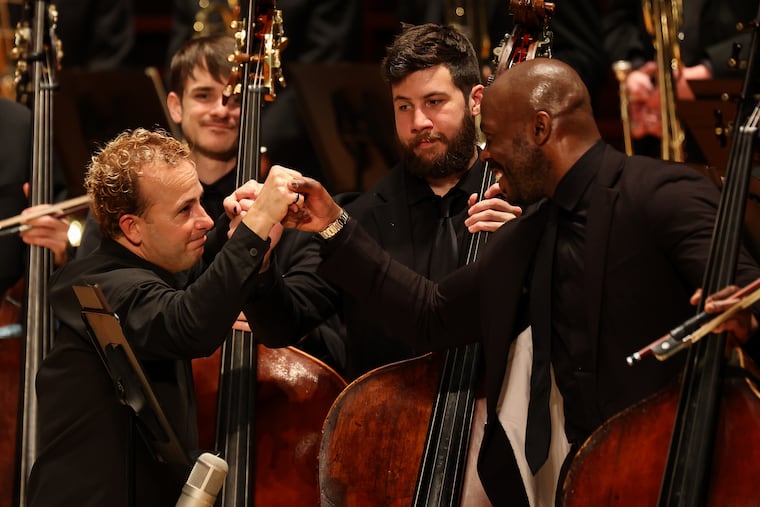
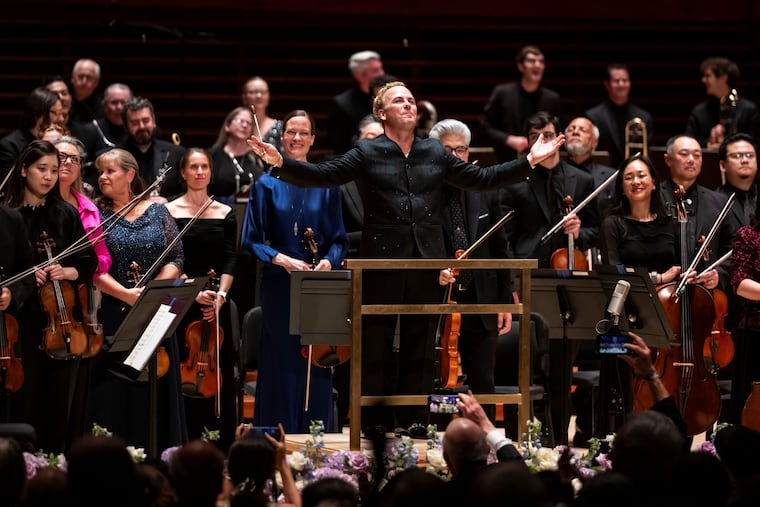
Symphonic circles look like ongoing constant Mahler festivals these days, but Philadelphia Orchestra’s music-artistic director Yannick Nézet-Séguin somehow leaves you wanting more.
This weekend’s performances of Mahler’s Symphony No. 2 (“Resurrection”) opened on Friday at Marian Anderson Hall with a well-deserved vociferous audience response to what felt like a very special occasion, whether or not it actually was.
The Philadelphia Orchestra’s standing is such that Tuesday’s repeat performance at the Mahler-glutted Carnegie Hall had all of six unsold seats as of Friday.
The laborious Mahler performances of decades past have given way to ones that discover hidden worlds that can be investigated without the symphonic whole lapsing into grandiose incoherence. Not so on Friday.
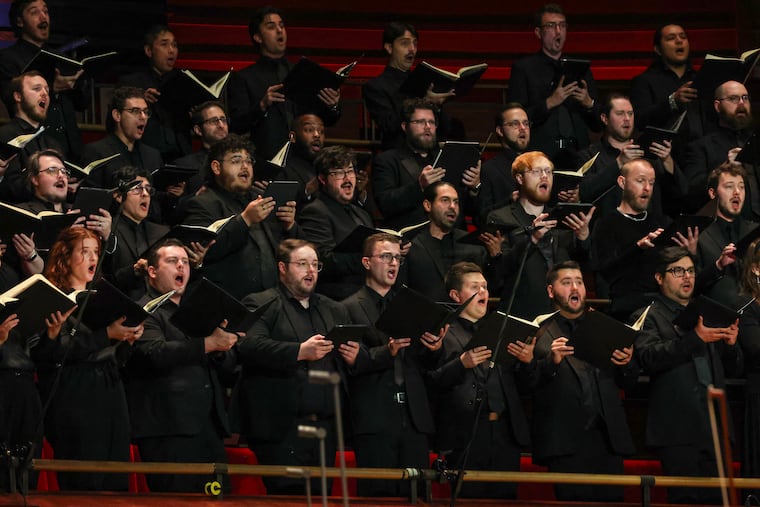
The incisive, explosive five-movement 80-minute “Resurrection” symphony—a large orchestra, a competing offstage band, two vocal soloists pondering our existence plus the Philadelphia Symphonic Choir supplying grandeur—had a vast but particularly specific range of expression on Friday.
While some conductors slow down to spotlight specific points, Nézet-Séguin was inclined to accelerate; not to be a speed demon but to suggest that this was Mahler “off his meds.” Nothing conveys emotional extremes like high-energy symphonic precision.
Apocalyptic moments are expected in the violently contrasting sonorities and gestures of the first movement. However, the dance-based second and third movements had their landmine that, in this performance, never allowed moments of gentility and repose to rest easy.
In the spare depths of the fourth “Primal Light” movement, mezzo-soprano Joyce DiDonato didn’t just convey profundity, but lived it.
Though the multisection fifth movement is sometimes framed by soaring solo soprano writing (so well sung by Ying Fang), the words included by Mahler can put the symphony’s many moving parts in perspective.
For me, in this performance, it was “You were not born for nothing!” This has special poignancy for a composer who had boyhood aspirations to become a martyr. Not a sign of great self value. Is this a to-be-or-not-to-be symphony? With all questions answered with affirmation in fortissimo?
The four previous movements teetering on so many different edges, the symphony was a litany of the joys and horrors of existence; which one can’t help contemplating amid current global power struggles.
Just for fun: One point of reference was the Mahler 2nd finale that Nézet-Séguin recorded for the Leonard Bernstein biopic Maestro: It’s more imposing but with no sense of triumph over anguish. It was Mahler “on his meds.”
Good for the film. Not for me. I’m a no-meds Mahlerite.
“The Mahler Symphony No. 2″ will be repeated 8 p.m. Saturday and 2 p.m. Sunday at the Kimmel Center. $77-$252. philorch.ensembleartsphilly.org