Philadelphia’s Weitzman Jewish Museum aims to raise $100 million to reimagine exhibitions and strengthen finances
The museum has already raised $50 million toward its goal, leaders said.
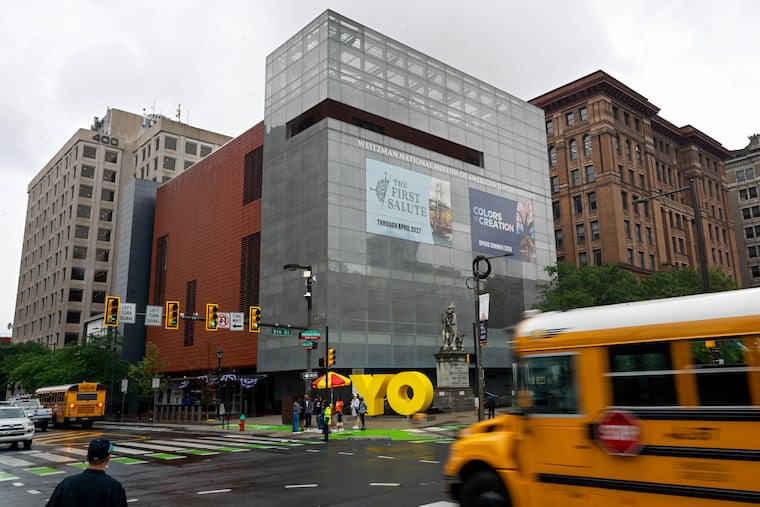
In 2021, Philadelphia’s National Museum of American Jewish History was focused on survival. Fresh out of bankruptcy and no longer the owner of its building, the museum got a lifeline: an eight-figure gift from shoe entrepreneur Stuart Weitzman.
Now it’s aiming for growth mode. This week the museum is unveiling a $100 million fundraising campaign. Half of the funds will go toward a complete revamping of exhibitions and some renovations, with the other half earmarked for endowment. Leaders are set to announce the campaign Thursday night at a New York gala honoring Jane and Stuart Weitzman.
The museum on Independence Mall, now named for the Weitzmans, has already raised $50 million, half of the goal — including the original Weitzman donation — said president and CEO Dan Tadmor.
“You can only grow from a position of being steady, and that was achieved in the last few years with the Weitzman gift,” said Tadmor.
The museum has not disclosed the amount of the donation, but an Inquirer review of the museum’s tax filings put the figure at about $25 million. The Weitzmans, who live in Greenwich, Conn., and New York City, are recipients of the museum’s Only in America Award, to be bestowed Thursday night.
A renewal of the 100,000-square-foot museum is needed, in part, because expectations around exhibitions evolve. The current core exhibition opened 16 years ago, “but it’s actually older than that, because it was planned almost 20 years ago,” says Tadmor. “It’s the destiny of thematic museums to age, and not necessarily gracefully. Stories change, narratives change, technology changes.”
But the larger context, the social and political climate, is also quite different from when the museum opened its new building in 2010, Tadmor says.
“We’re living in an age where we can’t trust our eyes anymore, right? We can’t trust what we read, we can’t trust what we see. A museum that you trust is a sanctuary of truth.”
To that end, the museum was compelled to develop a new exhibition, which will open in October.
“You can’t have a national Jewish museum have nothing to say about contemporary antisemitism,” said Tadmor, “and the truth of the matter is when our museum [building] opened in 2010, it opened with the assumption that antisemitism in America was for the most part in the rearview mirror. Which of course it isn’t.”
The exhibition will be permanent — “unfortunately,” says Tadmor.
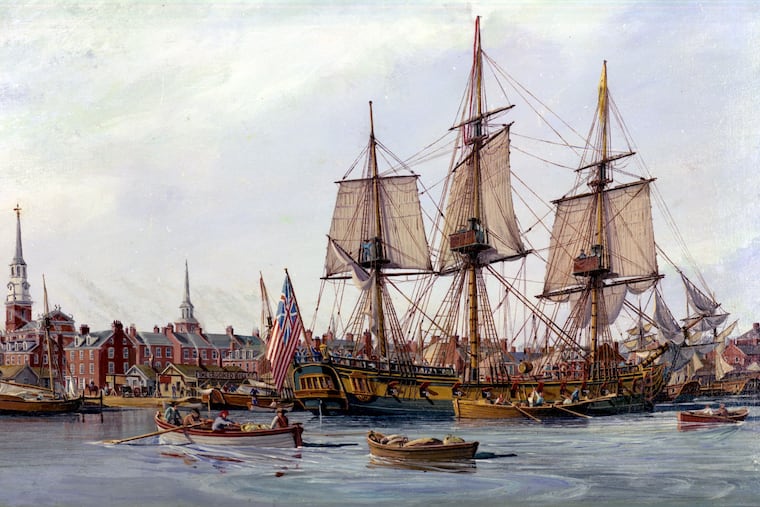
In addition, the museum will open a new exhibition in July for children inspired by the seven days of creation, and in April it opened a temporary show relating to the country’s 250th anniversary called “The First Salute.”
But a much more ambitious changeover will take longer, and be perhaps trickier. The Weitzman National Museum of American Jewish History’s new core exhibition devoted to being Jewish in America could take years to develop from conception to reality.
“Do you go back 3,000 years, or do you stay with 1654? That’s a big decision,” says Tadmor, referring to the arrival of the Jews in New Amsterdam (today’s New York).
“What themes do you want to encompass? Do you want to talk about, besides Jewish history, Jewish values? And if so, which values? You can imagine that in itself is six months of deliberation — I would add Talmudic deliberation. What part does Israel play? What part does Zionism play in the nation’s Jewish museum, which is unequivocally Zionist, and how do you tell the story? These are very serious questions that I wouldn’t dare try to tackle on my own.”
And so he won’t. The museum will assemble an advisory committee — “people with storytelling background, with marketing background,” Tadmor says. “We need to make sure that it’s diverse in gender, ethnicity, denomination, not only Jews. It has to be a carefully deliberated process.”
Tadmor is hesitant to criticize the current core exhibition, but he does point out two areas he’d like to see better handled in the new experience.
One involves the hierarchy of information.
“You walk into a space, what are we trying to tell you? What’s the most important thing? What’s the second most important thing?”
The other aspect he’d like to see is more emotion.
“A good museum takes you through an emotional journey, not only a cerebral journey. A good museum gives you some spots, probably not more than five or six, in which you laugh or cry or contemplate. And it gives you pause. And those, by the way, are the moments that you remember. You’ll forget the information, but you’re not going to forget that place that made you feel.”
As it develops future exhibitions, the museum — which was founded in 1976 in a nearby building shared with Congregation Mikveh Israel — is conscious of its place within the universe of museums devoted to specific groups.
“This is the only national Jewish museum,” said Tadmor. “There are scores of Jewish museums in America. A lot of them are Holocaust museums, some of them are very local museums that tell a local story. The Jewish museum in New York is a fine museum. It’s an art museum, it’s not a thematic museum. So this is it. This is the nation’s Jewish museum, and the nation deserves a fine, world-class Jewish museum.”
Leaders are also making a financial argument. With a bigger endowment, the museum can cover more of its expenses than is currently the case. It aims to have a total endowment of $50 million, with $2.5 million or so in annual investment income that would cover a good portion of the museum’s $10 million to $11 million annual budget. The museum declined to specify the endowment’s current market value.
“I can comfortably say that if we get to a $50 million endowment, our operations are going to be fine,” said Tadmor.
It could take four or five years before the museum reaches its total $100 million goal for endowment and redone exhibitions, Tadmor says. In the meantime, the museum is under consideration for becoming part of the Smithsonian Institution.
The argument for why a Jewish museum is needed has unexpectedly sharpened since the initial campaign to erect the current building.
“When it opened, it was in retrospect what [writer] Franklin Foer and others have described as the pinnacle of Jewish assimilation in America, to the point where people were saying, ‘Who needs it? We’re fully assimilated.’ Over the years there were even suggestions that the Jewish museum should simply be a museum of immigration, of everybody’s immigration, because the Jewish immigration story is everybody’s immigration story that’s universalized to the point of not even being a Jewish museum. Now, obviously, that’s not the way we see it anymore.”
And so, if there’s a silver lining to the current climate — and “it’s a very slight silver lining,” says Tadmor — it’s that “nobody contests the need for a strong Jewish museum.”