A Beethoven celebration to mark Emanuel Ax’s 50 years with the Philadelphia Orchestra
Including a "marvelous" Beethoven cadenza that seemed to make time stand still.
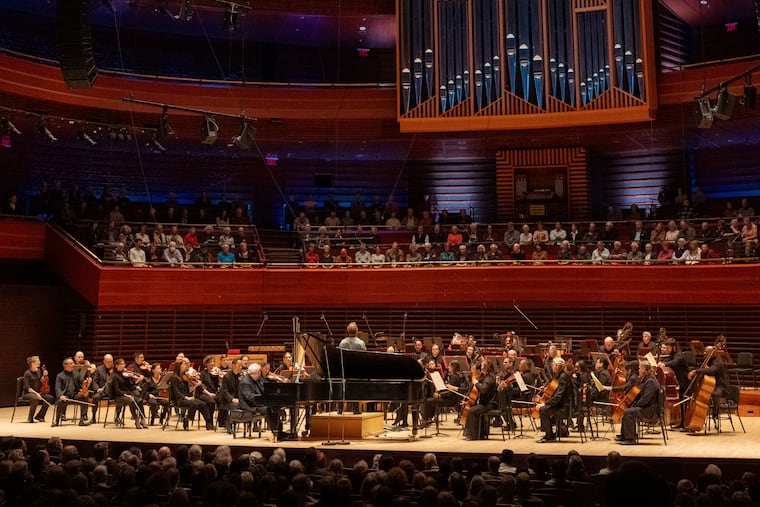
The format for Thursday night’s Philadelphia Orchestra concert is tried and true: pairing two 19th-century warhorses with a more recent and unfamiliar work.
William Grant Still’s symphonic suite Wood Notes (1947) was a refreshing opener. Inspired by poems by Joseph Mitchell Pilcher, the texts of which were included in the program, Still’s music resonates with the poems’ wistful impressions of the rural Southern landscape that both men knew as native Mississippians.
Although the character of the music could be broadly described as “cinematic,” the five movements of Wood Notes moved across a lot of different stylistic ground.
Still’s music resonates with the range of influences encompassed in his three self-described creative phases: “ultramodern” (the dissonant idiom stamped by his two years of study with Edgard Varèse), “racial” (foregrounding African American musical traditions), and “universal” (that is, neoclassical).
The highlight for me was the third movement, “Moon Dusk,” whose flickering colors and ominous lyricism left a haunted mood hanging in the air: question marks and sighs amid the Spanish moss.
Hats off to the orchestra for including some (ahem) “new” music on this program. But it should be said that putting Wood Notes first on the program suggests something of a musical hors-d’oeuvre before the main course. I also wonder if his music would have shone brighter on a program with contemporaries such as, say, Aaron Copland or Ruth Crawford Seeger.
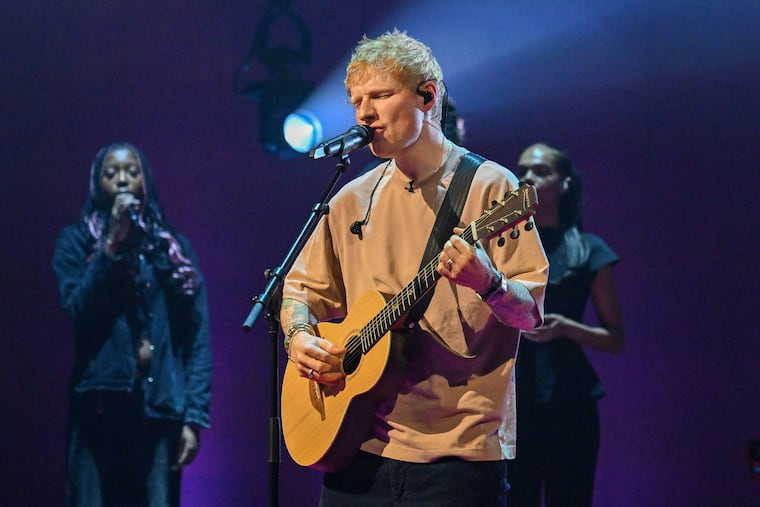
This concert marks the 50th anniversary of pianist Emanuel Ax’s collaboration with the Philadelphia Orchestra. (As conductor Yannick Nézet-Séguin noted, when Ax first played in Philadelphia in 1975, Nézet-Séguin was 4 months old.)
Ax was joined by the Philadelphians in a reliably masterful rendering of Beethoven’s Piano Concerto No. 3. The cadenza toward the end of the first movement, where the orchestra sat back to allow Ax to play unaccompanied at some length, was the most striking.
Cadenzas in the 19th century were one of the last vestiges of the improvisatory practices that used to be everywhere in European music. This one, like most since Beethoven’s time, was written out, but composed in such a way as to give the feeling of an extempore performance.
The effect here was marvelous, as if time stood still.
In fact, it was a bit disillusioning to see the orchestra ready their instruments as Ax approached the end of his solo, revealing that this dreamy impromptu was in fact planned to the measure.
Beethoven’s somewhat soporific second movement lost my attention, but then found its retroactive justification as a prolonged upbeat to the rollicking rondo finale. (Let’s not pretend that classical compositions don’t have their doldrums and, yes, even some filler now and then.)
In the third movement, in spite of its triumphalist major-key ending, the orchestra summoned an urgency, a danger, and even a hint of violence — the music smells of gunpowder and echoes the whir of falling guillotine blades.
Brahms’ Symphony No. 4, occupying prime position at the end of the program, undeniably stole the show. The piece is simply a tour de force.
The first movement, in particular, is Romantic music at its best: If you aren’t swept away by the music’s prismatic orchestration and harmonic twists, its simultaneous sense of drama and inevitability — well, I don’t think anything else will do it for you. (And I write this as someone not generally enamored with 19th-century music.)
The breathlessness of the performance was reinforced by Nézet-Séguin’s choice to lead from the podium without a score (a move that also highlighted the resemblance of conducting to interpretive dance) and the way he pushed the orchestra headlong, without a break, into the second and fourth movements.
In spite of Brahms’ well-known backward glances — to Beethoven, the “giant” he always felt looming over him, and in the fourth movement of this symphony, even further back to Bach — there is an element of modernist maximalism in his music.
Rather than consigning each movement to its traditional role within the large-scale dramatic arc (epic opener, lilting song-form, light-hearted dance, etc.), Brahms seems to want to fit the full spectrum of symphonic feeling into each movement, creating a fractal compression of musical form. The result is exhilarating for the listener but also taxing — another good reason for a piece such as the Fourth Symphony to be performed last.
On the whole, the music was beautiful, varied, and lovingly played, offering up a good introduction not only to the unfamiliar music of William Grant Still, but also to the possibilities of the remarkable musical conglomeration that is the symphony orchestra.
“Emanuel Ax Plays Beethoven” repeats Saturday, Nov. 1, 8 p.m., and Sunday. Nov. 2, 2 p.m., Marian Anderson Hall, Broad and Spruce Sts. ensembleartsphilly.org