A paper-thin plot booms with a rock-solid orchestra in Opera Philadelphia’s ‘Il viaggio a Reims’
It’s exactly the kind of grand but little-known piece that Opera Philadelphia can risk in the opening slot of its 50th season. But don't leave during the intermission.
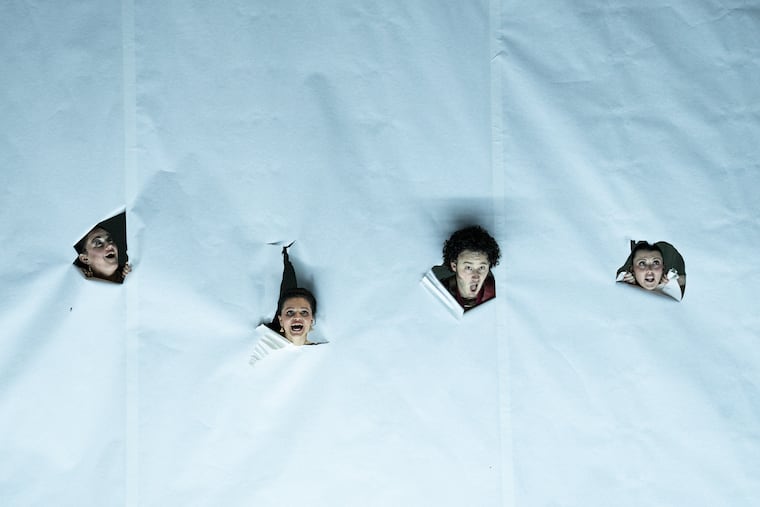
Much ado about nothing? Or everything?
With light comedy, lack of tragedy, minimal plot, and a succession of glorious arias, the Rossini opera Il viaggio a Reims was definitely “ado” — in overdrive — as presented by Opera Philadelphia at the Academy of Music on Friday.
It’s exactly the kind of grand but little-known piece that Opera Philadelphia can risk in the opening slot of its 50th season. The low ticket prices all but guarantee full houses for the four-performance run.
And judging from the response on Friday, the audience was quite happy to be there, though with a smattering of intermission departures. Word to the wise in future shows: Act II has a considerable payoff that shouldn’t be missed.
Much respected but a lost score for 150 years, Il viaggio a Reims (“The Journey to Reims”) hangs by a thread — musically deluxe with rich orchestral scoring, an expansive 10-stanza patter song, and a gorgeous a cappella chorus with 14 vocal parts.
But theatrically? It’s paper-thin. Actually, tissue-thin. A special-occasion piece written for the French coronation of Charles X, the stage is populated by upper-class 1820s character types of questionable charm.
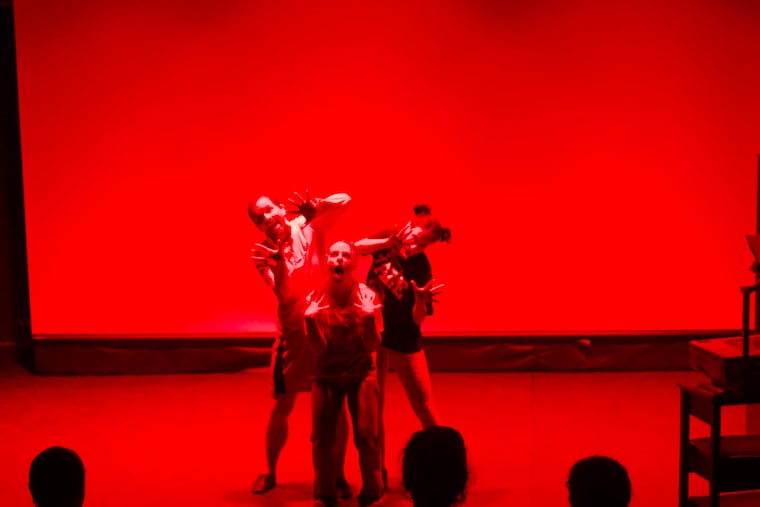
The imported Dutch National Opera production by Damiano Michieletto tried to make this ship-of-fools cross section of society less quaint and more immediate — and sometimes did.
The staging concept: Set in a modern art gallery rather than a grand hotel, the opera now has figures from a commemorative coronation painting coming to life amid more modern paintings by the likes of Keith Haring that also come to life.
The coronation denizens are bewildered — as are we, watching this confused collection of humanity. It doesn’t really help the opera itself but it is at least colorful, animated, and visually stimulating (if often cluttered).
The second act has greater dramatic purpose as the characters rediscover their home in the coronation painting.
I won’t say how it’s done, just that it has a good model in the Stephen Sondheim musical Sunday in the Park with George.
The main source of operatic stability here was the orchestra under Corrado Rovaris: The rock-solid playing had extra glow and sheen from the string section. Interpretively, Rovaris knows just what Rossini needs.
Opera Philadelphia’s main challenge was finding 10 of the world’s best Rossini singers — we’re talking vocal Olympics here — who can also engage with characters lacking the dramatic backbone of the composer’s later masterpieces such as William Tell. These characters may not have much on their minds but have plenty to say.
In the cast of mostly up-and-coming regional-opera voices, the audience favorite was Lindsey Reynolds as fashion maven Contessa di Folleville, who translated the vocal athletics into theatrical panache.
The most gratifying singing came from Emilie Kealani as Corinna — a visionary character whose arias such as “Arpa gentil” became islands of pure lyricism. The lightish voice of Alasdair Kent, as Conte di Libenskof, is that of a fine Rossini tenor in the making. Similarly, Minghao Liu (Cavalier Belfiore) is definitely somebody to watch. At the opposite extreme, the large Verdi-appropriate voice of Scott Conner (Lord Sidney) tended to bulldoze Rossini’s intricacies.
Brenda Rae was the cast’s biggest name, but made a curious impression in the central role of Madama Cortese — tentative in one phrase, astonishing in the next. The great patter song “Medaglie incomparabili” was good but not scintillating with Ben Brady staged behind a lectern, banging a gavel in ways that got in the way of what could’ve been show-stopping singing.
Such is often the problem with high-concept stagings: The director doesn’t know when to stop.
“Il viaggio a Reims” is repeated at 2 p.m. Sunday, 8 p.m. Friday, and 2 p.m. Sept. 28 at the Academy of Music, 240 Broad St. Remaining tickets are $11 to $276. 215-732-8400, operaphila.org