The Temple jazz band won the National Collegiate Jazz Championship. What is its recipe for success?
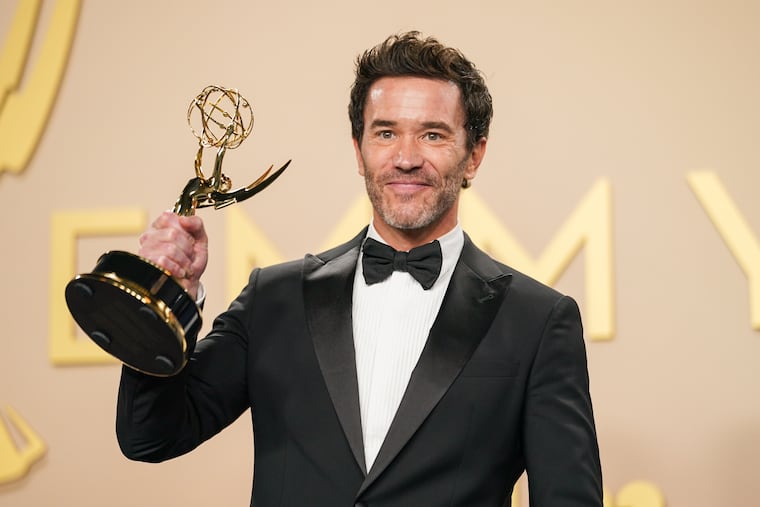
The band has won what is the biggest honor in the field but for its director Terell Stafford, performing jazz is never about winning.
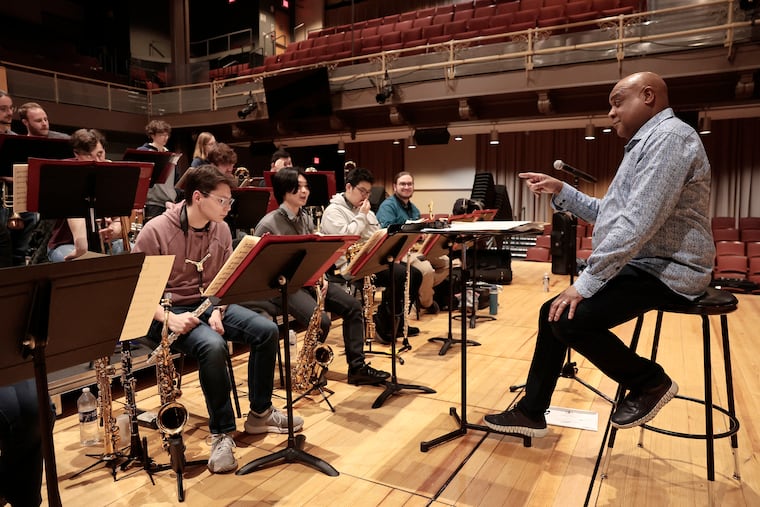
On a recent Wednesday evening, thundering percussions and the sweet whistles of woodwind instruments filled Temple University’s Performing Arts Center. Some of the notes even escaped the thick doors and pour out onto the street.
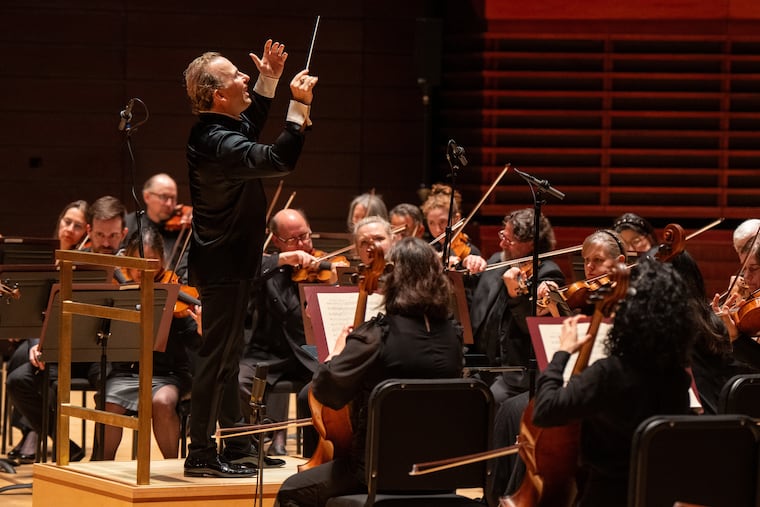
The stage was full but few spectators sat in the cherry-colored seats watching Temple’s Jazz Band rehearse familiar and new tunes. Among them was the band’s director Terell Stafford, instructing the ensemble. The student musicians followed every word.
Some played with their eyes glued to the sheet music, while others plucked their strings, pressed their keys, and flicked their drum sticks with delicate focus.
“The rehearsals can be intense,” senior vocalist Jackie Paul said. “We all put a lot of work and energy into it. Every week we rehearse for three hours, and that’s only part of it. We work on it outside of class. But it’s also our intention with the music, and I love our director. He’s really inspiring.”
The late evenings spent inside the performance space, playing to an empty auditorium, helps lead to the precision that Stafford demands. It’s also the recipe for awards for this national championship-winning powerhouse.
In January, Stafford and the 19-member collective won the 2026 National Collegiate Jazz Championship at New York City’s Lincoln Center, beating out the likes of Ohio State, Northwestern, UT Austin, and Huston-Tillotson to win the biggest honor in collegiate jazz.
But Stafford, the acclaimed trumpeter and director of jazz studies at Temple, who has led the jazz band for nearly 30 years, isn’t one for competitions.
“We didn’t come there to win. We just came to play, and we wanted to play with honesty, joy, and clarity. And that’s exactly what they did,” he said.
The win marked the program’s first national title since 2020, and the second one in its history.
When the award was announced, Stafford said, the band was shocked. Not because they were ill-prepared, but because he and his young musicians did not set out with winning as the goal.
In fact, if it hadn’t been for the insistence of multiple Grammy-winning trumpeter and composer Wynton Marsalis, the artistic director at Jazz at Lincoln Center, the band probably wouldn’t have competed at all.
Stafford ultimately agreed to participate in the competition. But rather than stress winning, Paul said, he encouraged the band to tune out the judges and fellow competitors, and get lost in their chord progressions. His words helped.
“We came in with the right mindset,” Paul said. “It was more about the music for us. We’d gone over those songs like a billion times, so I was never worried. I was enjoying playing music at the Lincoln Center. That’s an amazing opportunity within itself.”
“The only goal,” said bassist Graham Kozak, “was to do the music justice.”
While the other bands incorporated solos into their high-energy sets, Stafford picked “Windows” by Chick Corea, arranged by Ted Nash, and “I Got It Bad (And That Ain’t Good)” and “Second Line,” both by Duke Ellington.
These, he said, emphasized the unified sound and harmony between the 19 band members.
Kiara Rouse, a first-year jazz saxophonist, said she was thrilled to see the judges noticed their nuanced performance. It wasn’t just the music the band played, it was “the interpersonal connection that we had,” she said.
Stafford’s emphasis on musical unity and clarity is what, third-year guitarist Matt Pantos said, ultimately led to the band’s victory.
He wanted the band to go and have fun, Pantos said. “No one’s good enough to win by showing off. We’re just here to make music. It took a lot of nerves away.”
Stafford, who typically conducts in front of the ensemble, stepped to the side and let his students command the stage.
“As a professor, the best feeling is when you can feel students investing in the music and into each other. I just got out of the way and let it happen,” he said.
Along with that national title, first-year drummer Mehki Boone, Rouse, and others received individual awards in their respective categories, including outstanding drums, outstanding tenor saxophone, and the Earl Hines Outstanding Musician Award.
Prizes are great, but all Stafford wanted was his students to be happy to be playing at Lincoln Center. Not only were they performing on a world-renowned stage, but they had the chance to forge connections with some of the most talented bands and musicians from around the country.
What Stafford is most invested in is nurturing the commitment the band shows outside of competition stages.
The weekly rehearsals are demanding, but, Paul said, they help the band form a shared identity, which shows up whenever she and her band mates perform on stage.
The ensemble is a mix of first-year musicians and upperclassmen, making it the youngest group Stafford has instructed in his nearly 30 years at Temple.
The band is set to perform in Japan, and again in New York this spring. The group will also head to Europe this summer to record music and attend concerts in Spain and Rome and at France’s Jazz in Marciac festival.
“As far as competition, that’s the competition,” he said. “The preparation to get ready for these performances, to get ready for these tours, and to get ready for these trips.”
He is thankful for the investment the university’s administrators have put into the program over the decades. “If these opportunities weren’t provided [by Temple],” he said, “we’d have to find a different route to bring up [our performance] level.”
If there’s a secret sauce to the band’s success, Stafford said, it’s the combination of talent, administrative investment, and the experience of his fellow faculty members.
“We have faculty that play and offer that maturity and wisdom. These aren’t folks that don’t play and only teach,” said Stafford, who performs as a member of the Grammy-winning Vanguard Jazz Orchestra in New York.
As a gift to his students for their national award-winning performance, he got them tickets to Vanguard shows. He will continue to bring in musicians and guest instructors to coach his ensemble. It not only improves their musicality, he said, it further crystallizes what’s at the heart of being a jazz player.
Honesty, clarity, and soul.
It’s this kind of collaboration, Stafford said, that ultimately makes Temple’s jazz band and music program run.
“When we won, it was a team effort. It wasn’t just me or the kids that did it. Temple did it,” he said.