Víkingur Ólafsson conjures the spirit of Beethoven in Marian Anderson Hall
The Icelandic pianist with a billion-plus streams sounds great on records but his sonority needs to be heard in person. His recordings display what he thinks; the live performance was what he feels.

Víkingur Ólafsson, who played to a near-full-house at his Thursday recital at the Kimmel Center, is a rather unlikely sensation.
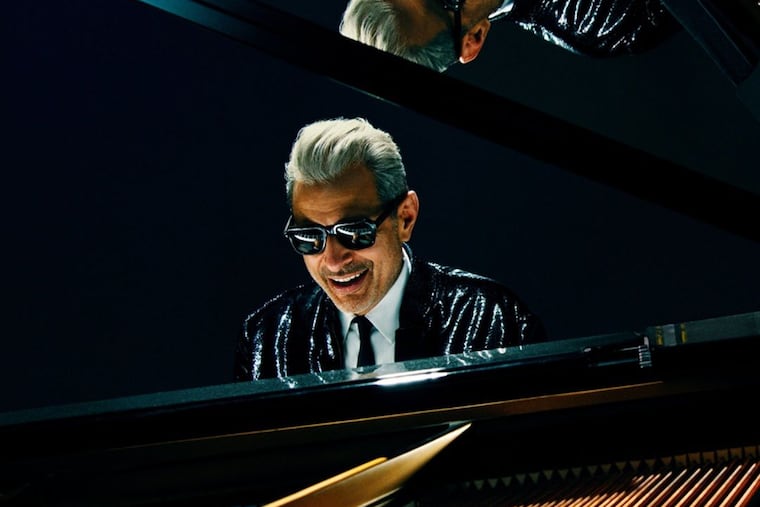
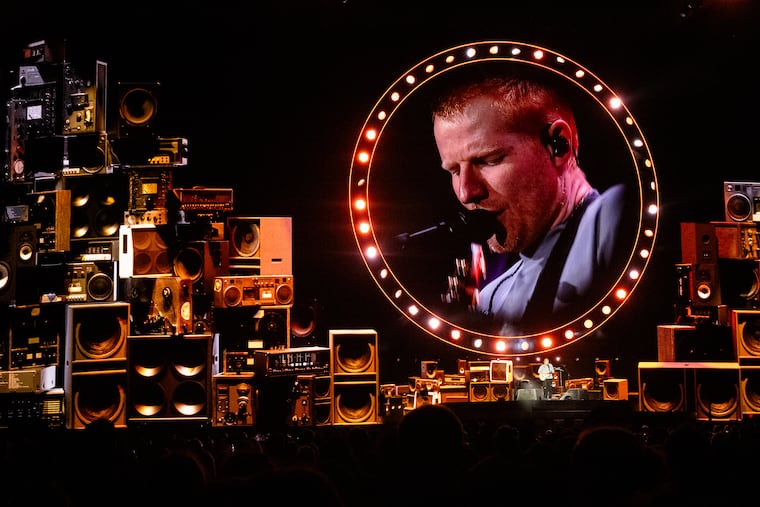
The studious, bookish 42-year-old Icelandic pianist has arrived at the top of the classical world with best-selling recordings, a carefully curated image, album covers that are vaguely psychedelic, and a lighting design that surrounded his piano in a deep blue halo at the darkened Marian Anderson Hall. The 80-minute Beethoven-dominated recital had no intermission and came with requests for no between-piece applause.
A séance of sorts? Even an Ólafsson skeptic would have to admit that the spirit of Beethoven was indeed conjured, along with much else in a program with most pieces in the key of E minor.
Yet for all his air of artistic necessity, he’s hardly an aloof personality. His self-authored program notes are lucidly and highly personal. By the end, he was chatting amiably to the audience, played three encores, and said he loves the Marian Anderson Hall’s acoustics. Having played here two years ago (presented by the Philadelphia Chamber Music Society), he’s already planning a third visit.
Artistically, the Ólafsson package suggests a later-day Glenn Gould, but that shortchanges his distinctive vision. Gould’s originality was often mixed in with eccentricity, occasional perversity to do the wrong thing plus a pharmaceutical influence in later years.
But Ólafsson — even in his early recordings made in Iceland after his Juilliard School graduation — is very much a thinking pianist, anchored in music history (how the past turns into the future) as well as his unabashed love of what he’s playing.
He’s not a consistent miracle worker, however.
His 2024 performance of Brahms’ Piano Concerto No. 1 with the New York Philharmonic was a work-in-progress. The concert exactly replicated his most-recent Deutsche Grammophon recording, titled Opus 109, which now seems like a work-in-progress compared to the far-more-compelling live version on Thursday.
Also, Ólafsson’s sonority needs to be heard in person. Overall, everything he does is super clear, which could easily become clinical. Yet he insists that all relevant working parts of the music are heard with full emotional impact in panoramic sound pictures that he creates. His recordings display what he thinks; the live performance was what he feels. The primary marvel is the diamond-hard bass notes — hugely imposing but never blotting out the treble range.
In his pursuit of a musical through line, his strongest dramatic trajectory was heard in Bach’s Partita No. 6, which begins at a minor-key flourish that’s as emotionally unfiltered as Bach could ever be. It’s typically stated as an abrupt confrontation. Ólafsson was surprisingly low key, giving himself space to build a trajectory, aided by bringing out the inner voices of this dense music in ways that elude even the best harpsichordists.
A through line was harder to find in Schubert’s youthful, unfinished Piano Sonata D. 566, though Ólafsson’s probing treatment gave credence to his claim that the piece is a significant discovery.
In the two Beethoven sonatas (No. 27 Op. 90 and No. 30 Op. 109), Ólafsson stayed close to the score markings in the recording, with little of the flexible tempos and rhapsodic freedom in performance.
In the great theme and variations movement that ends Op. 109, Glenn Gould made each section explode with contrast; the no-less-eventful Ólafsson maintained a greater sense of what each variation drew from the others. The final moments can seem to end the piece casually, though his slow but beautifully-sustained tempo created a great sense of arrival.
Footnote: After so much music in E minor, this sonata is the brighter E major. Smart planning.