For decades, a Pa. couple quietly collected art. Now their trove featuring Matisse and Picasso could fetch more than $180 million.
Robert F. Weis, the chairman of Weis Markets and his family, lived in a home in Sunbury, Pa. where having a Matisse hanging above the couch was "as natural as the chair in the corner."
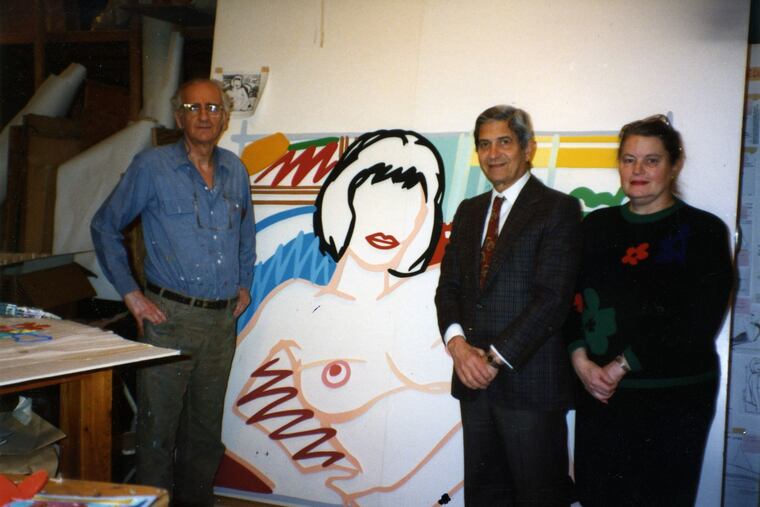
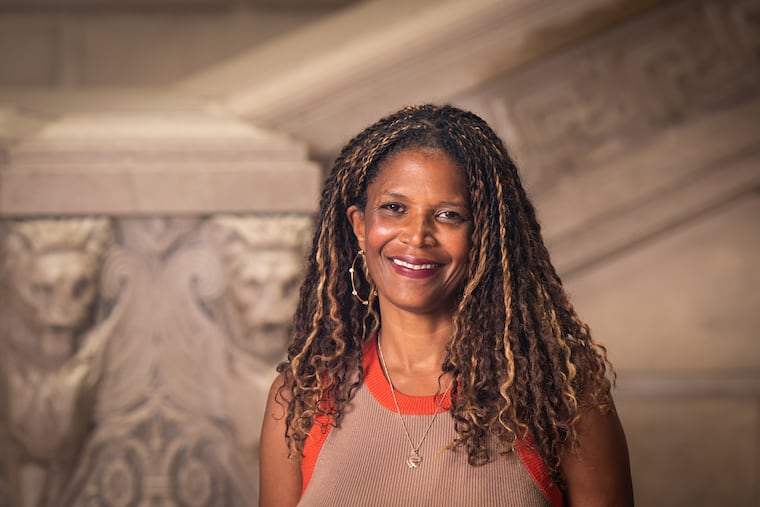
When Colleen Weis and her two siblings were growing up in central Pennsylvania, there were two rules for kids in the family home: Don’t put your feet up on the white couches and don’t bring food into the living room.
No particular rules existed around the 1937 Matisse that hung above the white couch, which may now fetch up to $25 million. Or the 1932 Picasso, valued at approximately $40 million, displayed behind the piano nearby.
“It was just that we lived with these beautiful works of art,” Weis said. “We were surrounded by them.”
Colleen’s father, Robert F. Weis, was the heir to, and chairman of, Weis Markets, the regional supermarket chain. When he wasn’t busy running the multimillion dollar company, he and his wife, Patricia G. Ross Weis, collected artwork.
Over the course of 60 years, they built a trove of modernist treasures, including works by Piet Mondrian, Joan Miró, and Mark Rothko.
That collection, assembled quietly and displayed in their homes in New York and rural Pennsylvania, is now headed for sale at Christie’s major fall auctions. Encompassing paintings, sculptures, and ceramics, the 80 pieces will likely bring in upward of $180 million, according to a Christie’s release about the sale.
Robert Weis died in 2015 and Patricia Weis in 2024; Weis Markets is now run by their son, Jonathan H. Weis. The auction house guaranteed the couple’s three children — Colleen, Jennifer, and Jonathan Weis — who are together selling the collection, a minimum payout that likely nears $200 million in advance of the sale, according to the New York Times.
In spite of the extraordinary value of the works, the art was all displayed in the homes where the Weis family spent time: a New York City apartment and the one-story ranch house that the couple built in the 1960s in Sunbury, Pa.
Unlike other collectors, who often put valuable works in storage or lend them to museums, “they never wanted paintings to be away for extended periods of time, because they didn’t want blank walls,” Colleen Weis, the couple’s middle child, who lives in New York City, said. “They really wanted to take pleasure in their pictures.”
That meant some of the works had so rarely been seen in public that even art world professionals had only seen them reproduced in books, said Max Carter, Christie’s vice chairman of 20th and 21st century art.
Carter was particularly impressed with how the Weises accumulated such a rich, varied collection in the era they did.
These days, art collectors have quick access to enormous amounts of information to choose what to buy. But “back then, the only way of doing what they did was through study, through travel, through looking carefully, and through patience,” Carter said.
When he visited the ranch house in Sunbury to see the collection earlier this year, he encountered a “wonderfully lived-in family atmosphere,” he said, in which Picasso, Matisse, and other great artists hung within each other’s sight lines in the living room.
Weis said her father’s favorite hobby was reading his art books and reviewing catalogs. At home in Sunbury, he had spotlights installed in the living room; she recalled him switching off the regular lights and gazing at the artworks in the spotlights’ glow.
The masterpieces were woven into the kids’ daily lives, “as natural as the chair in the corner,” Weis said.
The couch pillows matched the living room Matisse. As a teenager, Weis took photos with her friends in front of a Picasso in the front hall. That painting, a stormy portrayal of the artist’s lover Françoise Gilot, was the only one her parents ever sold or traded away, she said, later replacing it with a dreamy portrait by Picasso of his lover Marie-Thérèse.
The family took a vacation to La Ciotat, in the south of France, to witness the spot where Georges Braque painted a vibrant early 1900s landscape they owned.
Selling the collection is bittersweet for the Weis siblings because it involves a dismantling of what their parents so painstakingly built, Weis said. But she is sure that it’s what her father would have wanted.
“He always said: ‘We’re custodians of this collection. It will go to others,’” she recalled. “It will be their chance to enjoy these masterworks.”