Philadelphia Jewish Film and Media is being ‘formally integrated’ into the Weitzman Museum
The Jewish media organization has worked out of the museum for four years. Now the two are making their relationship official.
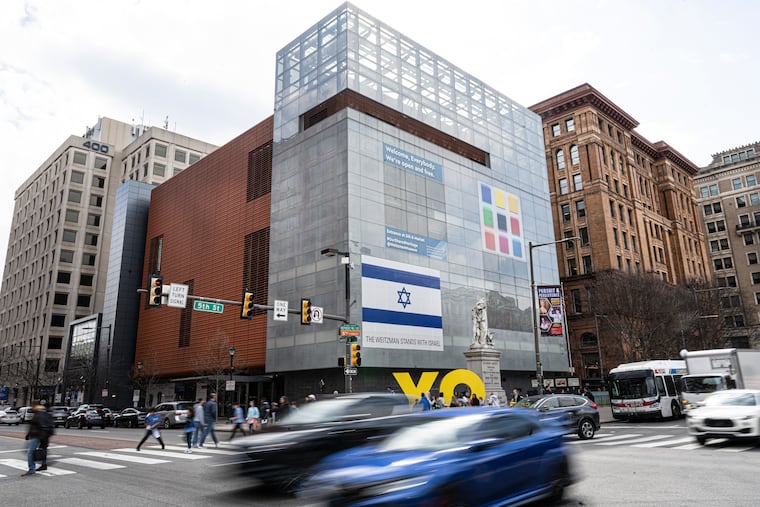
The Weitzman National Museum of American Jewish History has, for the last several years, been the main venue and sponsor for events hosted by Philadelphia Jewish Film and Media (PJFM), including its annual fall film festival. For the last four years, the PJFM has had its offices in the Weitzman building after years of working out of the old Gershman Y building on South Broad Street.
Now, the two entities are making their relationship official.
PJFM will now be “formally integrated” into the Weitzman, the museum announced on Monday.
“PJFM is becoming a program of the Weitzman,” said Dan Tadmor, the Weitzman’s president and CEO. “Whereas up until now we’ve been close associates and collaborators — increasingly close — now it’s just a complete synergetic, full integration.”
The coming together of the organizations has been in the works for a long time, Tadmor said.
The PJFM will keep its name, identity, and branding, while its executive director, Kristen Arter, will join the Weitzman as its major gifts officer, arts and culture. Beth Becker, formerly PJFM’s program logistics and operations manager, will serve as the programming manager on the Weitzman Museum’s public programs team.
“To me, this official integration is a natural next step, built on the years of growing programmatic synergy between PJFM and the Weitzman,” said Arter. “PJFM has always evolved in response to the community while staying true to its mission, and I believe this thoughtful integration gives that work a strong foundation and room to not just thrive but to grow.”
The annual Jewish film festival, which is the oldest film festival in Philadelphia, will still take place in November, this time for its 46th year. PJFM will continue to hold its year-end film programming events.
“Their expertise is great. This is the second-oldest Jewish film festival in the country. They know their stuff,” Tadmor said of the PJFM team. “We know public programming and have a rapidly growing public programming slate.”
“So when you bring these two things together, I think what we’re talking about is a film festival that will gain more and more regional and national prominence,” said Tadmor. The two organizations, he said, can now combine their marketing and database resources.
“PJFM’s screening and advisory structure remains in place, along with the thoughtful programming approach and perspective that audiences have come to know and trust,” Arter said. “People can expect the same curatorial voice and the same commitment to high-quality, meaningful, and enjoyable programming.”
New this spring from PJFM is the “Docs and Dialogues” series, where a series of documentary screenings and talks is scheduled to take place in May, which is Jewish American Heritage Month. PJFM will also continue to hold non-film events, such as the “Unapologetically Jewish” social media contest.
“There’s a group of staunch supporters of PJFM,” Tadmor said. “Their support will now simply go further, because we’ll be able to catapult this and create more and more impact.”