West Chester’s star-studded poetry meetup has a new twist: Cheap tix for schoolteachers
The West Chester University Poetry Conference is one of the country's biggest and best regarded. Along with reaching out to teachers and students, the organizers have recruited a diverse group of presenters.
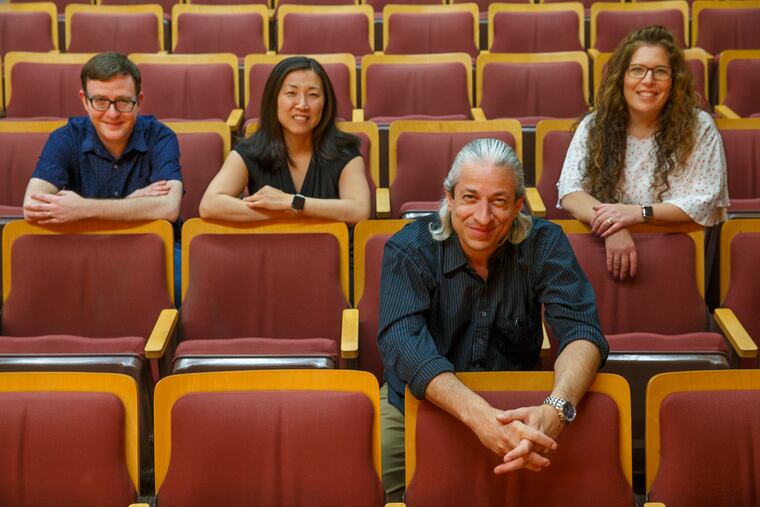
The West Chester University Poetry Conference is throwing the doors wide open.
Since 1994, West Chester has been the yearly destination of famous poets, would-be poets, teachers, and poetry lovers. Running this year from June 5 to 8, the gathering has earned a reputation as one of the biggest and best in the country.
Now, thanks to new management and a refreshed outlook, West Chester is seeking diversity in the big names, the kinds of poetry discussed, and, most of all, the people invited, as in students, teachers, and people of different backgrounds.
“Art has to stay alive,” says Jesse Waters, artistic director since January 2018, “and that means young people.” Waters has rejiggered admission fees so it’s easier for students and teachers to attend, and he’s bringing in new names and themes.
But what about West Chester’s hallmark, its stress on form, the tough, hands-on structuring and shaping of poems? That stays, Waters says: “We want to make sure the young poets out there who are as obsessed as we are with form know they have a place where they can come to grow and contribute.”
But U.S. poetry is busting out all over. “The American way of poetry is growing and changing all the time,” Waters says, “and we don’t want to lose that sense of vitality and exploration.”
The bumpy road to now
It’s been a bumpy road for the conference during the last few years. After concerns about finances and leadership, it went dark in 2015. Interim director Sam Gwynn resuscitated it in 2016-17, but in a decision that caused controversy in the poetry world, his appointment was not renewed. Waters was brought in and has breasted the tide handily, eager to reassure the old guard and welcome the new.
Welcome starts with ease of access. A new pricing structure aims to make it easier for students to attend. Though full-on admission for all five days runs to $549, students can attend for $299 (meals and housing included), or $199 (meals only). Waters says that “speaking anecdotally, our registration numbers are running healthily ahead of last year." (Information on registration is at wcupa.edu/poetry.)
For teachers, there’s an all-day Saturday session called “Teaching Poetry: Connecting Head with Heart,” taught by conference veterans Rhina Espaillat and Jennifer Ozgur. It’s priced at $49, or $59 with lunch.
As for big names, both old and new will be on hand. Mainstays include keynoter David Yezzi and fine poet/teachers like Espaillat, Ned Balbo, and Jane Satterfield.
One of the fresh names this year is Jericho Brown, a poet from Emory University in Atlanta. He’s both a voice from right now and the inventor of a new form called the “duplex,” a richly ironic verse form with stanzas of two lines each. The second line becomes the first line of the next couplet, except ... something’s different. Here’s a taste, from his poem titled “Duplex”:
A poem is a gesture toward home.
It makes dark demands I call my own.
Memory makes demands darker than my own:
My last love drove a burgundy car.
My first love drove a burgundy car.
He was fast and awful, tall as my father.
Steadfast and awful, my tall father
Hit hard as a hailstorm. He’d leave marks. ...
Brown’s workshop for the conference is called “Jumpstart Your Engines,” and it runs for three days. “I’m completely excited about contributing to a conference with the history that West Chester has,” he says.
Brown is a big reason Julia Mallory, 36, is traveling from Harrisburg to take part. “I’m a black woman,” Mallory says, “and many times I’ll look at an event and ask, ‘Are there going to be people there, not just “who look like me” but who are doing the type of writing I’m interested in?’ A poet like Jericho Brown teaching a three-day workshop really sealed the deal for me.”
The West Chester atmosphere — “of almost familial warmth and conviviality,” as Espaillat puts it — also works for Alexander R. Murphy, 25, from Atlanta. He “went blindly in 2017,” he says, and was ready to feel intimidated. “But everyone was very welcoming and nice to me — and they were some of the smartest people I ever met.”
Which is saying something — because Murphy is a graduate student in mechanical engineering at Georgia Tech. He minored in English as an undergrad at the University of South Florida, and an English teacher impressed with his poetry chops encouraged him to try out West Chester.
He went again last year. “It was clear there had been a regime change,” he says. But he liked it: “The biggest difference was the participation and inclusion of a younger audience, way more college students. I made many more connections last year with people my age.”
Chad Abushanab won the coveted Donald Justice Poetry Award last year at the conference; it goes to the best book-length collection of poetry that pays attention to form. “When I heard about West Chester,” he says, “I thought, ‘I’ve found my people.’ The word I keep coming back to is community.”
Abushanab, 33, who identifies as an Arab American poet, says that “as a somewhat younger poet of color who writes in formal verse, which isn’t always the most popular kind of poetry in some areas, I can’t tell you how encouraging it was, how much impact it’s had. I woke up this morning with a poem in the New York Times Sunday supplement.”
He says Waters “is bringing in more diverse voices and trying to angle for younger poets, people who are newer to poetry in general. That is really important if we want to keep poetry alive.”
Waters keeps expanding the pool and has spent the last 17 months reaching out to college and high school groups.
Matthew Kay is a teacher at the Science Leadership Academy and founder of the Philly Slam League, a poetry program that involves around 300 students from 22 schools all over town.
He says Waters “has been a judge in Slam League events for the last two years and has sent poets to talk to the league.” An early end of the school year prevented kids from attending this year’s conference, Kay says, “But we’re going to start next year. Jesse and I have been talking about the possibilities. I’m excited about what could happen.”