His world premiere got shelved, but Wynton Marsalis wowed this week at the Philadelphia Orchestra
The orchestra concert this weekend also includes Beethoven's 'Symphony No. 7.'
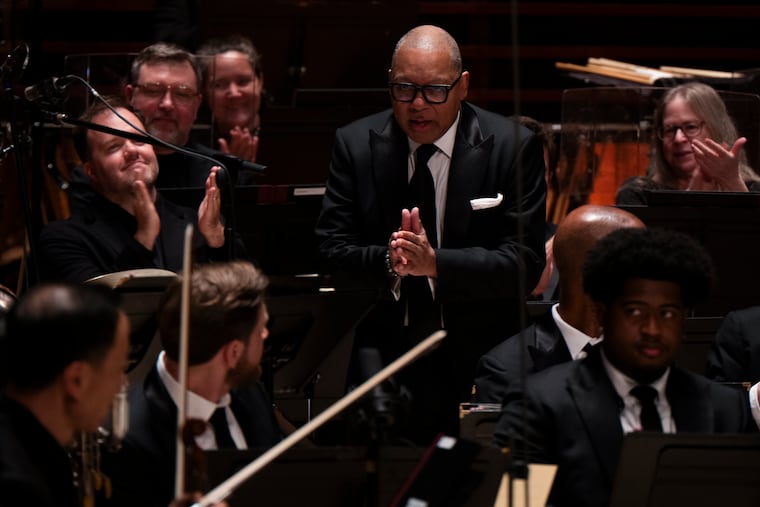
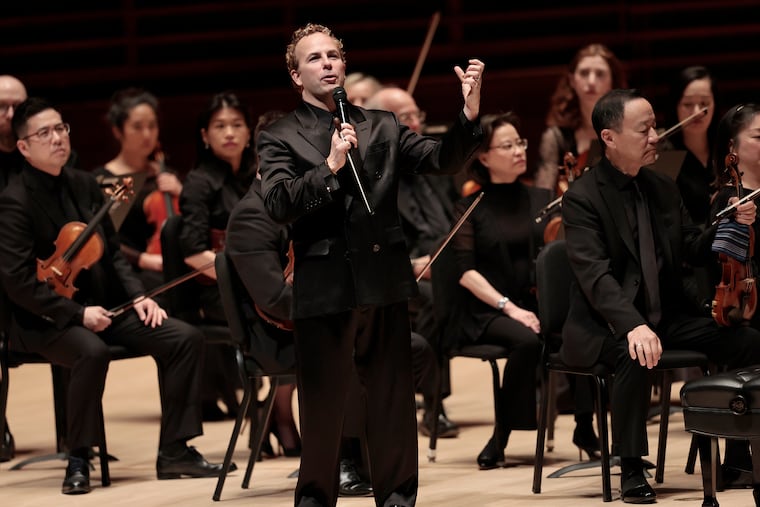
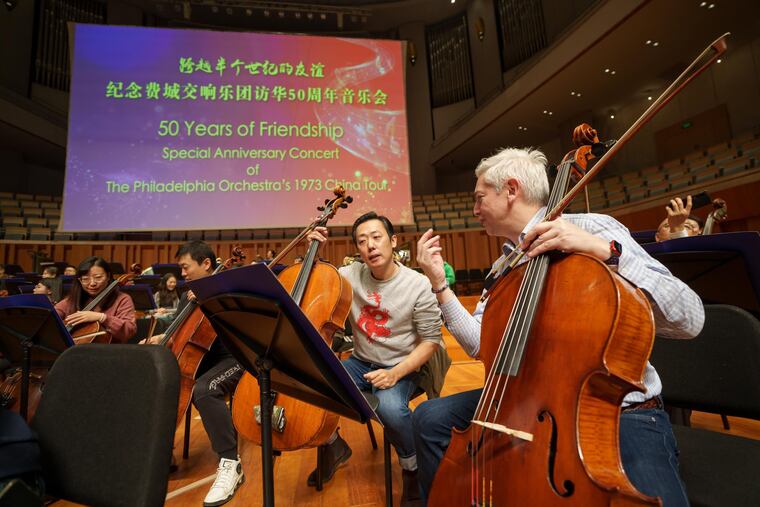
The world will always need a new Wynton Marsalis symphony, though his newest one will have a postponed Philadelphia Orchestra premiere, replaced Thursday by his massive 2016 Symphony No. 4 (“The Jungle “) in excerpts that nonetheless wowed the Kimmel Center audience.
Let’s not try to speculate what Marsalis has in store with the still-in-progress Symphony No. 5 (“Liberty”) commissioned by the Philadelphia Orchestra, since his orchestral works are a hugely varied succession of aural photographs, with every possible note at his disposal, plus his imaginative, ever-more-meaningful use of sound.
The trumpeter/bandleader/composer, 64, has a multidecade history of jazz at its most sophisticated, and his admirers would have to be deep-listening concertgoers, ready for bracing new sounds, as well as being open to principal guest conductor Marin Alsop performing Beethoven on the program’s first half.
An integral part of the two-hour concert was Marsalis’ 15-piece Jazz at Lincoln Center Orchestra that’s so much an extension of his aesthetic that you can barely tell where his playing ends and the other players begin.
The hectic musical density of “The Jungle” recalls the Brazilian symphonies of Heitor Villa-Lobos, though the Marsalis jungle is no rainforest, but the harder-edged, cheek-by-jowl mash that is New York City. The three (out of six) movements heard on Thursday were explicitly programmatic, beginning with the first, subtitled “The Big Scream, Black Elk Speaks,” with references to the Indigenous population that once dominated Manhattan. Black Elk was arrestingly vocalized in a movement that had lots of instrumental sections rushing concurrently in similar directions and not exactly at the same time. Exhilarating to say to the least.
If meant to be a musical travelogue, the following movement, subtitled “Us,” went between neighborhoods and time periods, 1920s Harlem being heard in solo piano writing. Later down the road, John Adams-style minimalism crept in (specifically The Chairman Dances), full of giddy cross-rhythms that sat well with Marsalis’ buoyant sense of dance. The final movement, subtitled “Struggle in the Digital Market,” is a warp-speed succession of ideas mercilessly crowding each other, trolls and all, with dissonances, squalling brass, and relentless rhythm in a Hieronymus Bosch-like vision.
Though the big moments in the piece deployed the orchestral forces with great color (an augmented array of percussion fanned out over the back of the stage), the string players were so overshadowed by the Jazz at Lincoln Center Orchestra that one could see the players bowing and not hear much of what they were doing.
An acoustical problem? In any case, one missed the kind of layers that are apparent in the two recordings of The Jungle I’ve heard (one from Australia, another from Romania), though never was the overall impact lacking. And Alsop not only managed the tricky tempo changes more fluidly than any other performances I’ve heard, but also revealed how eloquent they could be.
Footnote: The concert’s second half began with the Lincoln Center group without the Philadelphia Orchestra playing three shortish pieces — La Cumbia de Paz by Carlos Henriquez, Unembeza by Nduduzo Makhathini, and Origin by Elliot Mason. All were attention-commanding and well-made (especially Mason’s), but smaller in scale and ambition, probably belonging in a concert where one could hear them without anticipating a big Marsalis symphony to come.
And Beethoven? The Symphony No. 7 was a canny choice since it’s very much based in dance, and Alsop’s extroverted way with the music was perfect for those who didn’t come for Beethoven. The between-movement applause suggested there were a fair number of them. It was muscular, weighty when necessary but manically upbeat when not, with growling French horns plus extra-propulsive bass lines, showing everybody at their best. By the way, Alsop seemed to be having the time of her life.
The program is repeated Saturday at 8 p.m. and Sunday at 2 p.m. in Marian Anderson Hall, Broad and Spruce Sts. Tickets are $55-$241. philorch.org, 215-893-1999.