AI spending is helping prop up the economy. Now it’s getting stronger.
Google, Meta, and Microsoft will invest billions more on infrastructure, including data centers, expanding a boom that is driving U.S. economic growth.
SAN FRANCISCO — Despite doubts about a bubble, tech companies are doubling down on artificial intelligence spending, expanding a boom that is powering the stock market at a time of uncertainty.
Tech giants including Google, Meta, Amazon, and Microsoft are ramping up their spending, investing billions on infrastructure, including data centers, that will expand their capacity to power AI software.
The U.S. stock market rose on Friday following strong results from Apple and Amazon. Amazon shares soared 9.6% after the company reported strong quarterly earnings, including that cloud sales had grown 20% to $33.0 billion.
Amazon CEO Andy Jassy said Thursday that the company would accelerate its capacity to offer AI services. “AWS is growing at a pace we haven’t seen since 2022,” Jassy said. “We continue to see strong demand in AI and core infrastructure.”
The revised spending plans mean that Google, Meta, Microsoft, and Amazon are set to spend nearly $370 billion this year on construction of data centers, electricity-guzzling facilities packed with powerful computer chips used to create and run AI software such as ChatGPT.
But tech giants’ pledges to increase AI investment come after industry leaders, including Meta CEO Mark Zuckerberg, have said the sector has inflated a financial bubble around the technology that could burst, causing a downturn for tech firms that could ripple across the economy.
“It’s a green light for this AI arms race that’s happening in Big Tech,” said Wedbush Securities analyst Dan Ives. “The AI revolution spending is meeting and actually exceeding the hype, which goes exactly counter to the bubble argument.”
Tech companies’ investments in AI infrastructure arrives during a period of uncertainty for the U.S. economy. Even as inflation remains high, the Federal Reserve cut interest rates on Wednesday, citing the weakening labor market. Major companies such as Amazon and UPS are among those that announced mass layoffs last week, while the federal government shutdown affects federal contractors.
Silicon Valley’s investment in AI has been “a huge boost to the economy,” Ives said. “Without AI, you could argue the economy is tinkering towards a recession.”
Despite the popularity of apps such as OpenAI’s ChatGPT, the chatbot and many other recent AI ventures remain unprofitable. A pullback on AI spending and expectations for the technology could harm tech companies dependent on speculative investment, undermine businesses across the nation that have been buoyed by data center construction and wipe billions off the value of tech stocks sitting in retirement accounts.
Google chief financial officer Anat Ashkenazi said on an earnings call Wednesday that the company would spend between $91 billion and $93 billion this year on AI, an increase from its previous estimate of $85 billion.
Meta said its AI spending would be at the high end of its previous estimate of $66 billion to $72 billion and “notably larger” next year, in commentary released with its earnings report Wednesday. Microsoft said in its own report that it also expects its AI spending to grow in 2026, increasing from its anticipated outlay of $80 billion this year.
Recent investments in AI data centers and business spending on AI software dwarf previous tech booms such as the initial investment in internet infrastructure. By translating into more business for not just the tech sector, but also construction, trucking, and energy firms, AI investment has delivered an economic shot in the arm that has helped boost U.S. economic growth despite flagging consumer spending and a softening labor market.
OpenAI chief executive Sam Altman and Meta’s Zuckerberg have committed to huge spending on AI infrastructure, but both have also said they believe the industry has created an investment bubble that could lead to financial losses for some companies. (The Washington Post has a content partnership with OpenAI.)
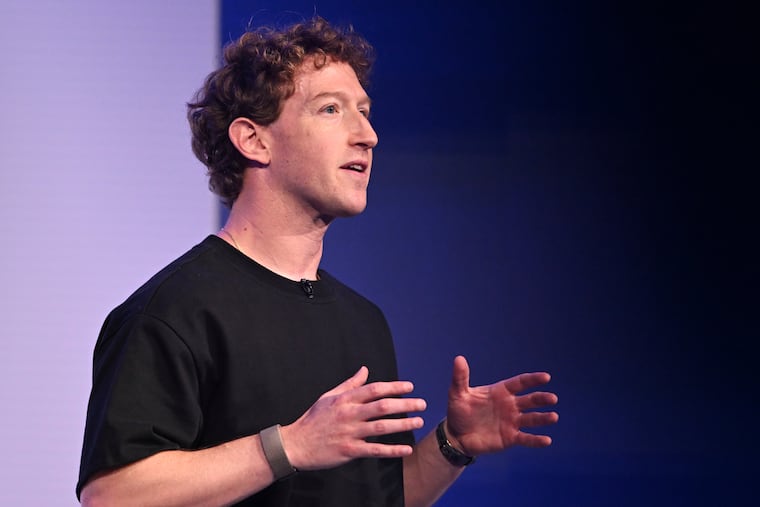
Zuckerberg said on Meta’s earnings call Wednesday that the company’s drive to build “superintelligence” — a term for machines hoped to one day outperform humans in every way — makes the risk of overinvestment worthwhile.
Meta’s increased spending will impact its profit margins, putting more pressure on the company to show it can make money from AI, Josh Beck, an analyst with Raymond James, said in a note to clients Thursday.
Zuckerberg acknowledged that Meta may be overspending on AI but said that if the technology didn’t deliver as hoped, the company could adjust. “In the worst case, we would just slow building new infrastructure for some period while we grow into what we build,” he said.
A major slowdown in data center construction would have knock-on effects outside of the tech industry, including in the energy sector, where the facilities’ power demands have increased electricity consumption and brought new investment.
On Tuesday, Google said it would reopen a defunct nuclear power plant in Iowa to provide more electricity to power its facilities. The deal follows one struck by Microsoft last year to reopen the Three Mile Island nuclear plant in Pennsylvania. This week, OpenAI asked the White House to double the amount of new electrical power generation the United States builds each year, to compete with China’s ability to provide more energy to its own AI industry.
Investors continue to bet that the tech industry’s huge expectations for AI will be met.
Nvidia, the computer chip company whose products are instrumental to training AI algorithms, on Wednesday became the first company to reach a market value of more than $5 trillion. Its stock rose after President Donald Trump mused ahead of his meeting with Chinese President Xi Jinping that he may ease restrictions on sales of the company’s most powerful chips in China.
Wednesday’s announcements suggest investors will continue to back companies driving and benefiting from the AI investment boom, Gene Munster, managing partner of Deepwater Asset Management, said in a video posted on X. “These companies are continuing to talk about spending and investing much more than we thought three, six months ago,” he said. “The AI trade is intact.”