Who gets cheap flights and hotel upgrades? AI will decide.
Delta has incorporated the technology into pricing, and Hertz has used it to assess damage. Frequent travelers are wary. Some lawmakers worry about surveillance pricing.
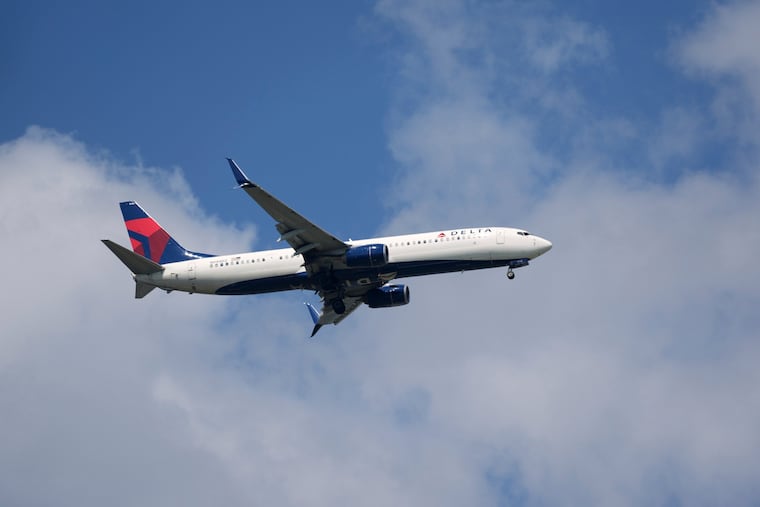
When Jason Kao started traveling regularly, Delta Air Lines was the easiest option. For the past 10 years or so, Kao, 34, has often flown out of Raleigh-Durham International Airport in North Carolina, where Delta has plenty of flight options. The rewards started piling up as he traversed the country for work as a cybersecurity adviser. But now that Delta is increasing its use of artificial intelligence in its dynamic pricing model, Kao’s loyalty is wavering.
“When the prices potentially may be a lot higher because of using AI to set prices, I may not be getting as good of a deal,” Kao said, noting that he could start earning similar loyalty perks with other airlines. “Is there much of a reason for me to stay loyal to Delta?”
Kao’s doubts arrived after Delta president Glen Hauenstein said on an earnings call in July that he wants the airline to increase AI-based pricing to nearly 20% of domestic flights — up from the current 3% — this year. Democratic senators voiced their concerns in a letter to Delta and asked for clarity about how the AI is used; Rep. Gregorio Casar (D., Texas) introduced a bill in the Republican-led House to “prohibit certain uses of algorithmic decision systems to inform individualized prices.”
Delta is one of many large companies adopting artificial intelligence to change the way we travel. In April, Hertz confirmed that several of its locations are using AI-assisted scanners to assess damage and send reports to customers without employee input. As of July 14, Marriott is using AI to assign hotel rooms and decide which loyalty members get upgrades.
This wave of AI implementation comes after travel agents have used chatbots and other technology to help arrange and book trips for years. For travelers, price fluctuations and less human interaction could be more common.
Dynamic pricing isn’t new for Delta, but some customers and consumer advocates worry about supercharged AI pricing that could be based on personal information. Those fears were bolstered by comments that Hauenstein made at Delta’s Investor Day in November, when he expressed hope “to have a price that’s available on that flight, on that time, to you, the individual,” using technology from Israeli start-up Fetcherr.
Shortly before the collaboration with Delta, Fetcherr CEO Roy Cohen spoke to Forbes about collaborating with airlines.
“We’ve been training our engine, using all the data we can get our hands on,” Cohen said last summer. “We are very stealth about how we work.”
An opaque process
Recently, Delta published a letter that chief external affairs officer Peter Carter sent to the concerned senators denying that the airline uses personalized data in the AI-based pricing model. He said there is “no fare product Delta has ever used, is testing or plans to use that targets customers with individualized prices based on personal data.”
Carter also said Delta is not sharing personal data with Fetcherr and does not require customers to log in to see prices.
When Lina Khan heard about Delta’s new pricing model, she thought it sounded like surveillance pricing, a term for companies’ use of personal data to charge different rates to different customers. As the chair of the Federal Trade Commission in the Biden administration, Khan studied the practice. The FTC did not respond to the Post’s questions about whether the Trump administration will continue studying it.
Even if Delta isn’t using people’s wages or recent searches, the lack of clarity around companies like Fetcherr worries Khan, who had not studied Delta’s new tactics in detail.
“AI and these algorithms can turbocharge the ability to engage in surveillance pricing,” Khan said. “It’s very salient for that reason. A lot of technological advances that we’re seeing in machine learning are happening concurrently with even more and more personal information being collected.”
The data opacity is part of what led Casar to introduce the Stop AI Price Gouging and Wage Fixing Act, which would ban the use of artificial intelligence to set prices based on personal data.
“Delta is the first of the [U.S.] airlines to say that they’re going to price a large number of their tickets using artificial intelligence and using models that are secret and not transparent to anyone,” Casar told the Post. “In a disaster scenario, an airline could increase the prices on your ticket because they knew that you Googled the family obituary and that you’re desperate to get to a family funeral. We cannot allow that to happen.”
Delta spokesperson Jessica Merrill said the airline complies with federal pricing regulations.
“A variety of market forces drive the dynamic pricing model that’s been used in the global industry for decades, with new tech simply streamlining this process,” Merrill said in a statement.
While many airlines have dropped bereavement fares, Delta offers “flexibility and discounted fares for SkyMiles Members needing to travel due to the death of an Immediate Family member” according to its website.
Some frequent Delta fliers have considered a VPN or private browsing window in case such data is being used. Others have figured that the pricing model could help, especially if the data shows their unwillingness to pay more for a ticket.
While Virgin Atlantic has used Fetcherr’s AI-pricing technology since 2023, American, Southwest, Alaska, and United said they do not use AI to determine costs for travelers.
Z. John Zhang, a professor at the University of Pennsylvania who studies pricing strategies, said consumers might be surprised if all airlines plan to use this form of pricing. As long as airlines are competing with each other, they’ll pursue customers with lower fares.
“Ultimately, everybody will catch up. Everybody will go in that direction and, in the end, suffer as firms,” Zhang said. “Of course, that’s good for the consumers. If the airlines compete harder against each other, they don’t make a lot of money and people will travel at a lower price.”
AI-generated charges for rental car damage
At six locations across the country, Hertz car rental service detects damage on its vehicles by taking high-definition photos and comparing them through an AI program from the company UVeye. In the case of a notable ding or crack on a car, the system automatically sends a report to the traveler and asks for payment, Hertz spokesperson Emily Place said. If a customer disputes the charge, a Hertz employee reassesses the reported damage.
The new scanners haven’t had a seamless transition. When Adam Foley headed to Atlanta to visit his brother in late June, Foley rented a car from Hertz without thinking twice. Upon arriving back in San Antonio, he received a text message from Hertz that included photos of damage and a charge for $350.
He said it was the last time he would be renting with Hertz.
“You had to 5X zoom in and really look side-by-side to even maybe get what is going on there,” Foley said.
To Foley, who advises companies on how to integrate AI and automation, Hertz isn’t thinking about the customer’s satisfaction. He disputed the charges, but his protests were futile.
“I tried communicating,” he said. “They had a chatbot [asking], ‘Do you have any questions?’ on that same page. Any question you had, it looped you back to a policy page. There was no break in it to get to a human.”
Foley hasn’t paid the charges.
‘No need to fight it’
In June, Marriott chief technology officer Naveen Manga said at an event hosted by Skift that Marriott was working with AI technology to automate room assignments. Travel publications One Mile at a Time and View from the Wing reported that as of July 14, Marriott’s Automated Complimentary Upgrade system decided through an AI model which royalty members would receive upgrades.
“This advanced system will automate the upgrade process, transforming it from a manual task into a swift operation completed in seconds,” Marriott spokesperson Kelly Lavin said in a statement. “Eligible members will benefit from increased visibility into their upgrades with advanced notifications, creating more anticipation before arrival and enhancing their overall experience.”
When Greg Guiteras, CEO of Florida-based Lorraine Travel, heard about Marriott’s new system, he knew frequent travelers might be upset. But Guiteras said the AI upgrades system could do away with the connections and tactics commonly used to get upgrades, making it easier for Marriott customers to get rewards if they’ve earned them.
To illustrate his point, Guiteras used a hypothetical hotel guest.
“Mr. Smith, who might have had a good connection with the room director at a hotel in Memphis, no longer has that connection,” Guiteras said. “When Mr. Smith calls that contact and says, ‘Hey, I’m going to be there like usual on Friday; can you get me that upgrade?’ that other guy’s probably going to say, ‘Hey, AI handles this right now. I’ll do my best.’”
Guiteras says that by using AI, his company can compete better with larger travel services. While talking with travelers, the agents at Lorraine use a chatbot to quickly source hotel prices or pull up pictures of potential lodging. The accuracy of the bot has been strong enough that Guiteras may let his customers use it.
His optimism expands to situations like Delta’s or Hertz’s, even if consumers are uneasy about using AI.
“I’m sure that there are cases where people get surprised by it,” Guiteras said, confident that consumers will still want his services. “But, hey, it’s going to be around. There’s no need to fight it. In fact, I’m all about embracing it.”