Trump administration launches bold air-taxi push
The administration is seeking to boost U.S. companies as they compete for dominance in the burgeoning air-taxi sector, with an eye toward showcasing the technology at the 2028 Olympics in Los Angeles.
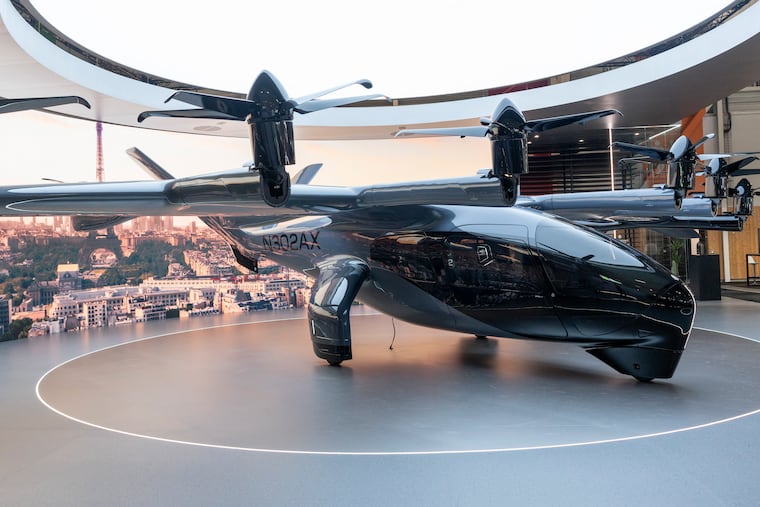
The Trump administration is seeking to boost U.S. companies as they compete for dominance in the burgeoning air-taxi sector — with an eye toward showcasing the technology at the 2028 Olympics in Los Angeles.
Through executive orders — as well as a new effort to gather data that could help fast-track adoption of these aircraft — the administration has embraced it as part of its transportation agenda.
In September, Transportation Secretary Sean P. Duffy announced the launch of a pilot program aimed at exploring ways to integrate these technologies — including air taxis, more formally known as electric vertical takeoff-and-landing aircraft — as well as hybrid-electric and battery-powered planes into the nation’s aviation system.
For decades, the dream of flying above traffic-clogged roadways has been just that — a dream. But companies such as Archer Aviation, Joby Aviation, and BETA Technologies are pitching their battery-powered aircraft, which take off and land vertically, as a way to revolutionize the way people travel. Meanwhile, Wisk, a Boeing subsidiary, and Reliable Robotics are working on versions that can operate without a pilot — an innovation that could improve the economics of air service and cargo delivery to smaller and more isolated communities.
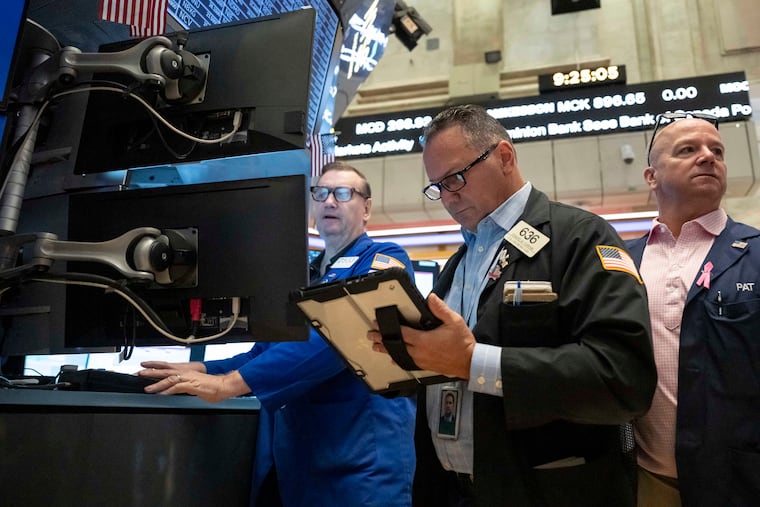
BETA Technologies raised more than $1 billion when it went public on the New York Stock Exchange last month, and investors have poured millions into the sector. However, questions remain about whether it will live up to the hype. A plan for air taxis to transport spectators during the 2024 Paris Olympics fizzled, while other high-profile ventures have faltered. Lilium, a German eVTOL company, received an infusion of cash after filing for bankruptcy last year, but was still unable to continue operations, filing for bankruptcy again earlier this year.
Experts say one key to financial success is making the leap from a novelty for the rich to a transportation option for the masses. Skeptics say the technology is still too unproven to merit government support.
“We’re talking about spending taxpayer money on something that’s not here yet,” said Rep. Scott Perry (R., Pa.) at a House hearing last week. “The private sector is free to chase this enterprise. As I see it, it can’t beat the physics of a 1960 helicopter.”
Pilot program hopes
The public may soon see how these new types of aircraft could change how people and goods move.
Dec. 19 is the deadline for submissions to the administration’s Electric Vertical Takeoff and Landing Integration Pilot Program (eIPP). Modeled after a similar initiative for drone operations launched during President Donald Trump’s first term, it seeks to explore how quieter, cleaner, battery-powered aircraft that take off and land like helicopters can transform aviation. At least five applicants will be chosen.
“This program represents the launch of a new era of American aviation,” said Greg Bowles, chief policy officer at Joby Aviation, which has been working for more than a decade to bring its aircraft to market. He predicted it will “introduce Joby aircraft into the skies over major U.S. cities” starting next year.
Sapan Shah, senior director of portfolio management for Advanced Mobility at Honeywell Aerospace, said he expects significant interest from state and local governments across the country that are eager to explore how these new types of planes can benefit their residents. The data collected from the program will offer participants an early look at how these aircraft operate in real-world conditions, and what changes will be needed to incorporate them into existing transportation systems, he said.
Major players in the industry, including BETA Technologies and Joby Aviation, have already said they plan to apply for the pilot program. In September, Archer Aviation said it hoped to participate in the program alongside United Airlines, an early investor in the company. The selections are expected to be made in March, with operations anticipated within 90 days. The pilot programs are expected to run for three years; Joby and Archer also aim to have a fleet of air taxis flying Olympic spectators around Los Angeles in 2028.
The state of Michigan also plans to apply, said Bryan Budds, aeronautics director for the Michigan Department of Transportation. As part of a partnership with BETA Technologies, it has installed a network of chargers for electric aircraft at four airports. While much of the focus around air taxis is on how they can move people in dense urban areas, Budds said one potential use in Michigan is moving pharmaceuticals and medical goods to the state’s rural areas.
There’s also been movement in Congress, which included several provisions aimed at bolstering air taxis in last year’s Federal Aviation Administration reauthorization bill. The industry received another major boost that year when the FAA released standards for air-taxi pilot training and certification.
To supporters, a main case for investing in these technologies is to ensure the U.S. continues its dominance more broadly of the global aviation industry. China, for example, has already certified an air taxi capable of carrying passengers.
At the House hearing last week, lawmakers emphasized the importance of ensuring that lead.
“Either we choose to embrace and unleash American innovation, or we carry on with the status quo and watch as other nations surpass us in new and emerging technology,” said Rep. Troy E. Nehls (R., Texas).
Even in the early stages, experts say, such programs can yield valuable information.
With a demonstration program, “we’re getting technology out into the actual markets,” said Laurie Garrow, a civil engineering professor at Georgia Institute of Technology who has followed developments in advanced air mobility.
These real-world projects will help communities and the FAA understand how these aircraft operate in the existing air traffic system and where the pain points might be, and the data gathered will help policymakers as they attempt to scale up to larger operations, she added.
Savanthi Syth, an aviation analyst with Raymond James, said giving manufacturers and communities an early opportunity to “try out” the technology in controlled environments means that by the time the aircraft are fully certified, they won’t be starting at square one — they’ll already have information allowing them to move into the next phase of operations.
Said Syth: “This is a better way than ‘Oh, you have a certified aircraft but now you have to get community buy-in.’”