With deals booming and regulations lightened, bankers are back on top
After years spent playing second fiddle to private equity and hedge funds, 2026 is shaping up to be “the year of the bank,” one consultant said.
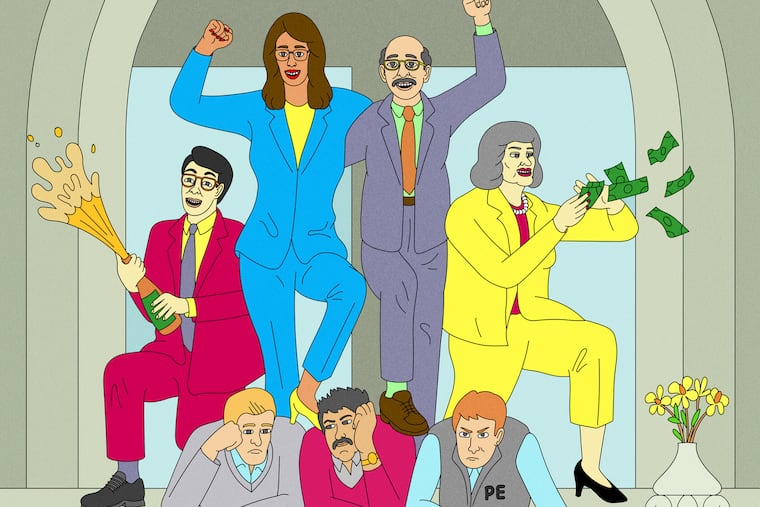
It is a golden moment for banks.
Trading profits are at record highs, and so are employee bonuses. Mergers, acquisitions, and other deals are piling up at the second-fastest pace in at least a decade, producing billions of dollars in fees. And after they operated for nearly two decades in what one banker described as a regulatory “straitjacket,” the Trump administration is making it easier for banks to expand and take more risks.
“The stars are aligning for banks in a way that hasn’t been seen in multiple decades,” Citi analysts wrote in a research note this month.
The good times for banks represent a flip of fortunes. Since the 2008 financial crisis, Wall Street’s biggest paydays have been earned by private equity and private credit firms, making often high-risk investments with the promise of high returns.
Lately, many of those private equity firms have struggled to raise money, as the industry has delivered lackluster investment returns. At the recent Milken Institute Global Conference in Los Angeles, a confab popular with the private equity set, the CEO of one giant investment firm compared the vibe, with some hyperbole, to the final days of Sodom and Gomorrah.
It’s also a tenuous time for many international businesses, with airlines going bankrupt, global ship traffic choked, inflation on the rise, and artificial intelligence roiling industries.
Many banks, by contrast, have followed the trajectory of Citizens Bank, a once sleepy Providence, R.I., institution that has been expanding rapidly and seen its share price rise by more than 50% over the past year.
“I feel great,” said Bruce Van Saun, Citizen Bank’s chair and CEO.
Citizens has been acquiring smaller specialist firms that are helping it to capitalize on a Trump-encouraged boom in corporate dealmaking, hiring up swaths of financial advisers that cater to the global well-to-do and opening up branches in wealthy neighborhoods.
Banks are insulated from many current macroeconomic pressures, increasingly catering to richer customers, whose wealth is largely tied up in a stock market that keeps hitting records despite the fighting in the Middle East.
In fact, the swings in oil prices and volatility in other markets caused by the war are benefiting the banks’ trading volumes, which brings in more fees. In the first quarter alone, nearly $50 billion in trading revenue flowed to the six biggest banks in America, including JPMorgan Chase and Citi, a record high.
“It’s interesting to see,” Matthieu Wiltz, co-CEO for JPMorgan in Europe, Middle East, and Africa, recently told Bloomberg Television, “that, for I think the first time, we have such a big conflict with limited impact on the market.”
JPMorgan recently announced that balances in its “prime brokerage,” which executes trades for wealthy clients, were at an all-time high.
Deals are also making a comeback after several sluggish years during the Biden administration, when mergers and acquisitions came under intense antitrust scrutiny. Big-money corporate deals are booming as the Trump administration waves through company tie-ups and, increasingly, encourages them directly.
And after a yearslong fallow stretch for initial public offerings — the business of listing privately held companies on stock exchanges — banks are salivating at the prospect of billions of dollars in commissions from offering shares in private companies including Elon Musk’s SpaceX and AI giants Anthropic and OpenAI.
The good times are encouraging the newest generation of bankers. In past years, Van Saun said, new college graduates would join banks and almost immediately begin applying for jobs elsewhere — a pattern that became known as “two and out,” a reference to the mass resignations by junior bankers after two years. Often, those young bankers were taking jobs at hedge funds, at technology firms, in venture capital, or in pretty much any other career more exciting or remunerative.
But now many young bankers are taking a look at what Van Saun calls “the travails” outside banking and increasingly staying put.
Banker pay is rising, too. Alan Johnson, founder of a namesake Wall Street pay consultancy, projects that investment bank employee bonuses this year will be 10% to 20% higher than in 2025, when New York’s finance set pulled in $49.2 billion in collective bonuses, with securities industry employees earning an extra $246,900 on average.
Johnson contrasted the imminent banker windfall with private equity pay, which he compared in many instances to “a lottery ticket that won’t be worth anything.”
“It is the year of the bank,” he said.
Although bankers are ebullient, that could change again.
One generator of the banks’ record profits are layoffs and attrition brought on by increasing uses of AI. Last week, Goldman Sachs’ president predicted in a television interview that he would replace his firm’s “human assembly line” with digital agents.
And much of the wind behind the banking industry can be traced to ever-fickle Washington, where securities enforcers have dialed back scrutiny of everything from antitrust issues to crypto.
The Federal Reserve, the main bank regulator, has proposed easing the annual “stress tests” that banks are required to undergo. It also suggested that a core safety backstop, known as capital requirements, be slashed by around 5% for the largest banks and more for smaller ones. Even that modest change could mean billions more in lending.
Bank executives say that would free them up to make more loans — to individuals through mortgages and credit cards, to other Wall Street firms in areas like private credit, or to finance construction projects like AI data centers.
But less regulatory scrutiny necessarily requires faith that the industry will police itself, noted Anat R. Admati, a professor at the Stanford Graduate School of Business who cowrote a book warning of escalating problems in the banking system since the financial crisis.
“I don’t think anyone has a clue how much risk is being taken,” she said.
This article originally appeared in the New York Times.