Why shoppers will keep buying these brands despite tariff price hikes
“Brand equity” is giving some firms hope that customer loyalty will keep sales strong despite tariff-fueled inflation.
Ralph Lauren knows it’s attracting a customer with expensive taste.
It’s what the company has been aiming for: Over the past eight years, Ralph Lauren has upped its premium assortment to improve its “value proposition,” CEO Patrice Louvet said in an earnings call recently. During that time, the average price per item sold has doubled.
The strategy is paying off as wealthier consumers retreat from traditional luxury brands and middle-income shoppers become choosier about their spending as tariffs take a bite. By leveraging price increases while demonstrating its products’ high quality, Ralph Lauren has found a way to “elevate” the brand and attract “a more elevated full-price consumer base,” Louvet said.
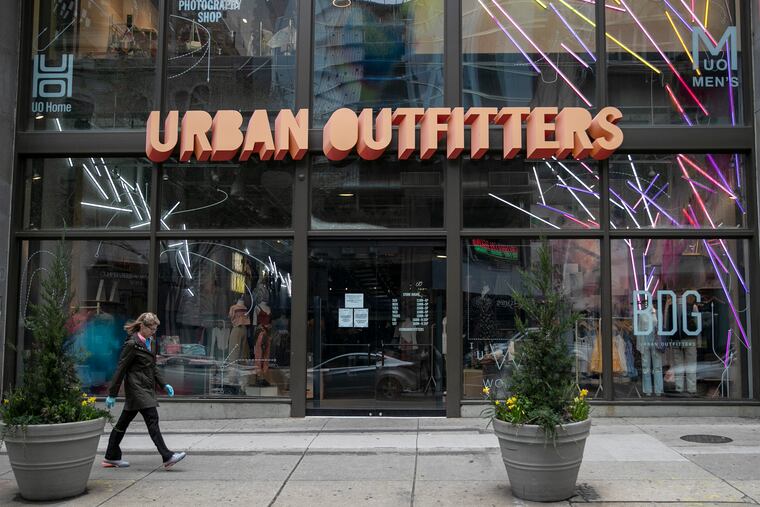
Ralph Lauren is not alone. Analysts point to Coach, Birkenstock, On, and Philadelphia-based Urban Outfitters — which includes Anthropologie and Free People — as companies with strong-enough customer loyalty and interest, as well as compelling “newness,” to avoid pullback from consumers once tariff pricing sets in.
“It’s all about brand equity,” said Simeon Siegel, a managing director and senior analyst at BMO Capital Markets. “Whether it’s because of tariff pressure … supply chain pressure, or a port strike, brand equity is what allows companies to weather volatile cost periods, raise prices, and pass on the cost to consumers.”
Birkenstock, the cork-soled sandals that regained popularity in recent years, raised prices on select items on July 1. But the company saw “no impact whatsoever” on sales, president David Kahan said in an earnings call Thursday.
This kind of standing with consumers is increasingly important as tariffs — which are paid by businesses to the U.S. government on imported goods, and often passed along to the consumer — cause inflation to heat up. It’s already started, with the core consumer price index, which excludes volatile food and energy, rising 3.1% in July from a year ago.
Economists expect prices to continue going up as retailers run out of the inventory that they front-loaded before tariffs kicked in. These import taxes will cost Americans an average of $2,400 per year, according to estimates from the Budget Lab at Yale University.
Consumers are reacting by being choosier and more purposeful about their spending. They’re holding out for sales, comparing prices, and finding cheaper alternatives for groceries and small luxuries, said Katie Thomas, who runs Kearney Consumer Institute.
Meanwhile, analysts are watching to see which brands manage to convince their customer that paying more for $180 sneakers, $350 handbags, or $698 blazers is worth the expense.
Companies like Ralph Lauren, Coach, and Anthropologie fall into this consumer sweet spot. As higher-income buyers move away from luxury brands like Louis Vuitton, Christian Dior, and Gucci — fed up by the increasing handbag prices with little newness on shelves — Ralph Lauren is an example of a reasonable trade-down, said David Swartz, an analyst at Morningstar. The company raised its full-year guidance earlier this month and saw net revenue surge 14% in its first quarter over last year to $1.7 billion. Its stock price has roughly quadrupled in the past five years.
The brand also added 1.4 million new customers to its direct-to-consumer business, a mid-single-digit increase over last year, and attracted “full-price store customers” who “skew more toward women, luxury, and next-generation younger cohort,” Louvet said in the earnings call.
Meanwhile, Coach and Anthropologie are well-suited for a middle-earning shoppers with disposable income who are looking for accessible luxury and on-trend style.
Coach is particularly popular among Gen Z and millennials, who accounted for the majority of the brand’s more than 6.8 million new customers in North America over its recent fiscal year, the company said recently. In recent years, the brand has improved its style and design and adopted a “fashion-forward approach,” which “simulates a greater buying frequency among customers of all ages,” said Neil Saunders, a managing director at retail analytics firm GlobalData.
In its recent quarter, Coach sales increased 14% year over year to $1.4 billion. The stock price for its parent company, Tapestry, has almost doubled in the past year, largely because of Coach’s success.
Urban Outfitters and its subsidiaries Free People and Anthropologie are taking a similar approach, slowing markdowns and attracting more full-price customers. Chief operating officer Francis Conforti told investors in May that the company is “gently and sparingly raising some prices,” mostly on already higher-priced items. The company’s net sales increased 10.7% over last year in its first quarter to a record $1.33 billion, with Anthropologie leading the pack.
Shoppers are also swayed when they see the value in their purchase, Thomas said, explaining they’re “no longer willing to pay more for nothing.” And consumers want to know that if the price is going up, it either means it’s better quality or something new and innovative, said Janine Stichter, a retail analyst at BTIG.
Ralph Lauren, Coach, and Swiss sportswear brand On have pointed to this as part of their pricing strategies. On, which saw second-quarter net sales surge 32% year-over-year to 749.2 million Swiss francs ($929 million), raised prices on select designs in the U.S. in early July, chief executive Martin Hoffman said in a recent earnings call. The company is focused “on innovation, on quality, on customer experience” to stand out in the crowded sportswear industry, he added, arguing that a higher price helps with that “premium” brand perception.
Coach also reduced its promotions and moved its discounted handbag to a separate outlet store website to maintain consumers’ quality perception of the brand, said Swartz, of Morningstar. Unlike its accessible-luxury competitor Michael Kors, Coach has been able to raise prices. “People see Coach as a better brand even if their products are probably not that much different than Michael Kors,” he added.
Not all brands will get away with raising prices as easily, analysts warn. Consumers could “rebel against companies that don’t deserve to” hike prices, Siegel, of BMO Capital Markets, said. Stichter expects that fallout will lead to promotions in the next few months as brands and retailers push to clear their shelves before the following season’s inventory comes in.
“Even if you can afford to pay for something, no one likes feeling like they’re being taken advantage of,” she said.