This toy company’s stock is outpacing Nvidia
Build-a-Bear is bucking trends on two fronts: A thriving mall brand that sells items in a highly tariffed category.
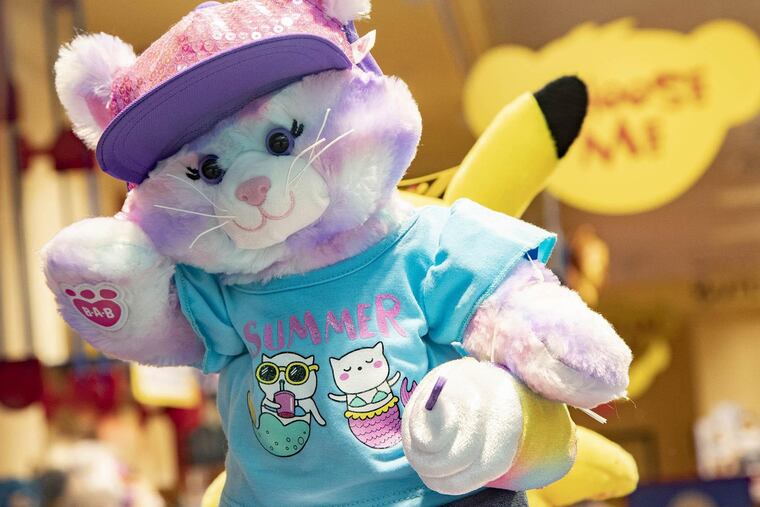
Nvidia. Palantir. Microsoft. Oracle. Despite being some of the most successful companies in the world, their five-year stock trajectory is eclipsed by one unexpected (plushy) underdog: Build-a-Bear Workshop.
The stock price for this stuffed-animal brand and mall chain has surged more than 2,000%, placing it in the top 20 market gainers during that period. Company shares more than doubled last year and are up 66% year-to-date.
It’s not a meme stock or a bubble, said Steve Silver, an analyst with Argus Research. It’s the market catching up to the company’s “strong fundamentals that have been in place for a couple of years,” he noted. And to be sure, these are gains off of its 2020 low of $1 a share. It now stands at $73 per share.
Analysts project the company will continue to grow, bucking trends on two fronts: a thriving mall brand that sells items in a highly tariffed category. While its counterparts in shopping centers shutter locations and file for bankruptcy, and their peers in the toy industry lower their full-year forecast and do rounds of layoffs, Build-a-Bear workshop is opening stores and raising its guidance.
The St. Louis-based company boosted its expected pretax income to between $62 million and $70 million, up from $61 million to $67 million, and is on track for its fifth consecutive year of record revenue and pretax income growth. Total revenue in its second quarter increased 11% over the same period last year, while net sales rose 10.8%, the company reported last month.
Build-a-Bear has 627 stores globally across malls, tourist destinations, cruise ships, and department stores. About 100 of those stores opened in the past two years, and the company expects to open 60 more in fiscal 2025. Almost all of its North America stores were profitable last year, the company said.
The resilience can largely be credited to its singular in-store experience, which captivates customers at a young age by bringing a “furry friend” to life, said Chris Byrne, a toy expert and consultant. Visitors stuff the animal, dress it, and participate in a heart ceremony. They can further personalize the plushy by adding a scent, a voice recording, and can take home a birth certificate.
Build-a-Bear is “so much bigger than this stuffed animal … we’re marking moments in time,” chief executive Sharon Price John said in an interview. “I’ve not met a person that can’t tell me the first time they went to Build-a-Bear, and what they bought, and why they were there, and who they were with.”
It creates a “halo effect,” she added. Building off the strength of the brand, John and her team have focused on expanding overseas and better appealing to adult consumers by upping its licensing deals and improving its e-commerce business.
The company does face some headwinds. Similar to other toy brands, Build-a-Bear sources the majority of its inventory from China, which has a 30% tariff rate. While the company front-loaded some of its core items to avoid the duty, that inventory is running out. It projects an $11 million hit from tariffs this year.
Still, Build-a-Bear has set itself up to weather the setback, said Eric Beder, an analyst with SCC Research. For years, the company was proactive in preparing for uncertainty: Reviewing every store and closing those that were unprofitable; adjusting prices and renegotiating deals with landlords and manufacturers to avoid taking on debt; and moving most of its online order fulfillment to stores, expediting delivery time and double-dipping on labor.
It also leaned on its vertical retail model — whereby it designs, produces, distributes, and sells its product — to pivot “from a retailer that just happened to have made a brand, to a branded intellectual property company,” John said. This allowed the company to diversify its business by partnering with tourist destinations like Carnival cruises, Great Wolf Lodge, and some Girl Scouts stores. It also franchised its brand overseas and built out its e-commerce business to better accommodate adult collectors.
Build-a-Bear has raised prices, and will likely do more, Beder said. But the company has been selective, for example raising the price of mini beans — smaller versions of the traditional line of plushies — from $9.50 to $10.
But Beder isn’t concerned it will deter customers: “Most grandparents aren’t going to care if they spend a little bit extra money,” he said.
Kids and kidults
As COVID lockdowns eased, families, antsy to do activities outside the home and flush with stimulus checks, flocked to the Workshop in their local malls, Byrne said. The surge was a welcome reprieve for the company, which, like most brick-and-mortar retailers, was bruised by dwindling foot traffic. Visits have only increased since then, the company said — an anomaly these days for stores situated mostly in malls.
“There has to be a reason for people to go to brick-and-mortar stores today, and who has a better reason than Build-a-Bear?” he said.
Zach and Bridget Wray have spent a lot of time in the stores — the family has hundreds of Build-a-Bears. The experience of making the furry friend is what their children look forward to the most, they said.
“They make it really special for the kids,” said Zach, 35.
But Zach and Bridget, 36, are also big fans themselves — often buying Build-a-Bears for their own Harry Potter, Star Wars, and Pokémon collections (which span many toy brands). They feel a special connection to those properties, Zach said, because it’s what they grew up with: “It’s a lot of nostalgia for us.”
Several toy companies have benefited from what industry insiders are calling the “kidulting” trend of adults buying and collecting toys out of sentimentality and the search for community. The sales growth of brands like Hot Wheels, Squishmallows, and Labubu has been driven by adults; at Build-a-Bear, they’re about 40% of the company’s business, Beder said.
John said the company fell into kidulting after adult customers flocked to its Minions and How to Train Your Dragon collections in 2015. Seeing the potential, the company has doubled down on licenses, partnering with 75 brands over time, including Disney, My Little Pony, Hello Kitty, Peanuts, and the National Football League. There were also website-only drops — since these customers tend to forgo the in-store experience — and the launch of a gimmicky “After Dark” collection around Valentine’s Day.
Wendy Hernandez, 33, has between 200 and 300 Build-a-Bears. While she enjoys the thrill of finding a rare bear, she said her favorite part has been making connections with other fans. She’s made friends through the Build-a-Bear subreddit, which she co-moderates with Zach and Bridget, and through her side hustle of finding and restoring bears.
“That’s the power of the internet — you can connect with people a lot easier from different places,” said Hernandez, of Winder, Ga. “And so instead of you having your own collection by yourself, now you know there’s other people who have similar interests as you.”
Social media has also expanded its reach, as limited editions and licensed characters go viral and quickly sell out online and in stores. Build-a-Bear now has a team that monitors channels, including TikTok, Instagram, and YouTube, tracking what’s going viral so it can prepare inventory and anticipate emerging trends.
“They’ve really demonstrated the ability to analyze and respond to the market,” said Chris Byrne, a toy expert and consultant. “They’ve given [consumers] more occasions to buy, and to buy more than one.”
Momo Holmes, 35, didn’t get her first Build-a-Bear until last year, when she learned it was releasing a stuffed animal — the Sanrio character Chococat — that resembled her newly adopted cat.
As a kid, her parents couldn’t afford to indulge much on toys. Now, making her own money as an aide to disabled individuals in Bettendorf, Iowa, Holmes has built a modest collection of eight Build-a-Bears.
“It’s nice to be able to splurge a little,” she said, adding that the experience of a new purchase always feels personal — one of her bears has a recording of her mom, another has meows from a cat who died recently. “Being able to enjoy a little bit of nostalgia is nice, especially in this economy.”