A changing death industry puts Philly cemeteries at risk
More people are opting for cremation, leaving some cemeteries stretched for money. Har Jedhuda Cemetery in Upper Darby is one of many that are struggling.
It always figured to be an emotional day when the Alter family gathered at Har Jehuda Cemetery in Upper Darby. They were commemorating their mother’s first yahrzeit, the anniversary of death in the Jewish tradition.
But when the family arrived at her grave, they found it in devastating condition.
Beatrice Reina Alter, 93, was buried last year next to her husband, Milton Alter, in plots that the couple bought in the Jewish cemetery in the 1990s. When their family came together for her yahrzeit in August, they expected there to be a new headstone to match Milton’s.
Instead, her grave was covered in a fresh mound of dirt. The corner of a plywood board stuck out. And there was no headstone to be seen.
“We were shaken and appalled,” said Daniel Alter, one of the couple’s five children.
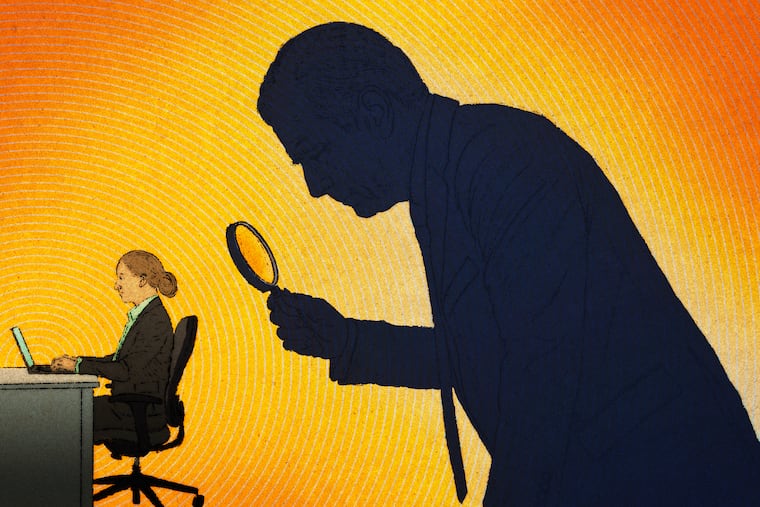
Yet issues at the cemetery — and for the burial industry — extend beyond placing headstones on time. Har Jehuda reflects an industry facing serious challenges to its longevity, where sometimes small, antiquated businesses must reinvent themselves. The country’s relationships with cemeteries and burials are changing, putting a seemingly timeless business at risk.
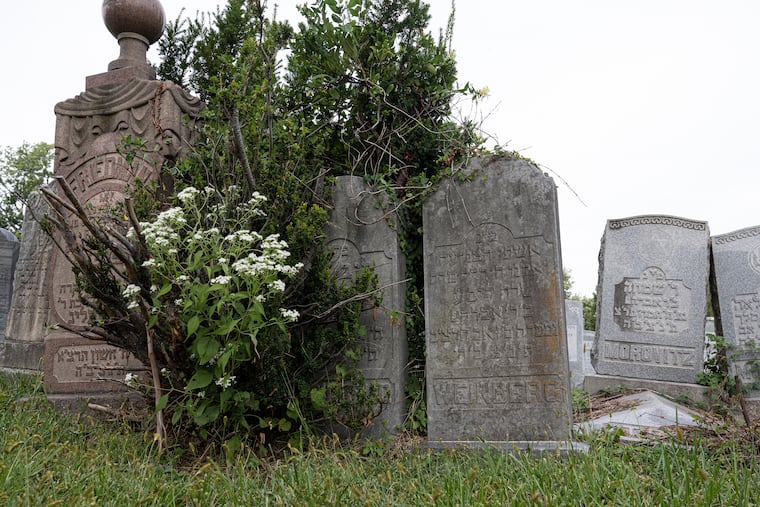
Har Jehuda, for instance, has been an important institution for the region’s Jewish community since its founding in the 1890s, holding more than 20,000 graves. But today, its grounds are largely overgrown and unkept, and numerous gravestones have fallen into disrepair. A volunteer group has stepped in to cover some of the maintenance and landscaping costs but fears it cannot sustain the cemetery for long.
“The reality is that there are not enough staff or funds to maintain the cemetery, and there hasn’t been for years,” Randi Raskin Nash, a member of the Friends of Har Jehuda Cemetery group, said by email.
The cremation boom
A hundred years ago, cremation was an unusual choice in the United States. Things started to shift in 1963, when the Catholic Church lifted its prohibition of the practice and Jessica Mitford’s book The American Way of Death, an exposé of the death industry, was published. Before then the cremation rate was reported to be in the single digits, and even as it rose, by 1999 only about 25% of Americans were cremated. But that is changing.
Cremations are expected to double the number of burials in 2025, according to a report from the National Funeral Directors Association. By 2045, the cremation rate in Pennsylvania is projected to reach over 82%, with burials dropping to just under 14%.
Several factors appear to be driving the shift, according to Christopher Robinson, the president of the association’s board of directors. Those include costs, environmental concerns, declines in religious affiliation, and growing cultural acceptance of cremation.
But that is not the business model that most cemeteries were built upon.
When folks secure a plot for interment, they are really buying an easement for burial rights, or essentially a license to use the cemetery’s land. Plots can cost thousands of dollars and are often nonrefundable.
Once it comes time for a person to be buried, the cemetery may charge for other parts of the process, like digging and closing the plot, creating a headstone monument, or supplying a vault for the casket.
Most cemeteries sustain themselves for the future by putting a portion of that revenue into an endowment fund, where the return on investment can be used for maintenance and repairs. Friends of Har Jehuda estimates that it requires roughly $50,000 to $75,000 just to cover lawn mowing and weeding per season.
Cremations are much less profitable, particularly if a cemetery does not actually perform it — a walled recess with an engraved cover for a loved one’s urn may cost only a few hundred dollars.
It’s unknown exactly how many cemeteries have formally closed or been abandoned in recent years, since the statistic does not appear to be widely tracked. What is clear is that cremation trends and dwindling space for future burials have left cemeteries struggling.
“There’s going to be a lot of cemeteries going out of business in the next 20 years,” said Tanya Marsh, a law professor at Wake Forest University who teaches funeral and cemetery law, in an episode of The Economics of Everyday Things podcast last year.
Would you get married at a cemetery?
Some cemeteries have embraced the changes and creatively diversified their offerings.
“We’re an outdoor museum. We’re a sculpture garden, we’re an arboretum … we’re more than just a cemetery,” said Nancy Goldenberg, CEO of Laurel Hill Cemeteries in Philadelphia.
Laurel Hill uses its combined 265 acres on both sides of the Schuylkill to its advantage. On a given day at the historic cemetery, you might see visitors on a history tour, stretching out to watch a movie screening, attending a wedding, or meeting with the official book club, Boneyard Bookworms.
Goldenberg said the extensive offerings are meant to build connections between people and the cemetery: They will be more likely to contribute money, or when they eventually need a resting place for their loved ones, they will look there first.
This all used to be more common — the first U.S. cemeteries in the mid-19th century also served as the country’s first public parks, with open grassy fields fit for a picnic. Before then, people buried their dead in smaller graveyards that eventually became overcrowded and sources of disease.
Laurel Hill is readying itself for a changing death industry, too. Goldenberg said she anticipates a rise in “green burials,” in which a person is buried without embalming or a casket, and said the cemetery was designating a section for them.
And while Goldenberg said she would be long gone before the cemetery runs out of space for new burials, it is a reality officials are planning for.
Laurel Hill is adding space for an additional 225 niches for cremated remains.
“There are small cemeteries, and once they fill up, that’s the revenue stream. … You have to be prepared for that,” she said.
“If you don’t, that’s when you fall on hard times.”
If a cemetery reaches the point of closure or abandonment, it’s not always clear what would happen to it. Last year, Gov. Josh Shapiro signed into law a bill sponsored by State Rep. Tim Brennan (D., Bucks) that would give financial relief to municipalities that take over abandoned cemeteries, since doing so can be a costly burden that local governments want to avoid.
Uncertain futures for cemeteries
Days after the Alter family made it through the prayers and memorial they planned, the emotional weight of the experience hit them even harder.
Daniel Alter later confirmed with Har Jehuda that a fresh grave had been dug where he believed his mother was buried. Recently, he hired a ground-penetrating radar company to examine the burial site, which determined the freshly dug grave was directly adjacent to where his mother was buried. While Alter was relieved to learn his mother’s grave had not been disturbed, he said Har Jehuda could have prevented the anguish he and his family have felt over the last few months.
Har Jehuda Cemetery’s owner, Larry Moskowitz, declined to comment for this article. Moskowitz was previously prosecuted by the state attorney general’s office over allegations that his other business, Wertheimer Monuments, had failed to deliver headstones to people who had paid for them. Complaints like these against the burial industry happen occasionally — the attorney general’s office also sued another Philadelphia monuments company in 2023 for failing to deliver headstones. There are multiple organizations dedicated to protecting consumers against predatory burial providers.
The Alters, like other families, continue to visit and bury their loved ones at Har Jehuda, but they hope that no one else goes through their experience.
“Our collective wish is that it never, ever, ever happens again to anyone in the Philly area,” Daniel Alter said.