The best (and weirdest) tech we found at CES 2026
Enormous TVs, throwback phones, and artificial intelligence are everywhere this week in Las Vegas.
LAS VEGAS — This week, 2.5 million square feet of prime Las Vegas real estate is packed with visions of the future. Some of them are sensible and going on sale soon, others are way out there and still in development.
That’s business as usual at CES, the massive tech confab once known as the Consumer Electronics Show that opens today. It’s a place where robots roam free, TVs tower over footsore onlookers, and artificial intelligence lurks around every corner.
Here’s what has stood out from the crowd so far.
Uber’s new robotaxi
The ride-booking giant’s road to robotaxis has been a complicated one: An early Uber self-driving test vehicle killed a pedestrian in 2018. The company sold off its autonomous driving project in 2020 and has since partnered with its would-be rival Waymo in some parts of the country.
Now, Uber is getting ready to roll its own self-driving cars onto city streets once again.
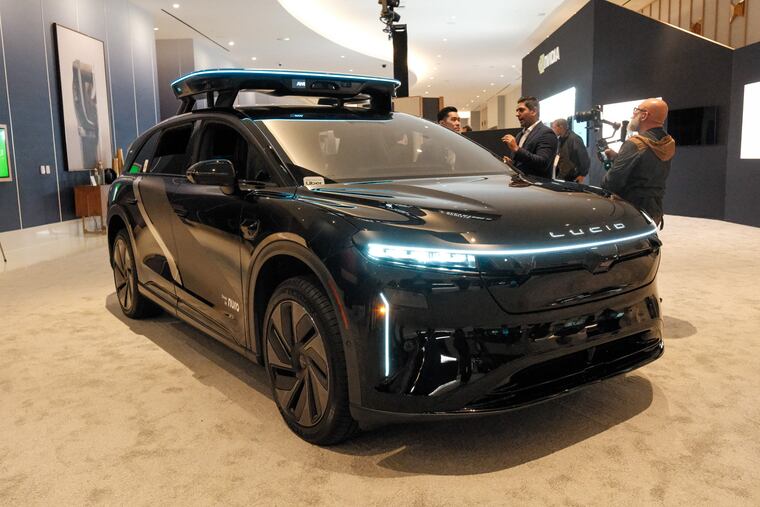
The ride-hailing company didn’t build this thing from scratch. Autonomous driving company Nuro provided the cameras, sensors, and self-driving smarts, all of which are integrated into a Gravity model three-row electric SUV from Lucid Motors.
Uber invested $300 million in Lucid last year and fleshed out the in-car experience for riders. You’ll be able to pick out playlists, adjust the cabin temperature, and make other customizations that are also already offered by Alphabet’s Waymo robotaxis.
On Monday, Uber said that its Lucid vehicles are already being tested on public roads. It plans to make robotaxis available to Uber riders in the San Francisco Bay Area later this year.
There’s no word yet on when these new self-driving Ubers will make it out of California, but at least it doesn’t seem like you’ll have to pay extra for one. When you hail a ride where these vehicles are active, the company says, you won’t have the option of selecting a robotaxi until you’ve already locked in a fare.
A toilet that can call for help
VOVO’s $4,990 Smart Toilet Neo comes with now-standard niceties like a built-in bidet and automatic flushing. And VOVO claims its built-in urine analysis sensor can provide deeper insights into a user’s overall health, splashed across a screen meant to be installed nearby.
Scanning one’s pee is par for the course at CES though: stand-alone liquid waste sensors have been floating around the show for years. The Smart Toilet Neo’s standout feature? When installed in a senior’s home, it can send messages to family members if no one has used it for more than eight hours, prompting loved ones to check in and make sure everyone is OK.
A TV for the ‘size matters’ crowd
Samsung’s 130-inch Micro RGB TV broke cover this week, and is so big that the svelte metal frame surrounding it looks barely up to the job.
Long story short, Micro RGB TVs use gobs of incredibly small LEDs in red, green, or blue to light up the screen. That makes them better at delivering bright, accurate colors compared to a more standard LED TV.
It’s unclear when Samsung plans to offer this monstrosity up to consumers, but when it does be sure to steel yourself before checking out the price tag. The company began selling a similar 115-inch model last year for an eye-watering $30,000.
A retro landline phone for kids
If you’re old enough to remember the pre-cellphone days, cast your mind back to all the time you spent tying up your parents’ phone line when you were young. A company called Pinwheel wants kids of the smartphone era to know what that feels like — without getting distracted by a screen.
The $99 Pinwheel Home, slated for sale in the coming months, is a dead ringer for the corded phones you’d find affixed to kitchen walls in the 1980s. The company says it’s designed to help young ones hone their verbal and social skills by chatting with a handful of preset contacts.
Calling other households with a Pinwheel Home costs parents nothing, but placing calls to regular phone numbers will set you back $9.99 a month. To sweeten the deal and help this throwback gadget further appeal to youngsters, the device will ship with a sheet of stickers.
A portable, battery-powered food allergen detector
For people allergic to gluten or dairy, even a simple meal out can feel like a minefield. Allergen Alert, spun out of a family-owned French biotech firm, wanted to help — by building a $200 portable allergen-sensing gadget they allege delivers lab-grade results.
Here’s how it works: You unpack one of the company’s test pouches (available in packs of five to seven as part of a monthly subscription), and cram a bit of a suspect meal into a slender spoon. Pack all of that into the sensing device, which is about the size of a thick paperback, and you’ll get a result back in a few minutes.
The catch? For now, the company only offers gluten test kits. It says that dairy-specific models will launch soon and that by 2028 the lineup will include tests for most major food allergens, including nuts and dairy.
Star Wars and Lego announce a new partnership
When Lucasfilm chief creative officer David Filoni brought out an array of X-Wing pilots, Chewbacca, R2D2, and C-3PO, he won the Star Wars fandom for Lego.
Lego announced its Lego Smart Play platform on Monday, which introduces new smart bricks, tags, and special minifigs for your collection. The new bricks contain sensors that enable them to sense light and distance, and to provide an array of responses, essentially lights and sounds, when they are used in unison.
Combine this with a newly announced partnership with the Star Wars franchise, and now you can create your own interactive space battles and light-saber duels.
LG reveals a new robot to help around the home
File this one under intrigued, for now.
The Korean tech giant LG gave the media a glimpse Monday of its humanoid robot that is designed to handle household chores such as folding laundry and fetching food. Although many companies have robots on display at CES, LG is one of the biggest tech companies to promise to put a service robot in homes.
The Associated Press contributed to this article.