A $3.2 trillion dealmaking frenzy is spurred by the AI economy
This year’s boom represents the most spent on global dealmaking in a six-month period in a decade. But questions persist about whether it can continue.
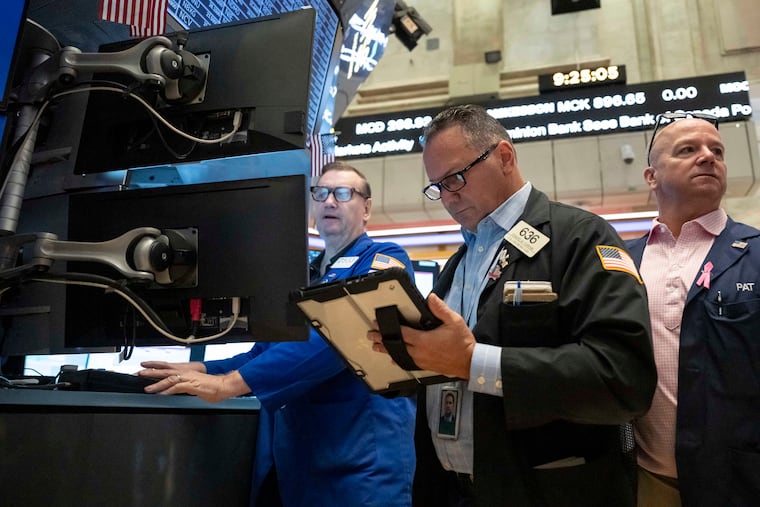
An ebullient stock market, huge bets on artificial intelligence, and an open regulatory environment have fueled one of the biggest six-month booms in dealmaking in years.
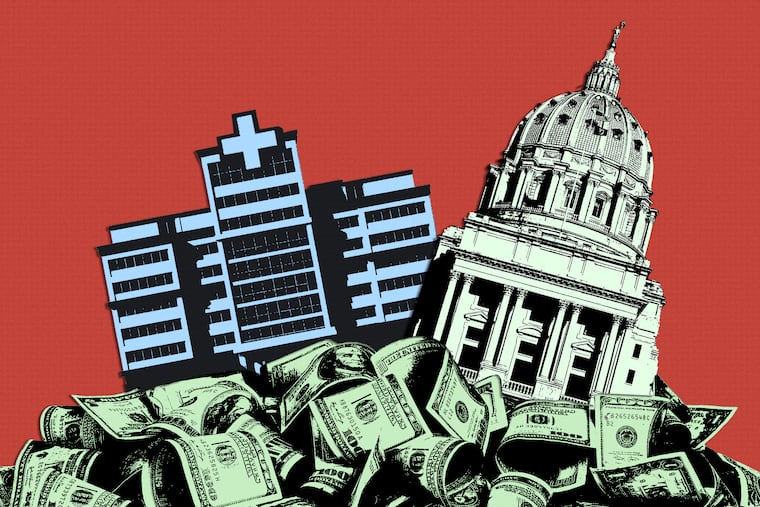
Through the end of June, there were about $3.2 trillion in global deals, a 45% jump from a year earlier, according to Dealogic, a data provider. That was the most spent on dealmaking over a half-year period in at least a decade.
The frenzy heavily favored large companies, with 44 deals announced that were larger than $10 billion, including takeovers and large-scale fundraising in the private markets. Those blockbusters pushed the overall value of deals higher even though the total number of transactions fell about 1% from last year, as companies with less financial firepower or those more vulnerable to geopolitical uncertainties stayed on the sidelines.
Executives of many large companies, however, have brushed aside the uncertainties posed by tariffs and the war in the Middle East to pursue takeovers that are more likely to be approved by regulators under the Trump administration than they were during previous administrations.
Many companies “perceive they have a window in which to attempt to affect something transformational, and now is really the time to try to do it,” Matt McClure, a global co-head of investment banking at Goldman Sachs, said in an interview.
Bankers insist this time is different from previous booms, such as the record-low-interest era of the COVID-19 pandemic, the leveraged buyouts of 2007, and the dot-com bubble in the 1990s.
The companies driving this year’s dealmaking surge are among the world’s largest and best-funded, and many of them are aiming to transform their business by doing big mergers, rather than making smaller acquisitions.
Some of this activity is propelled by a need to simply keep pace in an economy dominated by only a handful of giant corporations. Consider that companies need to be about twice as large to enter the S&P 500 as they did five years ago. Exxon Mobil, once the most valuable company in the United States, is about one-eighth the size of the largest of the so-called Magnificent Seven technology companies.
“The definition of scale keeps moving, so companies need to be bigger and bigger, and big companies need to do bigger and bigger deals to have an impact,” said Ben Wilson, a co-head of North America mergers and acquisitions at J.P. Morgan.
NextEra’s $118 billion deal for Dominion Energy, which was announced in May, would create a utility giant aimed at supplying the increasing amounts of electricity needed to power artificial intelligence. SpaceX’s $60 billion acquisition last month of Cursor, a start-up that makes code-writing software, is aimed at helping Elon Musk’s rocket company build its AI models.
Typically, companies are reluctant to take on big deals in times of turmoil. Disruptions in oil supplies because of the war with Iran and the White House’s open hostility toward America’s biggest trading partners in Europe show no signs of abating. Questions also persist around the AI build-out, such as the costs for computer chips, supply constraints and potential delays on when these AI companies might reap profits.
“What makes the current boom a little counterintuitive is it appears to be associated with maybe not unprecedented, but top-quartile-level uncertainty and volatility,’’ said Jonathan Knee, a Columbia Business School professor and senior adviser at the investment bank Evercore.
The deal activity has been a boon for banks, too, with details likely to emerge when they announce earnings next week. Bank of America expects its investment banking revenue in the latest quarter to be up 28% from a year earlier, while JPMorgan Chase expects a 10% increase, according to a research note from Jefferies.
Not every company has joined the party. In all, 21,727 deals were announced this year, down slightly from 21,997 at this point last year. Some of that decline can be attributed to the challenges facing private equity. Companies owned by private equity firms made up 24% of the overall deal value, according to Dealogic, down from about 34% in 2024 through 2025. Many of these firms are grappling with the uncertain values of the software companies they acquired before AI posed a threat to them, making them difficult to sell.
“So far this year, it’s just not been quite at the pace the market originally anticipated,” McClure said.
Initial public offerings during the first half of the year were dominated by larger companies bent on powering the race for AI and those in defense technology.
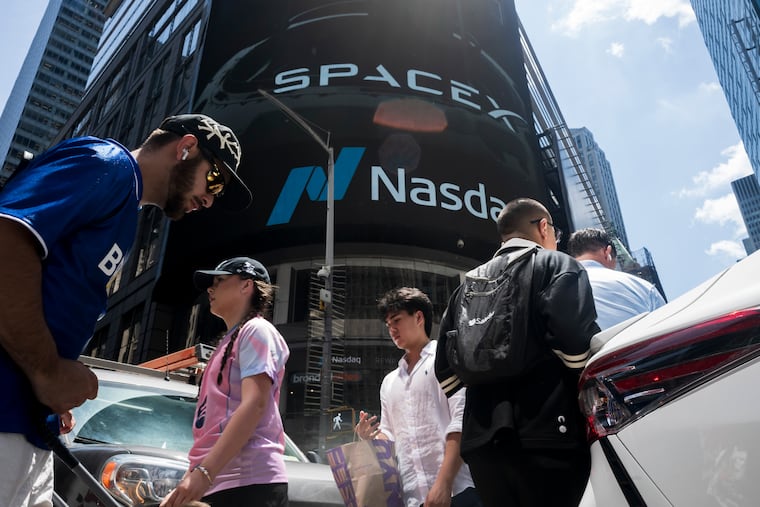
Madison Air Solutions, a cooling company that serves data centers, raised $2.23 billion in an IPO, and Cerebras, a Silicon Valley maker of AI chips, raised $5.55 billion. And, of course, SpaceX raised more than $75 billion, in the largest-ever initial public offering.
These offerings helped boost the value of IPOs in the United States to $155 billion, the most since 2021, when a flurry of so-called blank check vehicles stampeded into public markets.
Bankers say the door for other offerings related to AI remain open. SK Hynix, a South Korean memory chipmaker, is set to raise $28 billion in a U.S. listing this week.
But the first weeks of trading for SpaceX shares have been volatile. With its IPO price of $135 a share, it opened at $150 in its first minutes of trading June 12. It closed just above $135 on Wednesday, and was trading at less than $133 on Thursday.
Questions about whether demand will ultimately justify enormous spending on AI continue to swirl over the markets, along with other uncertainties including the war in the Middle East and inflation. Shares of the Magnificent Seven helped lead the S&P 500 through its best second quarter in six years, even as shares of those companies fell roughly 9% in June.
Still, Kennedy said, “I do think the AI theme will continue to drive activity through the end of the year.”
This article originally appeared in the New York Times.