Consumers down on the economy, as gas prices and mortgages surge due to war
A closely watched measure of how consumers feel about the economy showed gloomy results Friday.
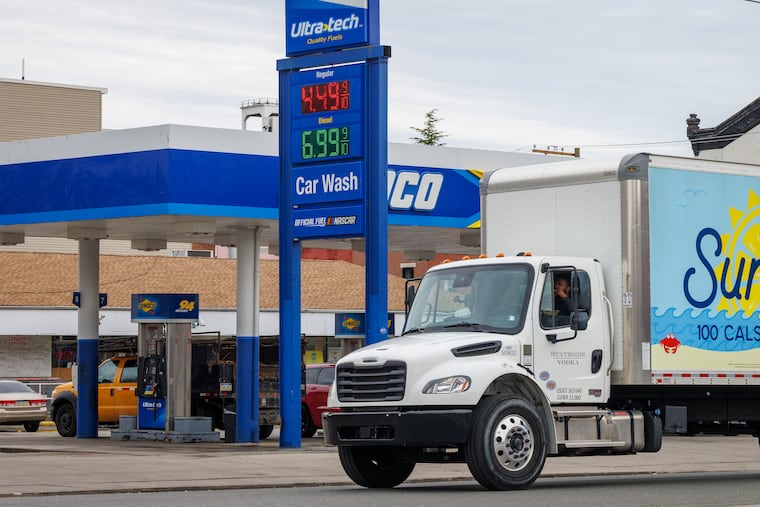
Americans are feeling gloomier about the economy in recent weeks, as the disruptions caused by the Iran war send gas prices skyrocketing and mortgage rates climbing.
Consumer sentiment, a measurement of Americans’ economic perceptions, fell nearly 6% to its lowest level since December, according to a closely watched index from the University of Michigan. Sentiment about the economy had been trending upward in the initial weeks of research, the survey’s early results found, but dipped significantly after the war in Iran began.
Gas prices at the pump are particularly concerning to Americans, as prices have shot up to a national average of $3.98, a dollar higher than a month ago. And gas prices are expected to worsen in coming days, with Brent crude oil prices above $110 a barrel Friday, up 50% from last month.
Uncertainty around the conflict has shaken the broader financial markets and sent 10-year treasury yields — a key benchmark for mortgage rates — to their highest levels this year. Mortgage rates, which had been easing, spiked to nearly 6.4% for a 30-year loan.
All three major financial indexes closed down on Friday for a fifth straight losing week..
Financial leaders around the world have begun to warn that the global economy is increasingly at risk from the ongoing conflict in the Middle East.
“We are facing a real shock that is probably beyond what we can imagine at the moment,” Christine Lagarde, president of the European Central Bank, told the Economist this week.
It’s unclear when gas prices will ease; the critical Strait of Hormuz, which connects the Persian Gulf to the Gulf of Oman, remains effectively closed to commercial marine traffic.
The strait allows shipping of the world’s oil and natural gas industries, serving as a conduit to move the products around the globe. About 20% of the world’s oil and natural gas shipments pass through the channel. President Donald Trump said Thursday that he has extended his earlier deadline for Iran to reopen the strait by 10 days, saying talks between the two countries are ongoing.
The price of diesel has also spiked; the fuel is used to transport goods around the country. That could eventually lead to higher prices on shelves, said Rebecca Babin, a senior equity trader at CIBC Private Wealth.
“If trucking costs more, it eventually gets passed through to consumers,” she said.
All of these creeping price increases have made Americans’ confidence in the economy falter. The University of Michigan’s survey found that middle- and higher-income consumers saw especially large drops in sentiment. Americans felt uneasy about short-term economic prospects and their personal finances for the year, but drops were more measured for long-term expectations.
“These patterns suggest that, at this time, consumers may not expect recent negative developments to persist far into the future,” Surveys of Consumers Director Joanne Hsu wrote in Friday’s report. “These views are subject to change, however, if the Iran conflict becomes protracted or if higher energy prices pass through to overall inflation.”
The Federal Reserve left interest rates unchanged earlier this month despite Trump’s calls for a cut as the Iran war added economic uncertainty. Hopes have cratered on Wall Street for a possible cut to interest rates this year, even though traders came into 2026 forecasting several.
The Associated Press contributed to this article.