A new round of confusing economic data is muddying the picture
Economists largely shrugged off this week’s monthly jobs and inflation reports, saying shutdown-related distortions were probably at play.
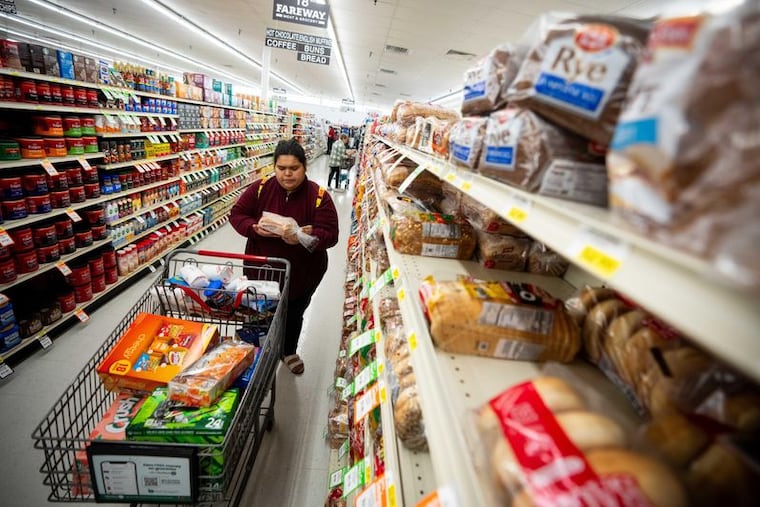
A barrage of post-shutdown data this week has left economists with more questions than answers about the state of the U.S. economy.
Unemployment rose to a four-year high in November, inflation improved more than expected, and retail sales appeared surprisingly resilient in October — though economists say all of that is likely to be bogged down by low response rates, disruptions in data collection and other shutdown-related complications.
The result: More confusion about an economy that’s already confounded policymakers, politicians, and business owners for much of the year.
“We knew we’d have to take this data with a grain of salt; I just didn’t know we’d have to make it this salty,” said Diane Swonk, chief economist at KPMG. “This week’s data really adds more confusion than clarity.”
Employment data on Tuesday showed a decline of 41,000 jobs in October and November, while the unemployment rate inched up to 4.6%, offering a sobering picture of an already slowing labor market. Two days later, the Consumer Price Index came with more optimistic economic news: Inflation, it said, had cooled from 3% in September to 2.7% in November. But economists largely shrugged off both reports, saying they were unlikely to be reliable snapshots because the 43-day government shutdown had upended the way federal agencies gather data.
The Labor Department’s monthly household survey, used to calculate the unemployment rate, was scrapped altogether for October. The data for November was far less reliable than usual, with a survey response rate of 64%, the lowest on record. (Two years ago, by comparison, 70% of households responded.) As a result, some said they weren’t putting much stock into the 4.6% unemployment rate. It’ll take a few more months of data, they said, to get a better read on the job market.
“Yes, the unemployment rate rose, but I didn’t pay too much attention to it, to be honest,” said Kathy Bostjancic, chief economist at Nationwide. “The survey process was completely disrupted by the shutdown.”
That was also the case for Thursday’s Consumer Price Index. Economists widely dismissed the figures, saying it was probably skewed lower by delays in data collection. Government officials didn’t begin tabulating prices until Nov. 14, when many items had already been marked down for Black Friday sales and other holiday promotions. More significantly, a third of the inflation index looks lower than it otherwise would because the government’s data appears to show no increase at all in rent and homeowners’ housing costs for October.
“This inflation data was flawed, at best — and I think it would be inappropriate to be making policy or investment decisions based off the November report,” said Joe Brusuelas, chief economist at RSM US. “We have definitely entered a season of noise in economic data that isn’t likely to clear until early spring.”
A third government report this week, a delayed retail sales reading, showed that spending picked up at grocery stores, furniture shops, and online retailers in October but declined at restaurants, gas stations, and hardware stores. Economists, though, cautioned against reading too much into the findings, calling them “unusually noisy” because of the shutdown.
Even data unaffected by the government closure did little to shed light on exactly what’s happening. A consumer sentiment reading from the University of Michigan on Friday showed Americans’ views on the economy inched up slightly in December but are down significantly from last year, with 63% saying they expect worsening unemployment in the coming year.
Although the U.S. economy generally seems to be on stable footing, economists are concerned that weakness in the job market, worsening inflation, or a pullback in consumer spending could easily tip the scale toward recession.
President Donald Trump has also recently shifted his focus back to the economy, kicking off an “affordability tour” and addressing the nation in a prime time address this week, saying he is “bringing those high prices down and bringing them down very fast.” He was expected to speak about the economy again Friday evening in North Carolina.
The next snapshot of the economy comes Tuesday, with a Gross Domestic Product report that is expected to show another three months of brisk growth between August and October.
The lack of clarity is a particular challenge for the Federal Reserve, which is looking to the job market and inflation for clues on whether it should continue lowering interest rates early next year. Fed Chair Jerome H. Powell last week cautioned that upcoming economic reports should be viewed with a “skeptical eye” because they “may be distorted by very technical factors.”
“We’re going to get data, but we’re going to have to look at it carefully and with a somewhat skeptical eye,” he said at a news conference this month.