A Biden EV charger project is reinvented for the Trump era
After losing in court, the Transportation Department says it will lift its freeze of federal funds allocated to build out charging stations on highways, with what it says will be more flexibility for states.
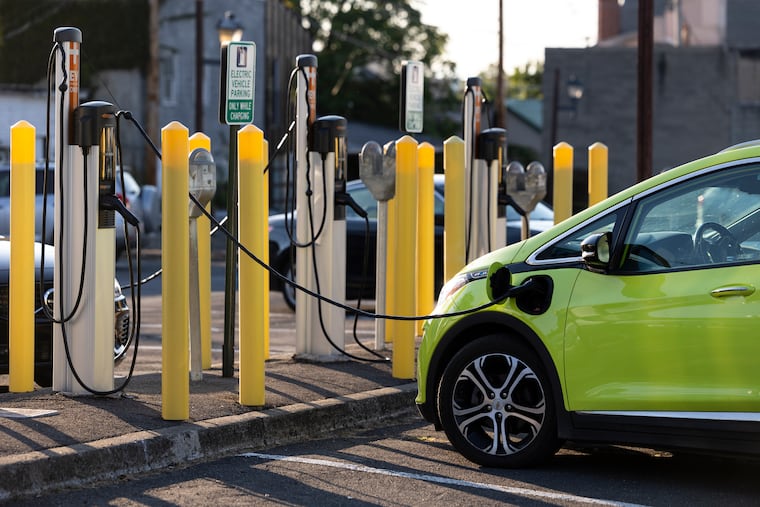
The Trump administration is planning to unfreeze funding for electric vehicle charging, restoring billions of dollars made available under President Joe Biden to fill the gaps in a national network that is still growing despite the White House’s retreat from backing battery-powered cars.
A federal judge ruled in June that officials had overstepped their authority in halting the funding, echoing a congressional watchdog’s finding a month earlier that officials had no authority to withhold the money. This week, Transportation Secretary Sean P. Duffy said his department would relaunch the program, however reluctantly, with revised guidance to the state agencies responsible for actually installing chargers.
“If Congress is requiring the federal government to support charging stations, let’s cut the waste and do it right,” Duffy said in a statement. “While I don’t agree with subsidizing green energy, we will respect Congress’ will and make sure this program uses federal resources efficiently.”
The new guidance removes Biden-era language promoting labor standards and the use of minority-owned contractors and investments in disadvantaged communities. It also gives states more flexibility to determine when their highway-based charger network is complete, freeing them to use the money for a wider range of charging projects.
The $5 billion program, created under the 2021 infrastructure law, represented a major federal investment in charging infrastructure at a time when the Biden administration was pushing the transition to electric vehicles. But it got off to a slow start — funding fewer than 400 charging ports to date — and came under fire as a classic example of inefficient government spending. The program was a prime target for the Trump administration, as it came into office vowing to roll back environmental efforts.
The growth in electric vehicle sales has stalled, and Congress opted to cut off tax credits for buyers at the end of September, which could further blunt demand. But EVs still account for about 10% of new vehicles sold, and millions of battery powered cars and trucks are on the road. They all need somewhere to plug in, and the auto industry says vehicle sales continued to outstrip the installation of new charging infrastructure in the early months of this year.
To serve EV drivers, Tesla — which builds the biggest share of charging stations and has opened them to other manufacturers’ vehicles — and other charging providers have kept rolling out new infrastructure at record rates this year, according to data firm Paren. The company forecasts that 16,700 new high-speed charging ports will come online this year, 19% more than last year.
Even without the freeze, the federal money was expected to account for only about 2% to 3% of new charging ports opened this year, according to Paren’s analysis. But the government funds are designed to play a key role in filling gaps in the national charging network, funding tens of thousands of ports along major routes in hopes of giving drivers the confidence that they will be able to find somewhere to plug in on long trips.
That means reaching areas the private sector will not get to, said Joe Halso, an attorney at environmental group the Sierra Club.
“The biggest gap for passenger EVs is highway charging that enables distance travel, particularly along highways in rural areas where charging is sparse,” Halso said.
The Trump administration put the federal program on hold in early February, bringing states’ installation plans to a halt. Despite the criticism of the slow pace at which the federal money had been spent, there were signs that state governments were finally getting ready to use it to install thousands of chargers, according to contract awards tracked by Atlas Public Policy, a Washington-based consulting firm.
“If you look at the awards over time, there was a considerable jump in the second half of 2024 compared to all the time leading up to that,” said Nick Nigro, the founder of Atlas. “Since January there has been hardly any, because the program has been stuck on pause.”
Guidance issued by the Trump administration this week would give states more flexibility in spending the money, in hopes of further speeding up deployments.
More than a dozen states challenged the funding freeze in court, securing an early victory that started at least some money flowing again. A federal judge in Washington state ruled that Trump administration officials “have overstepped their Constitutional and statutory authority and have attempted to override the express will of Congress.”
Halso of the Sierra Club said even though the Transportation Department has signaled it will relaunch the program, it has not immediately restarted it. The department is requiring states to resubmit their plans for using the money within 30 days and will then subject them to a review.
“We’re not letting up until the freeze is fully lifted and every dollar is available to the states,” Halso said.