China Evergrande’s debt crisis is rattling global markets. Here’s why.
The property developer has its hands in so many other industries in China — wealth management, hospitality, media, natural resources — that some experts worry about “contagion.”
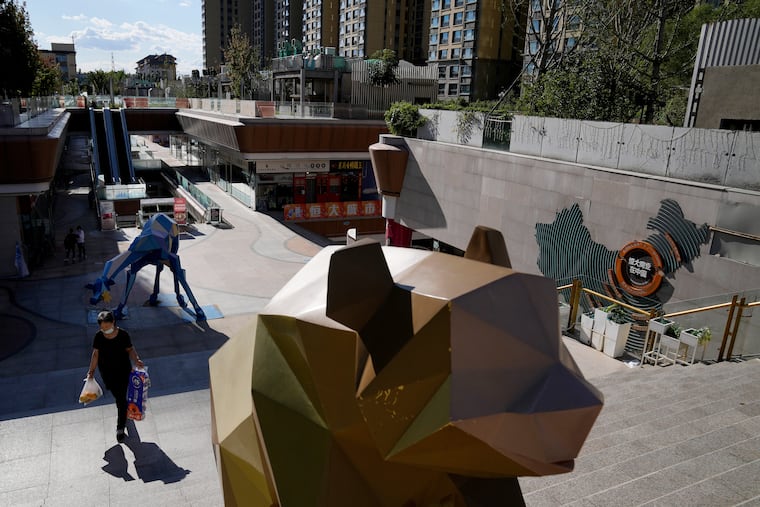
Property developer China Evergrande Group has hundreds of billions of dollars in debt that it can’t repay, roiling global financial markets this week on the specter of default. The brewing crisis has implications that extend well beyond the nation’s massive real estate sector. Here’s what you need to know.
What is China Evergrande Group?
Evergrande is a behemoth development company based in Shenzhen, in southeastern China, that rose to prominence constructing homes and apartment buildings just as the country began to introduce private homeownership. It sustained itself on a voracious appetite for expansion and a constant flow of cash — through payments from consumers and prolific borrowing.
Founded in 1996, it owns more than 1,300 development projects in 280 cities, and expanded into other major industries — it owns an electric carmaker, a mineral extraction group, a soccer team, and even a theme park — as the company matured.
Its founder, the uber-wealthy Hui Ka Yan, proclaimed in a 2017 speech to employees, "Development is the absolute principle," parroting a famous declaration by the late Chinese leader and revolutionary Deng Xiaoping. The saying anchored a philosophy of unmitigated economic growth largely fueled by the burgeoning real estate sector.
How did Evergrande end up in trouble?
Evergande is “overleveraged,” a fancy way of saying it holds too much debt. How much? $300 billion worth. The company has presold 1.4 million apartments worth more than $200 billion that it has not finished building. It has begun paying its bills by offloading unfinished projects to contractors, such as construction companies or painters.
For a while, Evergrande’s debt was not a huge issue to Chinese regulators, said Bill Bishop, who writes the Sinocism newsletter. And then it was. Chinese President Xi Jinping in 2018 unveiled “three tough battles” for the nation’s regulatory state: poverty, pollution and financial risk. Then, in 2020, regulators imposed “three red lines” on developers and their borrowing habits. The more overleveraged a developer was, the less regulators would allow it to borrow.
Evergrande breached all three red lines, so regulators placed a hard cap on its debt — the main way the company created liquidity.
"The real trigger was these rules that came into place, these three red lines, that said, 'This time we're serious,'" Bishop said. "These real estate companies can't take on any more debt, and if you can't take on any more debt, then the game stops. It's like musical chairs."
How does China’s housing market fit into the crisis?
As the government loosened controls over the economy in the early 1990s and created an opening for capitalist principles, land ownership quickly caught on. Land became important collateral as individuals, businesses and financial institutions were given leeway in the marketplace, Bishop said. As China’s middle class grew and homeownership rates rose, the ever-increasing value of land underpinned much of the new economic growth.
That's where Evergrande came in; it quickly bought up large tracts of land from local governments, which were eager to raise revenue to fund other elements of Deng's massive development philosophy. To build on that land, Evergrande did lots of borrowing. It could justify that borrowing because the value of its property kept rising, and it kept purchasing more land.
Meanwhile, those rising property values appeared to be good for Chinese home buyers, because they almost constantly saw the value of their homes increase, fueling the continued growth of the consumerist middle class.
In reality, experts say, the system just created a bubble.
What do experts say is at stake for China?
To be brief: a lot.
Close to a million Chinese home buyers purchased apartments from Evergrande that the company apparently no longer has the means to finish building. Those flats are likely to get completed, experts say, but that could take time. Regulators may have to aid in the sale of those projects to other developers.
Evergrande’s crisis pierces the veil of the Chinese real estate sector and the artificially valued tracts of land and development projects. Experts say that could depress existing home values, which could dampen Chinese consumer spending — a consequence that could reverberate worldwide. Chinese homeowners view their property holdings much like American homeowners do: It’s their largest investment, and as it grows in value, their long-term economic fortunes improve. If it shrinks in value, Bishop said, “People will feel poor. There is a chance that is could start somewhat of a prolonged slowdown.”
Evergrande's fall could also be a shot across the bow for other Chinese developers. It could show that the government in Beijing is willing to let massive companies fail if they take on too much risk, potentially persuading Evergrande's contemporaries to offload liabilities. Experts are watching the government's response to see what tone regulators set. But that could take a few days. Much of China's government and financial apparatus is off until Sept. 22 for the Mid-Autumn Festival, one of the most important holidays on the Chinese calendar.
The first real test for the company will come almost as soon as the country reopens. Evergrande is due to make an $83 million interest payment on Thursday, and there’s serious doubt about whether it has the cash to avoid a default.
What does the crisis mean for global markets?
Global markets plunged Monday on the Evergrande situation, with the Dow Jones industrial average plunging as much as 971 points before cutting its losses to 614 points, a 1.8% drop on the day. The Hang Seng Index in Hong Kong skidded 3.3%. Meanwhile gold, a traditional safe harbor for investors, jumped nearly 0.8%. All that action is a good reflection of the jitters traders are feeling.
Evergrande has its hands in so many other industries in China — wealth management, hospitality, media, natural resources — that some experts worry about a “contagion,” or spillover effect. In other words, if one major economic pillar collapses, will it spread to other markets or regions?
Another concern is credit markets. Evergrande has done so much borrowing, and so many lenders are at risk of getting burned, would its potential default have a ripple effect for other borrowers? On both of these questions, experts say, it's still too soon to tell.
But troubling signs already are emerging: Remember, hundreds of millions of Chinese homeowners could see their property values drop, meaning there’s a good chance they’ll rein in spending. Global consumer markets — on everything from clothes to electronics to food — rely on the prolific buying power of the Chinese middle class. If China is poised to spend much less on consumer goods, there will be economic ramifications around the world.
Evergrande owns an electric car company, a theme park and even a soccer team. What happens to them?
Evergrande had a taste for expansion beyond its developments. It owns an electric carmaker, a mineral extraction company, even a theme park and soccer team. Experts say many of those businesses grew out of the company’s voracious land appetite: If you own a car company, you need a factory, and you need land for that factory. If that land increases in value, you can borrow against it to fund other projects.
In the rush to unburden itself from its liabilities, Evergrande is reportedly exploring sales for these assets, but buyers are hard to come by. Experts say many could be worried about the financing for any deal, or if regulators will get involved to seize assets to pay off creditors.