As consumers pare spending, grocery stores race to cut prices
Still, prices across all food categories are expected to rise 3.2% in 2026, according to Department of Agriculture research.
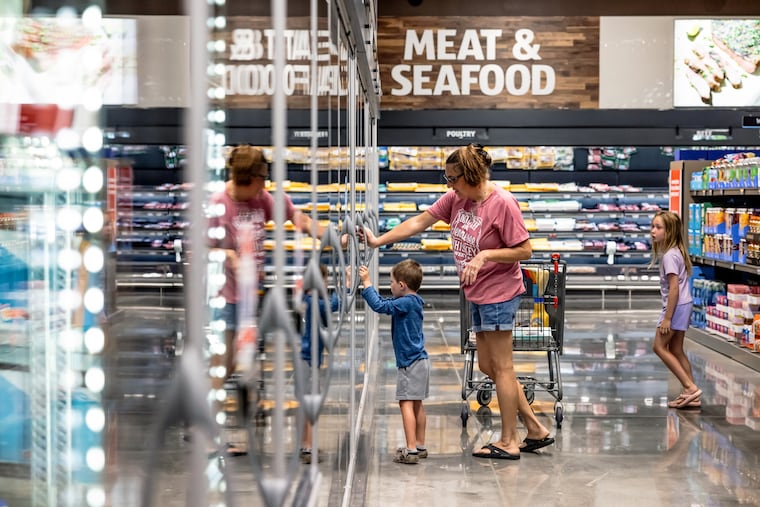
America’s grocery stores are cutting prices to attract consumers who have pared back spending to cope with rising costs.
Walmart, the nation’s largest retailer, said Monday that it would lower the price of ground beef rolls, fresh corn, cherries, potato chips, and Coca-Cola as part of a slew of summertime discounts.
It’s the latest grocery chain to do so, increasing competition in a relatively low-margin industry reliant on people buying shopping carts packed with items, including some at more profitable prices.
The grocery industry has struggled over the past 18 months as higher food bills, reductions in food stamp programs, and the rise in the use of weight-loss medications have resulted in shoppers buying less. On top of that, elevated gas prices because of the war with Iran are hitting shoppers’ wallets.
A May CNN poll found that 61% of Americans had changed which groceries they bought in order to stay within their budget.
High grocery prices have been a political issue for several years, so much so that President Donald Trump sought to take credit for Walmart’s announcement, posting on social media that the retailer “will be lowering prices, by a lot, at my administration’s request to celebrate our great country’s 250th birthday.”
Walmart did not mention Trump or his administration in its news release.
But while shoppers may get better deals on some items, it’s unlikely that their overall grocery bill will fall. Prices across all food categories are expected to rise 3.2% in 2026, according to the Department of Agriculture’s Economic Research Service.
While egg prices have dropped from last year’s record levels, the USDA predicts that prices for beef, pork, poultry, sweets, nonalcoholic beverages, fresh vegetables, and fresh fruit will increase this year. That comes on top of the 18% price increase in food consumed at home since the beginning of 2022, according to the U.S. Bureau of Labor Statistics. Beef prices continue to hit record levels this year; Walmart said it would reduce the price of its 1-pound log of ground beef to $5.94 from $6.74.
In the four weeks ending in late June, prices in 61 food categories rose 3.4% from the same period a year ago, while the volume of goods sold slid by 2.1%, according to analysts at Stifel, a financial services firm.
To lure consumers in their doors and, hopefully, persuade them to buy more, several grocery store chains have reduced prices on a few dozen items, or the top 10 food products consumers typically buy. They have also increased the number of less expensive store brand products on their shelves.
“It’s not going to be across the board. It’s not going to be across 40,000 items,” said Phil Lempert, a food industry analyst and the editor of Supermarketguru.com.
Consumers are also changing where they shop and are making fewer trips to traditional grocery stores in favor of discount grocery chains like Aldi, a company that originated in Europe and is quickly expanding in the United States, according to a grocery shopper study by consulting firm AlixPartners.
Retailers, still trying to maintain profits to keep investors happy, are looking for ways to fund the price reductions. On a call with analysts in May, Walmart executives said that at least some of the price cuts could be funded by the $2.4 billion it has filed for in reimbursements after the Supreme Court ruled in February that Trump exceeded his authority in establishing sweeping tariffs on imported goods.
In many cases, the reduced grocery prices likely reflect better deals grocery retailers have gotten from manufacturers, Lempert said. Food and beverage manufacturers, eager for consumers to put more of their foods in shopping carts, oftentimes offer discounts or other promotions to retailers, he explained.
“The average grocery retailer is only making 1.5% to 2% net profits on groceries,” he said. “There’s not a lot they can do to take price cuts on their own.”
Earlier in the year, executives at PepsiCo said the company was lowering some prices to drum up demand, or volume, for its snacks and foods. On Thursday, PepsiCo reported that prices in its North American food business, which includes Frito-Lay chips as well as Quaker Foods breakfast and snack bars, were down 2% in the second quarter compared with the previous year.
Executives said the lower pricing at many stores had helped boost demand in the quarter. They noted, however, that higher gas prices translated into weaker sales at convenience stores.
Executives at Kroger said on an earnings call in June that the retailer would push harder in negotiations with suppliers but would also fund discounts by cutting its own expenses.
In May, Stop & Shop, a unit of Dutch supermarket operator Ahold Delhaize, said it was lowering prices on more than a dozen food items in its New Jersey and New York stores. The price of a rotisserie chicken fell $1 to $6.99 and a can of Bumble Bee tuna was cut to $1.99 from $2.29.
The grocery retailer chose the products based on customers’ everyday purchases across a variety of departments, Daniel Wolk, a spokesperson for Stop & Shop, said in an email.
Since making the price cuts, Wolk said the chain was seeing “encouraging signs that customers are filling their baskets with more volume.” He added that the original cuts were part of a phased approach and that, since then, prices on “thousands of items” in stores throughout Massachusetts, Rhode Island, Connecticut, New York, and New Jersey had been reduced.
Costco said in May that it cut prices on everyday goods including eggs and beef, which had slightly impacted the retailer’s margins. The warehouse club slashed prices on items like chicken wings and chocolate almonds.
“Our goal is to be the first to lower prices where we see opportunities to do so,” Gary Millerchip, the chief financial officer of Costco, told investors on a conference call.
Target said in March that it would reduce prices for “pantry staples,” after lowering prices on thousands of food items late last year.
Retailers are also increasingly leaning into placing more of their own brands onto shelves, hoping to drive customer spending on less-expensive store versions of spaghetti sauce, frozen waffles, and baked goods.
Whole Foods Market, which was famously nicknamed Whole Paycheck for its higher prices, has been trying to alter that perception by expanding its store brand offerings and cutting prices.
“We’ve reduced prices on more than 900 products across private brands, including the 365 by Whole Foods Market private label selection,” a spokesperson for Whole Foods said in an email.
This article originally appeared in the New York Times.