Your paycheck is just keeping up with inflation
As prices continue to rise, affordability is playing a big role in how people feel about the economy — and leaders. “A lot of the middle class is getting so crushed,” said one Philadelphian.
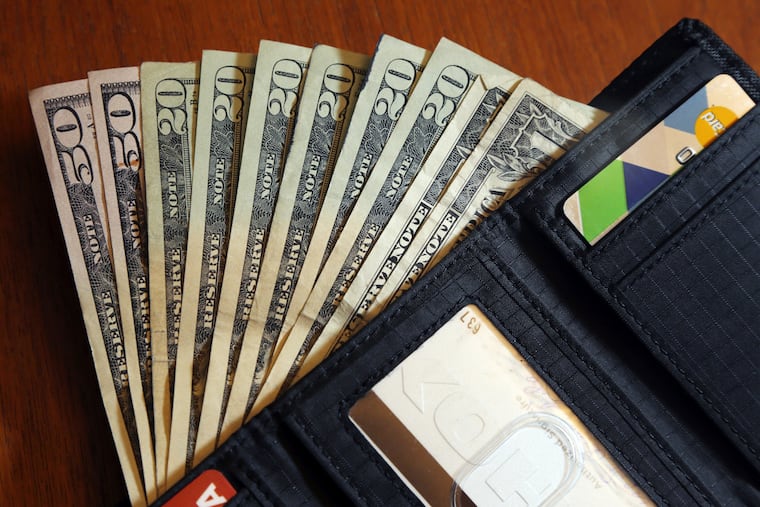
American workers’ paychecks are about where they were a year ago, and up 27 cents per hour in today’s dollars since President Donald Trump took office in 2025, because of inflation that has undercut pay increases.
June’s average hourly wage gain of 3.5% from a year earlier just kept up with inflation of 3.5% over that same yearlong period, according to data released by the Bureau of Labor Statistics on Tuesday.
Affordability has been playing a big role in how people feel about the economy. When pay doesn’t beat inflation, the political consequences rise.
“President Trump was elected because people were unhappy with the southern border being open and people were unhappy with the inflation that they had to deal with under President Biden,” said Michael Strain, director of economic policy studies at the right-leaning American Enterprise Institute. He said Americans’ experience in the economy “really does affect their opinion of how presidents are doing, kind of fairly or unfairly.”
White House spokesperson Kush Desai said in a statement that “President Trump has always been clear about the fact that oil and gas prices — and thus overall inflation — will rapidly drop as soon as the Iran situation is resolved.“ Desai added the administration’s “commonsense agenda of deregulation, tax cuts, and energy abundance” will push wages up.
Americans’ buying power did grow a little in June over May, as falling gas prices pushed the cost of living down slightly, according to Labor Department statistics released this week. Real average hourly earnings for employees increased 0.8%, the biggest monthly gain in more than a year.
But that gain comes as cold comfort to the millions of workers whose wages have failed to match it, with prices for many basics like milk and beef climbing steeply this year. Gas prices are also rising again as the U.S.-Iran conflict resumes after the collapse of the short-lived ceasefire.
“No matter what we see in the averages, there’s going to be a lot of people whose wages are simply not keeping up with inflation,” said Betsey Stevenson, who was the Labor Department’s chief economist from 2010 to 2011 and is now at the University of Michigan. “So they just can’t buy the same bundle of goods that they could have bought a year ago.”
Many workers holding the same job year after year see raises of around 3%. Some get less. Those people fall behind in an economy running at 3.5% inflation.
Others who are switching jobs or in a position to demand more from their current bosses are beating inflation. But few workers are moving into new jobs in the current sluggish labor market — with the share of the workforce quitting at the lowest level since 2020, according to recent Labor Department data.
“What you do get out of that is a lot of people feeling like it’s unfair,” Stevenson said. “And I think that’s coming into an economy where people have been questioning the fairness of the economy for a while.”
Jessica Newell, 45, earns $80,000 a year as a counselor at a Philadelphia public school, but despite annual salary increases, she is barely surviving, she said. After rent on an apartment she shares with a roommate, groceries, and a $440 monthly student loan payment, she has nothing left and sometimes puts bills on her credit card. Newell currently has less than $1,000 in savings, she said.
“A lot of the middle class is getting so crushed, and I don’t think anyone cares,” said Newell, who works a second job in the summers to pay the bills. “We don’t have money to live comfortably between paychecks. And there’s no saving for a rainy day emergency. God forbid anything happens to my car.”
Prices ran low for much of the 2000s and 2010s — increasing about 2% a year or less — so a modest raise kept workers even or a little ahead. That changed after 2021, when inflation spiked to a four-decade high during Biden’s presidency. Inflation cooled by the end of his term, but climbed back up through 2025, reaching 4.2% this May under Trump.
Those who own appreciating assets, like homes or stocks, tend to be better positioned against inflation, because the value of those assets can rise with prices.
“Different people are just having very different experiences,” Stevenson said. “That’s ultimately the real problem with inflation. It redistributes in a way that’s kind of random. Who ends up being able to buy more stuff today and who ends up being able to buy less stuff isn’t really based on who worked harder over the last year.”
Average earnings, measured by what that money can actually buy, are known as “real wages.” They rose slightly during the initial year of Trump’s presidency. Then they dropped this spring as the conflict with Iran drove oil prices higher, nearly erasing the earlier gains. June’s easing of inflation, which stemmed from the ceasefire, allowed real wages to start increasing again. But that upward trajectory could once again reverse depending on how things go with Iran.
Different states are also experiencing different wage environments. Workers’ earnings in some states are slightly beating inflation, while those in others appear to be losing ground on average.
Several of the states where workers are falling behind include congressional districts considered toss-ups in the upcoming midterm elections as Republicans try to defend their majority in the House of Representatives.
In Arizona, for example, Republicans are battling to hold two toss-up seats in a state where many voters feel squeezed by rising costs.
Barrett Marson, a GOP strategist in Arizona, said it would be a mistake for Republican candidates to overlook Arizonans’ pocketbook pain as November nears. High inflation will be top of mind for voters, he said.
“If gas spikes again, Republicans are in trouble. It’s just that simple,” Marson said. “People are going to think about their economic situation and vote accordingly, probably up and down the ballot.”
He added that many would-be GOP voters could be offended by the president’s dismissive comments about inflation caused by the Iran war.
“The problem with Biden — and now Trump is singing from that same hymn book — is the idea inflation doesn’t matter, [that] ‘you don’t know your finances as well as I know your finances,’” Marson said. “It didn’t work for Biden, and I don’t think it’ll work for Trump or anyone who follows that playbook.”
Dana Angelos, 51, of South Carolina, was making $20 an hour as a medical biller a few years ago, but then the contractor she worked for shut down. This year she’s been earning about $18 an hour for the same work, even as her living expenses have soared. To manage, Angelos moved to her mother’s property in a rural area, where she can live rent free. She also began supplementing her grocery shopping with donations from food pantries.
Angelos said Aldi and Walmart used to be affordable for her.
“But not anymore,” she said. “Everything’s going up but our paychecks.”