Private equity role in soaring childcare prices under investigation
Sen. Jeff Merkley, the top Democrat on the Budget Committee, asked two leading providers, KinderCare and Learning Care, for financial records and other documents.
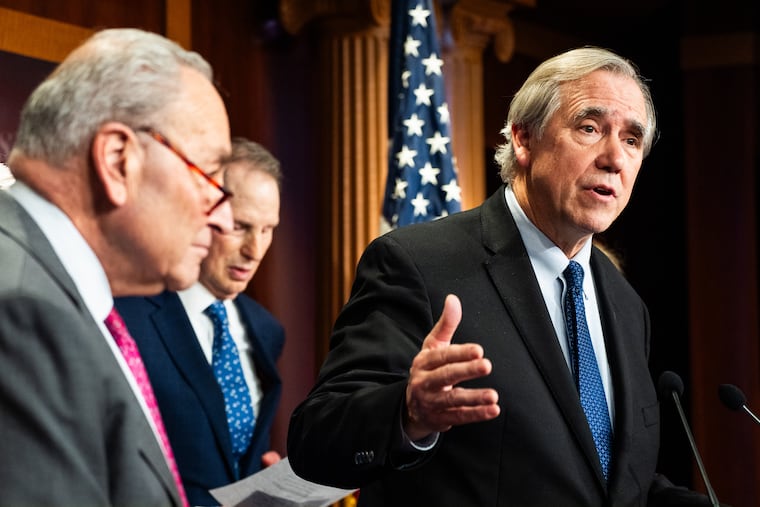
A Democratic senator launched an investigation Monday into the nation’s two largest for-profit childcare providers, as rising childcare prices squeeze voters already concerned about the cost of living.
Sen. Jeff Merkley (D., Oregon) sent letters to KinderCare Learning Cos. and Learning Care Group and their private equity owners requesting financial records and information on their ownership structure, cost and pricing trends, safety protocols, and employment practices.
Merkley wrote in the letters that each company’s market influence and substantial use of public subsidies “carry a clear responsibility to ensure that financial and management decisions do not come at the expense of child safety or access to affordable child care,” according to the letters reviewed by the Washington Post.
In the inquiry, Merkley raised concerns that childcare providers funded by private equity have an incentive to maximize profits by paying workers less, raising tuition, and investing in higher-income and high-population centers. He cited studies indicating that for-profit childcare centers are more likely to experience staffing and operational problems and listed alleged safety and labor issues at facilities owned by each company.
In a statement to the Post, Merkley said he hopes to examine private equity’s role in childcare and its effect on children and families.
"We’ve all seen the reports of private equity’s often negative influence in other sectors, such as hospitals, nursing homes, and single-family homes. I hope to better understand if that trend is continuing in the child care sector," said Merkley, who is the top Democrat on the Senate Budget Committee.
Congressional investigations are not intended to prove criminal guilt or civil liability, but they do inform potential policymaking. They can sometimes lead to congressional hearings and more public inquiries.
Both companies said in statements that they take their responsibility to children and families seriously.
“Every decision we make is grounded in providing safe, high-quality care and being a good place to work for our teachers,” Learning Care CEO John Bork said in a statement. “We believe thoughtful, long-term investment supports that mission, and we welcome the opportunity to work with policymakers to strengthen the system for families and educators.”
KinderCare said in a statement that its “mission is simple and unwavering: to support working families and to provide a safe, nurturing, high quality learning environment so their children can thrive.”
Advocates for the funding model argue that existing federal programs don’t adequately support most families’ childcare needs, and that private equity can provide needed resources to make childcare available in a challenging industry.
KinderCare said the federal government provides less than $250 in childcare funding per child, “while the cost of quality care continues to rise.”
Radha Mohan, executive director of the Early Care and Education Consortium, said in a statement that U.S. childcare “is chronically underfunded” and that all kinds of childcare providers struggle with staffing and rising costs.
“Federal and state funding falls far below the true cost of quality in nearly every state. Yet companies like KinderCare and Learning Care invest in accreditation and other external markers of quality, serve subsidized children at scale, and provide employee benefits and training despite reimbursement rates that don’t cover the cost of a qualified workforce,” he said.
Mohan added that any solution “must start with fixing the financing of the system itself.”
The cost of childcare routinely ranks as one of the biggest concerns for Americans worried about the cost of living. The cost of daycare is higher than in-state college tuition and fees in dozens of states, according to the advocacy group Zero to Three.
Private equity has made investments in eight of the nation’s 10 largest for-profit childcare organizations, according to a 2024 report from the nonpartisan Congressional Research Service.
That report found that private equity could help the childcare industry by increasing competition and expanding availability. But it added that the private equity business model of profit maximization could lead to higher childcare costs and lower quality of care.
KinderCare reported $2.7 billion in revenue in 2025 and served nearly 215,000 children across 40 states as of early January, according to its latest SEC filing. In 2023, Learning Care Group centers served more than 165,000 children and reported $1.5 billion in revenue, according to Merkley.
Merkley wrote in the letters that each company’s market influence and substantial use of state and federal childcare subsidies “carry a clear responsibility to ensure that financial and management decisions do not come at the expense of child safety or access to affordable child care.”
One in five families reported cutting back on childcare coverage or restoring to “inadequate” childcare because they did not have other affordable options, according to research from Columbia University published in January.