Philly workers are leaving the office earlier than they used to
Workers are leaving 12 mins sooner this year than they did in 2019, according to new data from five Philadelphia office buildings. SEPTA has also noticed the trend.
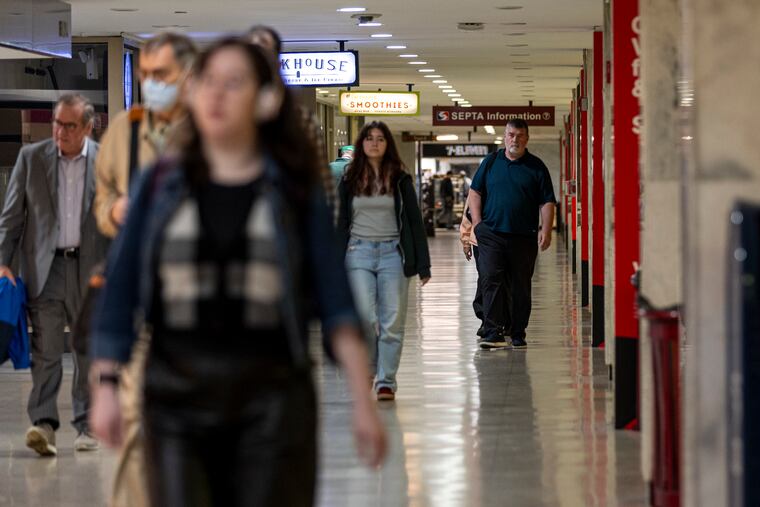
Are you heading home from the office a bit earlier these days than you did a few years ago? You’re not alone.
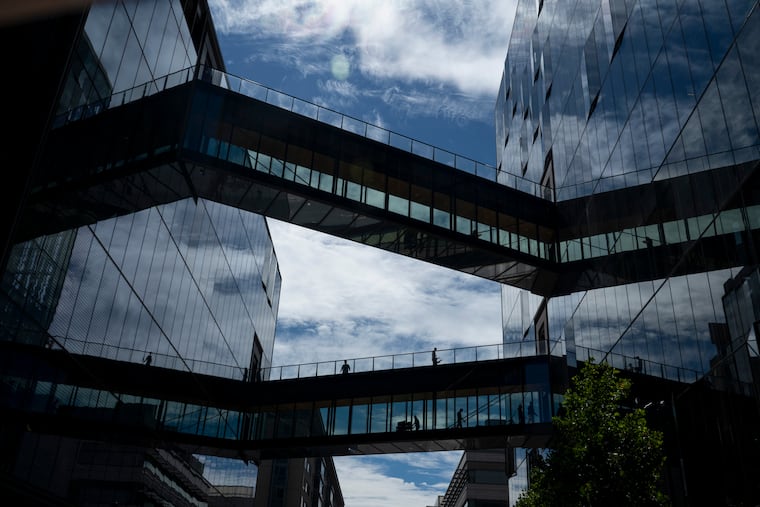
Philadelphia workers are leaving the office 12 minutes earlier on average this year than they did in 2019, according to a report by commercial real estate company JLL.
JLL looked at departure times of workers in five office buildings in the city. Their average time for leaving was 5:05 p.m. this year. In 2019, they were leaving at 5:17 p.m. on average.
Philadelphians aren’t alone in wanting to duck out a little earlier.
Using JLL’s data, the Wall Street Journal reported in August that some workers were leaving the office earlier in New York, Dallas, Chicago, and San Francisco — clocking out between 13 and 26 minutes earlier on average than they used to in those cities. JLL used anonymous cell phone data to track when workers arrived at the office and when they left.
SEPTA has noticed a shift in travel patterns since the pandemic too.
Paul Osciak, SEPTA’s director of railroad service planning and schedules, described the commute home on Regional Rail as “a longer evening rush,” and said that during the evening commute “historically there’s been some early ridership, but we’ve seen that grow on all the lines.”
While the evening commuter rush has historically started around 3 p.m. on just a few lines, SEPTA is now seeing increased ridership at that time across more Regional Rail lines.
But not everyone is going home earlier. While the evening rush hour historically ended around 6 p.m. on Regional Rail, travelers are extending the rush hour later to around 7 p.m. post-pandemic.
SEPTA updates schedules three to four times a year on the rail lines, taking into account what staff is seeing in the field, card tap data, and other metrics.
The transit authority has also been working with consultants, using cell phone data, to understand how people travel in the region regardless of transportation mode. Comparing 2024 travel patterns to 2019, they saw that commuters have changed their habits.
Across modes, “A lot of what we’re seeing in this initial data sort of reflects this idea of a earlier departure from the office,” said Colin Foley, the deputy chief planning officer in charge of service and schedules.
And changing office norms aside, workers have a diversity of commute routines across transit modes, he noted.
“People are working different hours, and the folks on public transit may not be restricted to the traditional 9 a.m.-to-5 p.m. jobs,” said Foley. “There are people that are working overnight shifts, there are people that are working midday.”
The shift comes as employers have called on workers to report to the office more frequently in the past couple of years, after many pivoted to remote work during the early part of the COVID-19 pandemic and hybrid schedules in the intervening years.
Last year, Mayor Cherelle L. Parker called city employees back to the office five days a week, breaking from several years of hybrid work under her predecessor. Large employers such as Comcast, Independence Blue Cross, and SEPTA have also cut back on remote work.
In Philadelphia, some 14% of workers were employed remotely last year, down from roughly 24% in 2021, according to data from the U.S. Census American Community Survey.
While some workers across the U.S. are heading out of the office earlier, for many the work day doesn’t end then. Employees are logging more hours of work at home after their regular schedule, the Wall Street Journal reported in June.
While some workers are leaving slightly earlier, the national data shows that employees’ average arrival time at work has stayed consistent.
One explanation for this, the Journal’s report said, is that workers feel OK about heading home early — knowing that it’s understood they’re not necessarily clocking out for the day — but they feel that arriving at work late might signal to others that they’re not pulling their weight. As put by one reader who commented on the article: “Come to the office early and dip out at 3? No one bats an eye. Start days later and stay till 6? Everyone loses their mind.”
And sometimes people are just aiming to meet the minimum in-office requirements. Some Philadelphia-area workers have said that in order to comply with their employers’ policies, they sometimes commute in to swipe their badge and log their attendance but don’t stay long at the office.