These Peco employees do dangerous work at all hours. Their union is pushing for a better retirement package.
IBEW Local 614’s roughly 1,600 members will see their contract expire later this month. They want to get pensions back for all members.
Repairing and maintaining power lines for Peco is highly physical work.
“The job takes a lot of wear and tear on your body,” said Jim McGill, a lineman in Chester County and Peco employee for over 40 years.
Workers end up with bad knees, bad shoulders, and achy joints, said McGill, and the risk of electric shock is ever present.
“An error in this line of business could mean life and death,” he said, adding that “electricity is very unforgiving.”
McGill is among the roughly 1,600 Peco employees in the IBEW Local 614 union, which is pushing for better benefits and wages as they negotiate new contracts. The union may grow by some 30 members after a group of Peco contractor consultants vote next week on whether to join.
One of the union’s main asks in bargaining: They want all members to get a pension when they retire. Under the current contract, employees hired in recent years can save for retirement, but don’t get a pension.
“It really is a dangerous job dealing with the high voltage,” said Fred Baumeister, one of Peco’s troublemen, who are the company’s first responders to power outages and electric problems. “You do that for a career, you deserve a good retirement package.”
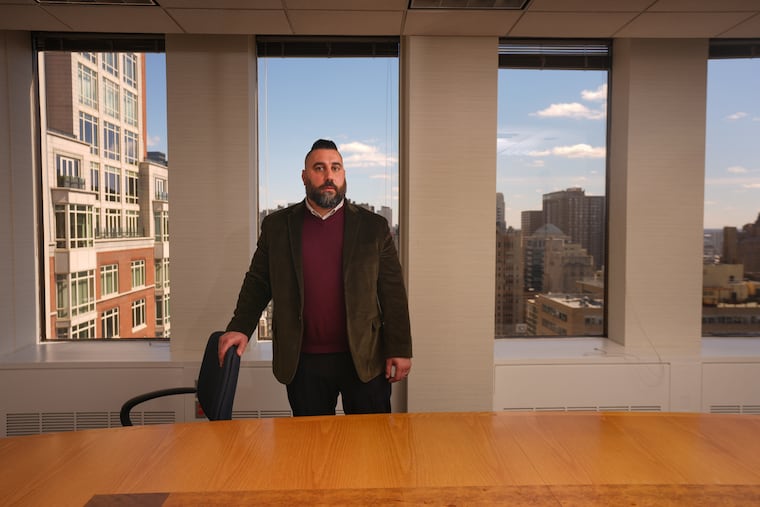
The union includes gas and electric field workers, such as linemen, as well as back office and call center employees. Their current five-year contract expires March 31, and negotiations so far have been less than productive, said union president Larry Anastasi.
“We’re bargaining in good faith,” said Anastasi. “We don’t want to fight the company — but we will.”
The contract negotiations come as electricity prices have been on the rise and following a big increase in profits for Peco. The energy company’s net income was $814 million last year, up 48% from 2024, parent company Exelon reported in February.
Peco provides electricity to 1.7 million customers in southeastern Pennsylvania and provides natural gas to 553,000.
“Our employees are the backbone of our business, and we recognize the talents and value they bring to the company,” Peco spokesperson Candice Womer said in an email Wednesday. “We are bargaining in good faith, and we are confident that we can reach an equitable agreement that is fair for our employees and best serves the needs of our customers.”
What are workers looking for?
Linemen, which make up between 400 and 500 union members, said Anastasi, are some of the highest paid members of IBEW Local 614. They can make as much as $59 an hour after four years on the job, but enter the field as apprentices making $26.77.
Peco spokesperson Womer said the average total pay for a lineman in 2025 was over $243,500, including overtime.
McGill acknowledged that “sounds like you’re making a lot of money.” But the unpredictability of the job is a pain point. While he typically works the dayshift Monday through Friday, overtime calls can come in at any hour of the day when issues emerge.
“You’re singing happy birthday and the phone rings. It’s Peco calling because a tree fell, broke a pole, pulled some wire down,” said McGill.
Peco linemen make less than the established prevailing wage set in Philadelphia for city contracted work, Anastasi noted, and some union workers elsewhere in the industry are making more.
The national median hourly pay for installing and repairing electrical power lines was $44.50 in 2024, according to the U.S. Bureau of Labor Statistics. On average, these workers made an hourly wage of $45.86 in Pennsylvania, $51.77 in New Jersey, $43.06 in Delaware, and $51.09 in New York that year, according to BLS data.
The union is looking to increase wages not just for linemen, but for all of its members.
Call center employees have their own challenges, like unhappy customers yelling at them, said Anastasi, describing it as a “brutal job with very high turnover.”
Peco spokesperson Womer said the company “continues to offer attractive wages and benefits that exceed those of our industry peers in the region.” Womer also added that the company has robust training programs to ensure safe work.
The union wants one uniform pension plan because currently workers hired after 2021 have no pension, and others have seen their pensions reduced, said Anastasi.
“We’re all out doing the same job,” said McGill, who has a pension. “We’re all working in the pouring rain, climbing over debris in the road and in the backyards and things like that, and I’m getting different benefits than they’re getting.”
If the new contract doesn’t improve benefits, Anastasi said, “a bunch of guys” have said they may quit Peco and go work for contractors.
When negotiations do not advance, one avenue unions pursue is to hold a strike authorization vote. It doesn’t immediately lead to a strike, but a “yes” vote paves the way for a work stoppage and adds pressure on the company to reach an agreement. IBEW has not reached that point yet.
“You can’t strike over everything, obviously,” Anastasi said. “We’re not going to all walk away for a sick day, but if you can’t retire with dignity and you’re not making adequate wages in comparison to the rest of the industry, those are legitimate priorities.”
Growing the union
Peco has seen strong interest in its union roles, Womer said, and the company’s union workforce has grown by 32% in the last 15 years.
“We are proud to have generations of families working in represented roles across the company, exemplifying the continued desire to work at Peco,” said Womer.
Nearly a third of IBEW Local 614’s union members are set to retire in the next two to five years, Anastasi said. But he doesn’t find himself boasting Peco as an employer to industry newcomers.
“The training’s not great. The company is incredibly difficult to deal with. Your medical benefits are atrocious, and you’re still gonna have to put yourself in harm’s way every day you work here,” he said.
But he said he’s trying to change that.
“Would I like to make it a great place to work? Absolutely. That’s what we’re trying to do.”