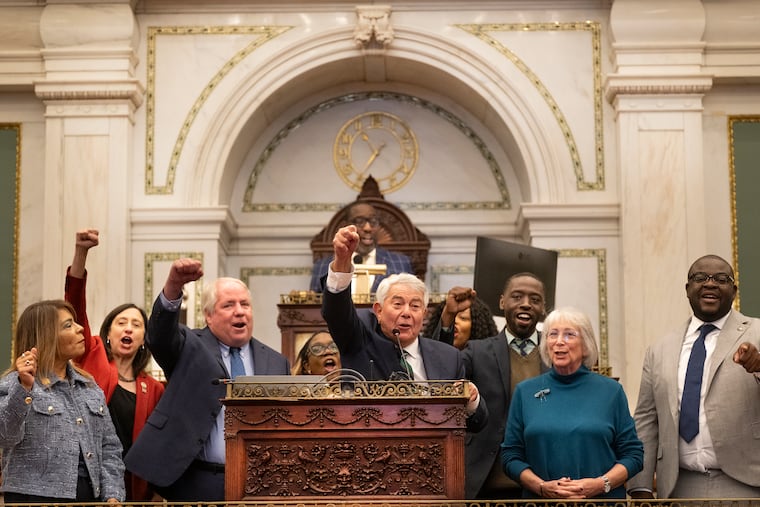
Philly-area federal workers are finally getting paid again. But they fear another shutdown.
As they begin to receive retroactive paychecks from the shutdown, federal workers spoke of lingering financial damage and worries that another lapse in funding could come in late January.
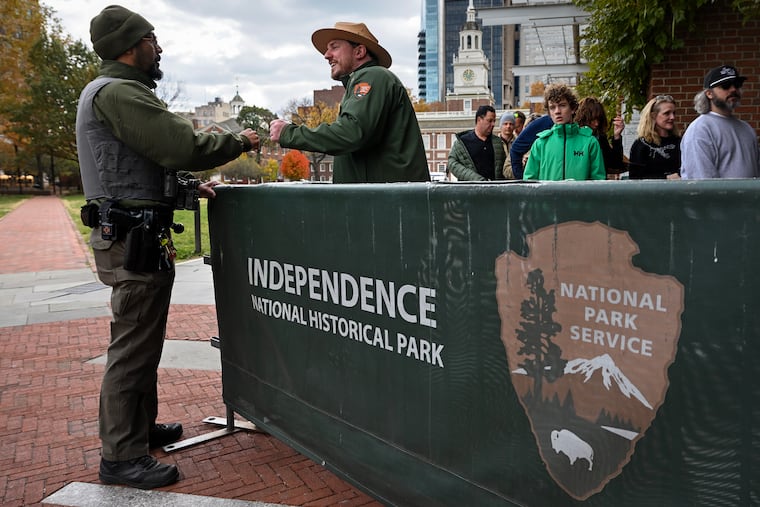
The longest ever federal government shutdown is now in the rearview mirror, but not for federal workers.
With their jobs back to normal, some local federal employees said worries created by the shutdown remain — one said their credit score suffered, others noted their Thanksgiving tables will be less festive. And for many, another shutdown in a matter of weeks is a real concern.
Federal employees — whether furloughed or required to work during the shutdown — missed paychecks during the 43-day lapse in federal appropriations, the longest ever in United States history. Workers sought out food pantries, delayed payments on bills, and tried to make ends meet for their families ahead of the holidays.
“I will be paycheck to paycheck for the next couple of months maybe, before I can start accumulating my savings again,” said a Philadelphia Veterans Benefits Administration employee, who was working without a paycheck during the shutdown.
The Inquirer agreed to withhold the names of federal employees interviewed due to their fear of retaliation for speaking out. Despite workers beginning to receive retroactive paychecks from the shutdown, they spoke of lingering financial damage and worries that yet another lapse in funding could happen in just a couple of months.
The bill to end the shutdown, signed into law by President Donald Trump on Nov. 12, funds the government through Jan. 30. It includes protections for federal employees such as reversing layoffs that took place during the shutdown, and ensures back pay for all government workers throughout that time, which had been put into question by the Trump administration. And certain government agencies, such as Veterans Affairs, the Department of Agriculture, and the Food and Drug Administration, have been allocated a year’s worth of funding.
But after Jan. 30, if lawmakers once again fail to agree on keeping the government open, some federal workers could once again face a lapse in their pay.
“We’re bracing for Jan. 30,” said Philip Glover, national vice president of the American Federation of Government Employees District 3, the union that represents federal employees in Pennsylvania.
The recent shutdown and the possibility of another are among a series of obstacles that government workers have faced this year. The Trump administration’s efforts to shrink and reshape the federal workforce have included layoffs, pushing employees to resign, and the dismantling of collective bargaining agreements. When government funding lapsed in October, the Trump administration used it as an opportunity for more firings.
Federal workers have been “dealing with a layer cake of trauma,” said Max Stier, founding president and CEO of the Partnership for Public Service, a federal government management organization.
“This is not simply one incident, but it’s one on top of a bunch of them that this administration has put in their way,” Stier said.
The financial strain
At the Social Security Administration in Philadelphia a benefit authorizer said Monday that she and her coworkers had started getting their back pay, but she had already felt the impact of missing checks.
“We assumed we could just call and everybody would place everything on hold, and that was not the case,” said the Social Security employee.
The benefit authorizer had put her mortgage and car payments on hold, but some banks and utility companies weren’t as accommodating, and she accumulated overdraft fees from a credit union.
Her role required her to work through the shutdown without pay. (In Pennsylvania, furloughed workers may apply for unemployment benefits, but those who continue to work, even without pay, may not.) The benefit authorizer looked for additional work, unsure how long the shutdown would last. Some of her colleagues in Philadelphia picked up gigs with Uber, DoorDash, and Instacart, she said.
Another Philadelphia Social Security employee, who has been with the agency for 15 years, noted that some colleagues picked up night shifts at Amazon or work in home healthcare.
“People living paycheck to paycheck, they needed something to pay those bills that were absolutely essential that they had to pay,” the 15-year Social Security employee said.
For one federal employee from Central Jersey, 2025 already came with an unexpected career turn when they lost their job at U.S. Housing and Urban Development, as part of a mass layoff of probationary employees. They found a job at the U.S. Department of Commerce, in Virginia, which allowed them to support their mother and three kids back in New Jersey.
Wary of permanently moving to Virginia during such a volatile time in the federal workforce, the Commerce employee commutes eight hours by Amtrak twice a week and stays in a $200 per night hotel on workdays.
During the federal shutdown, the Commerce employee had to work without a paycheck. They used up their savings paying for the commute, hotel, and other expenses. Ultimately, they took out a bank loan to cover their expenses.
The government shutdown exemplifies a lack of stability in the workforce, the Commerce employee said. “To be honest, you feel unsafe all the time, and you feel like you’re not deserving that.”
Worries remain ahead of the holiday season
The Philadelphia VBA employee, who worked without pay during the shutdown, received their back pay Monday. The single parent said they were one more missed paycheck away from turning to food pantries and living off credit cards.
“Usually I’m the one donating around this time,” the employee said last week. “I usually adopt a family and provide them with the meal and then their gifts and stuff from our local community churches and outreach programs.”
Thanksgiving is the time they “splurge,” but now the shutdown has made them contemplate their finances. “I haven’t even thought about the process of even having a Thanksgiving dinner on the table because I didn’t want to spend the money,” the VBA employee said. By Christmas, they hope to be caught up on payments.
It’s a similar story for one Philadelphia VA Medical Center employee who worked without pay through the shutdown. Speaking days before the shutdown’s end, the employee said their credit score had taken a hit. They reached out to creditors and got some of their payments deferred, but relief won’t set in until the employee can catch up on their water, electric, gas, mortgage, and car bills.
A “big feast” for Thanksgiving is off the table. “You can’t do that now because you don’t have the funds,” they said.
‘Fear of what’s to come’
Throughout the funding impasse, Philadelphia’s federal workers turned to each other for assistance.
At the VBA, supervisors set up a small food pantry several weeks into the shutdown. The VBA employee said that didn’t feel especially helpful. “That was our second paycheck missed, and that was the best that they could come up with,” the employee said.
“It’s business as usual in the eyes of the VA, and they expect us to work like nothing’s going on in our real lives.”
At the Social Security Administration, workers banded together to start an impromptu food pantry, the Philadelphia benefit authorizer said.
“Everything was taken. People needed it. People were really pinching pennies,” she said.
The national office of AFGE, the largest federal workers’ union, backed the deal to end the government shutdown. “Government shutdowns not only harm federal employees and their families, they also waste taxpayers’ dollars and severely diminish services depended on by the American people,” AFGE national president Everett Kelley said in a statement on Nov. 10.
But some thought it should have ended differently.
In the days leading up to the deal, dozens of AFGE Local 3631 members, who are employed at the Environmental Protection Agency, said in a local union survey that they did not want their local to support budget legislation such as what passed. Their concerns were with an expected rise in healthcare expenses across the country.
The union local had polled members at the end of October, according to local union officer Hannah Sanders. The survey got more than 100 responses, and over 85% said the local should only support a deal if it preserved subsidies for Affordable Care Act healthcare plans and avoided cuts to Medicaid.
In Washington, most Senate Democrats held out, only supporting a vote on an appropriations bill that would extend ACA subsidies. But eight senators, including Sen. John Fetterman (D., Pa.), crossed party lines to back the Republican bill that omitted the subsidies.
Sanders said there are few changes between the recently passed deal and the bill that could have averted the shutdown back in September. “We would have not had this shutdown, and people wouldn’t have, you know, gone without pay or gone without SNAP benefits and all these things. So it’s super frustrating to see that this is how it all resolved,” said Sanders.
Now, the benefit authorizer at the Social Security Administration says, people are concerned that another shutdown could be on the horizon come Jan. 30.
“We are in complete fear of what’s to come,” she said.