Wawa, Independence Blue Cross, and other Philly-area businesses are investing in a new partnership to create more middle-class jobs
Three industries in the Philadelphia area already offer jobs with good pay that don’t require a four-year degree. Business leaders have a plan to create more of them.

Why are so many working people in the Philadelphia region just getting by, not reaching financial stability? It’s because the area needs more jobs at companies that bring in money from other cities and states, a new business group argues.
But that could change by investing in three industries that already have a foothold nearby: business software, biomedical engineering and production, and specialized manufacturing — such as making medical device parts or industrial electronics. That’s according to the Greater Philadelphia Growth Partnership, which launched Tuesday.
The new group is bringing together local companies such as Wawa, Essential Utilities, Jefferson Health and Thomas Jefferson University, Independence Blue Cross, Cencora, and the Pew Charitable Trusts, to invest in workforce development for those three sectors.
It could stand to benefit employers like Boomi, Rhoads Industries, and Janssen Biotech, which the partnership highlighted in a report as companies that already provide these well-paying jobs.
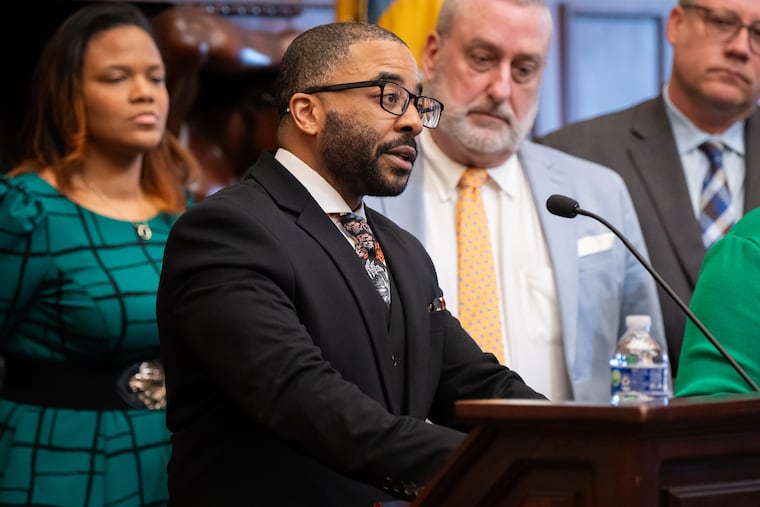
“Our economy and our residents should be thriving. Instead, over the past decade, we created 104,000 fewer traded sector jobs than expected,” said Claire Marrazzo Greenwood, executive director of the new group.
Unlike jobs and organizations that exist to serve the local community, the traded sector sells goods and services to people in other communities as well. These kinds of jobs “bring new money into our economy and pay wages that let a family get ahead, not just get by,” Greenwood said.
The partnership is building out a plan based on recent research from the Brookings Institution, which identified the industries ripe for creating good, well-paying jobs that often don’t require a four-year degree.
“We have a huge gap between what this region could be and what it is, and today we’re hoping we can start to do something about it,” said Greenwood.
The goal is more jobs with healthcare coverage and “family-sustaining wages,” defined as $29.76 per hour or more. Business software, specialized manufacturing, and biomedical engineering and production are already creating these jobs in the region, according to research cited by the partnership.
The Philadelphia region “has a real edge,” in these industries, said Greenwood. If these kinds of companies grow in the region, she said, it will “generate quality, accessible jobs at scale, open to residents at all skill levels, not just those with four-year degrees.”
The Greater Philadelphia Growth Partnership has raised $5.4 million to support the first three years of the initiative, and the Chamber of Commerce for Greater Philadelphia has pledged $4 million annually, which includes the cost of staff support. Greenwood said the initiative has a $6 million budget for the first year, and plans to grow its annual budget to $10 million.
The group has hired an economist for research and data analysis, and the budget will be used to convene partners, attract business, and for talent pipeline work, among other areas.
“This partnership brings together groups that, frankly, have competed at times, for jobs, for business, for funding. But this is different. It asks all of us to move together,” said Wawa CEO Chris Gheysens at the event on Tuesday.
But seeing the outcomes of the plan will take time, says Greenwood.
“We have watched this region fall short of what it could be for people and businesses that call it home, and that’s ultimately what this is about,” said Greenwood. “It is about whether a young person growing up in this region today will have more opportunity available to them than the generation before.”