Local small businesses are also struggling with affordability. Here’s how they’re coping.
Inflation, high interest rates, and fears of a potential recession are top challenges for small-business owners.
Many small- and midsize-business owners don’t think the economy is booming.
In a recent survey of 800 small- and midsize-business owners by Nationwide, nearly half rated the current U.S. economy as “poor” or “fair.” They cited inflation, high interest rates, and fears of a potential recession as their top challenges.
So how are local businesses navigating these challenges?
Cutting business costs and reducing waste
Carley Razzi, president of Penns Woods Winery in Chadds Ford, has been paying very close attention to her expenses. She’s not alone.
“We’ve been very disciplined about overhead and renegotiating vendor contracts where possible,” she said. “We’re also being more strategic with purchasing and taking advantage of bulk purchases. We even share freight with others if they are purchasing glassware or other materials around the same time.”
Cutting back on square footage is another tactic, which Manayunk lingerie boutique Expect Lace has employed.
“We intentionally downsized to a smaller, more curated retail footprint to lower rent and operating expenses,” said Expect Lace owner Shaw Lewis. “We’ve also tightened our inventory assortments in order to save room and renegotiated vendor terms where possible. Because we have less space, we have become much more disciplined with purchasing.”
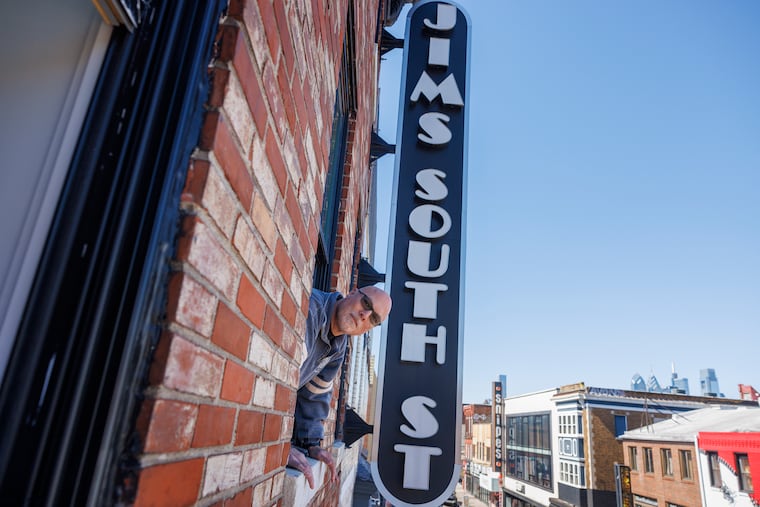
Ken Silver, who owns Jim’s Steaks on South Street in Queen Village, says he is aware of “every wrap” that goes on a cheesesteak and “every bag” that a cheesesteak goes in.
“Everything that we do, everything that we waste, everything that we accidentally break, costs money,” he said.
Some businesses are raising prices
Regardless of how many costs can be cut, at some point prices have to be raised. Many business owners are loath to do this, for fear of losing customers. But most have little choice if they want to stay profitable.
At Puerto Rican restaurant Boricua Restaurant in Philadelphia, owner Hector Serrano says he’s passing on price increases to customers cautiously.
“Almost every time the costs of goods go up, we must mark up our prices,” he said. “The customers assume that we are making more money, but that’s far from the truth. We are trying to survive in an expensive economy.”
Even after raising prices many business owners continue to face declining profit margins. Silver, for example, said he would have to raise cheesesteak prices by another $5 today if he wanted the same margin he had 10 years ago. But he could “never charge that much,” he said.
To avoid raising prices even further while maintaining profits, Serrano has put off hiring more staff.
“Sometimes I am alone cooking, serving tables, and doing inventory because I can’t afford to have extra employees,” he said.
Using technology can help
A good point-of-sale or accounting system, a better use of spreadsheets, offering remote access to phones and email, and online invoicing and ordering can make a real impact. There’s also potential to enhance productivity with AI, but many businesses still find these investments to be expensive and, for now, limited.
Charrita Jones, owner of women’s clothing boutique Senoj Clothing in Philadelphia, said she sees AI as a potential cost-saving tool and hopes her business can leverage it to support employees.
Lewis thinks there are limits to what technology can do right now.
“AI and automation help with efficiency when it comes to marketing, scheduling and operations, but they are not replacing labor in a retail environment like ours,” he said. “The technology can help us move faster and leaner, but it won’t solve rising fixed costs.”
Focusing on customers
Smart business owners know the importance of focusing on existing customers and keeping their loyalty with more community involvement, ongoing promotions, and special offers. Some businesses have expanded their product offerings to seek out new revenue streams.
For example, Jim’s Steaks is now doing catering and hiring out its dining room for events for the first time, Silver said. He also started selling chicken cheesesteaks for the first time. Jim’s recently opened a location at the Philadelphia International Airport, and he’s considered franchising opportunities but so far has held off.
“If I was 20 years younger, I would be looking at where another Jim’s would be located,” he said.
Keeping employees
One thing that seems to be a common theme among small businesses: protecting their workers.
Many are struggling to preserve payroll, benefits, and livable wages, and making cuts elsewhere first. In some cases, owners are reducing their own pay, working longer hours, or accepting lower margins to keep their teams intact.
Razzi of Woods Winery and Jones of Senoj Clothing both said they have chosen to absorb as much of the rising employment costs as possible to avoid pushing any burden on to their teams.
Most business owners have accepted that today’s worker expects benefits such as health insurance, flexible time off, and retirement contributions, which weren’t always part of a pay package as recently as 10 years ago. So employers have had to absorb these costs, even cutting their own pay sometimes. But there is a limit.
“At a certain point, putting employees first becomes unsustainable if revenue doesn’t support payroll,” said Lewis. “If we are overcommitted to payroll, we risk being unable to reinvest in inventory, marketing, or growth.”