Philly yoga, meditation, and mental-health businesses see more demand post-election
After Donald Trump's win, mental-health professionals and mindfulness experts are helping anxious people "be in the moment, not in the next four years."
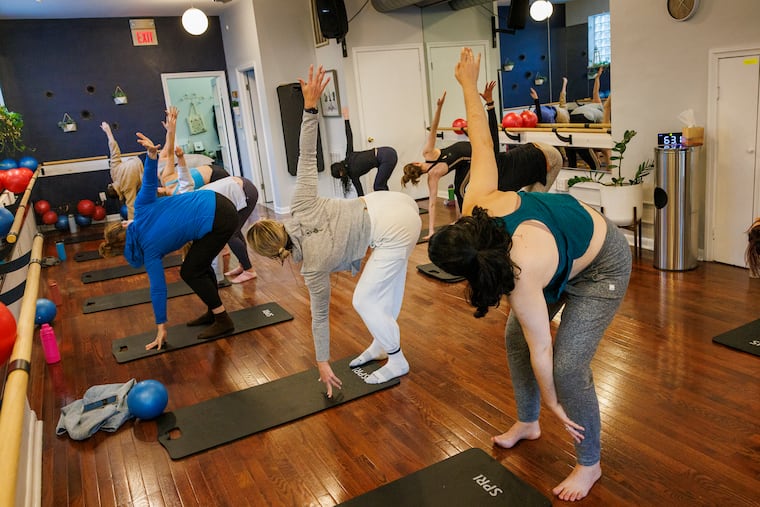
At 7:15 a.m. Nov. 6, just hours after Donald Trump was declared the winner of the presidential election, the mood in a Washington Square West yoga studio felt heavy.
“Folks were sobbing throughout class,” said Callie Kim, founder of Tuck Barre & Yoga. Students expressed a variety of emotions: “Sadness, frustration, overwhelmed, feeling very tired, exhausted, physically and emotionally.”
But all 18 of them — 17 regulars and one newcomer — showed up to the sold-out class.
It was the start, Kim said, of a busy week at Tuck’s three locations across Philadelphia, Pennsylvania’s most Democratic city and one of few areas in the swing state where a majority of voters rejected the president-elect in his third bid for the White House.
At the Washington Square West, Northern Liberties, and Point Breeze studios, there was about a 15% increase in attendance, Kim said, and a noticeable influx of new faces. Was it a coincidental rush of people choosing to ramp up their wellness routines all at once? Feedback in the studio suggests not, Kim said.
“It’s about finding some way to regulate their emotions,” Kim said, “and for a lot of folks, it’s movement.”
Other movement- and mindfulness-related businesses said community members have turned out in similarly robust numbers over the past week. Not only are anxious residents signing up for yoga, barre, and pilates classes, but they’re also booking private meditation sessions, joining group nature hikes, downloading mindfulness apps, and seeking out therapy.
If the trend continues in the coming weeks, and then during the next four years of a second Trump presidency, it could provide a small but meaningful boost to business owners. At Tuck, for example, first-timers get one free class, then a month of unlimited classes for $99. After that, sessions cost between $18 and $28 apiece, or regulars can opt for additional unlimited packages, which come with a greater discount per class but a larger up-front cost.
Others turned to meditation apps, such as Headspace and Calm, which cost $13 and $15 a month respectively. On election night, Calm paid for airtime to run silent 30-second ads during CNN and ABC’s live coverage, and at times sponsored CNN’s “Key Race Alerts.” Headspace saw spikes in interaction with its “Politics Without Panic” collection.
Overall engagement was up across both apps. Downloads of Calm, which has limited free content, increased 30% compared to the prior week, according to a company spokesperson. In the week after the election, Headspace saw a 13% increase in subscriptions and free trials — including a 11% rise in Pennsylvania and a 24% jump in New Jersey.
Jon Kole, Headspace’s senior director of psychiatry and medical director who is based in Pittsburgh, noted particularly high engagement the day after the election, including a 1,700% rise in use of the app’s “Pause with 5 Calming Breaths” exercise.
“People just wanted to be in the moment,” Kole said, “not in the next four years.”
Meditation centers see people seeking more calm
Dominique London has spent more and more time at the Black Lotus Holistic Health Collective over the past two years. First, it was once a month, then a couple times a month, and recently it’s been at least once a week.
The week of the election, London, a 39-year-old master’s student, spent parts of several days at the Germantown space, a cooperative that includes therapists, meditation teachers, yoga instructors, and other mindfulness professionals. London was one of dozens of people who took part in the collective’s free two-day “Grounding in Calm” event, which included meditation and yoga and took place on Election Day and the following morning.
“Leading up to the election, I was really disassociating a lot. I didn’t want to engage in social media. I didn’t want to feel the anxiety of others,” she said. When she learned about the election events at Black Lotus, “I was like this is exactly what I want to be spending my time doing.”
The meditative time made the emotional weight of the days feel a little lighter, London said, and it allowed her to go on with her day Wednesday with less paralyzing anxiety than she felt in 2016. She wished that she had such an outlet back then.
Since the election, Cassandra Renee Bolding, founder of Black Lotus, said she’s received a flood of emails, asking what the collective can do next to help a stressed community.
“There have been — oh my goodness — requests for me to come out, for us to come out, to provide similar services as ‘Grounding in Calm,’ requests from different agencies and companies,” said Bolding.
She usually takes Saturday off but ended up going to two different events the Saturday after the election to provide sound therapy and other wellness resources. In her work as a licensed professional counselor, she said she has responded to five crisis sessions in the past week, and other patients have requested to increase the frequency of their appointments to cope with the election.
As for the collective, she’s said she’s hoping to keep providing regular programming at a “nominal” cost, such as $16 for a yoga session or $1-a-minute for a massage. She said she often asks herself: “How do we share this burden?”
At the Veda Den in Cherry Hill, founder Nicoli Rena Sinclair said she started getting emails within hours of the election results coming in. Most were from women wanting to book $300 to $500 private meditation sessions with friends or partners. She did one of those three-hour sessions last Sunday, and another on Monday.
“One in particular was really struggling and they vocalized it,” Sinclair said. “It was the fact that she couldn’t control that Trump is now in office. So now what?”
Sinclair said she stresses that acceptance is different than complacency: People can still protest, participate in activism, and take other actions as an engaged citizen, while accepting a fact that they cannot change.
She added: “It causes friction in the body when you can’t accept things.”

- Remember Mr. Rogers: “What’s mentionable is manageable,” Jon Kole said, quoting the beloved TV host. Try to name what you’re feeling and validate it. Then, bring yourself to the present. Think of something you can do to address what you’re feeling right now.
- “Go back to the things that make you feel good,” as Callie Kim put it. Make time for walks, talking with friends, watching comfort shows, reading a good book, or doing anything else that brings you joy, preferably without your phone.
- Move your body: You don’t have to pay money to do so. You can go on a walk, run, bike ride, or pull up a free yoga or exercise video online.
- Set scrolling limits: About to grab your phone? “Ask yourself: 'What do I have the bandwidth or capacity to do?'” Cassandra Renee Bolding suggests. “Can I read stuff? Am I going to watch stuff? How long am I going to do it?”
- Make a plan for when you feel anxious or overwhelmed: Bolding recommends box breathing, the technique of inhaling for four counts, holding your breath for four counts, exhaling for four counts, and then breathing regularly for four counts.
- Control what you can: Think about ways you can act in line with the values that inspired your vote, Kole suggests. This may mean volunteering, adopting more environmentally friendly habits, or writing someone a kind note.
- Reach out to your people: “A lot of us tend to isolate. We sort of lose our faith in people, and I think that’s what certain folks are feeling right now,” Kim said. “The reality is connecting with each other is what helps us lift everybody and lift ourselves.”
- Look for the good: Some of the people who are most distressed right now “assume the people who did not vote in their direction did so for the worst possible reason,” Kole said. “Consider that no one is fully embodied by one decision. Part of moving forward is to find other ways to identify shared humanity and connection.”
Sources: Jon Kole, Headspace's medical director and director of psychiatry; Cassandra Renee Bolding, founder of Black Lotus Holistic Health Collective and a licensed professional counselor; Carrie Kim, founder of Tuck Barre & Yoga