SpaceX IPO extends Elon Musk’s influence across more than just AI
SpaceX’s IPO, the largest in history, dramatically increases Musk’s personal wealth and broadens his power over the global economy, worrying critics.
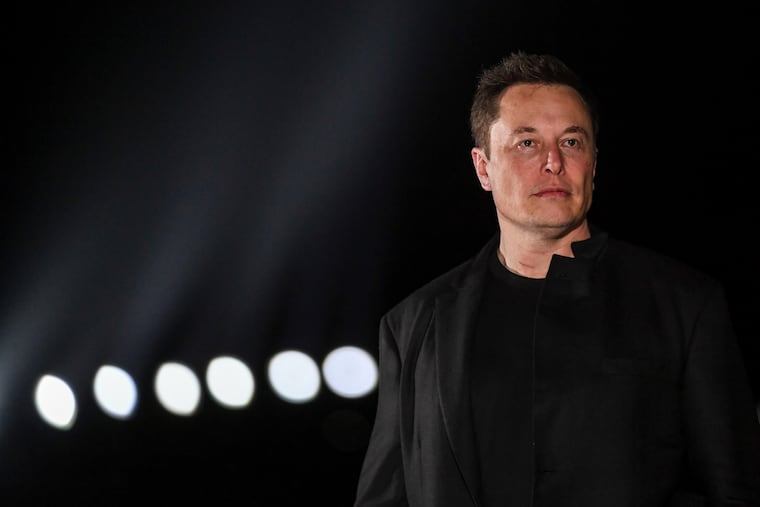
Elon Musk controls reusable rockets that are the backbone of the U.S. space program. His constellation of satellites in space represents a pillar of U.S. defense. And he has struck deals with leading artificial intelligence companies to fuel the AI revolution.
Now the public sale of SpaceX’s shares will not only dramatically increase Musk’s wealth, making him the world’s first trillionaire, but it will expand his reach into pivotal sectors of the global economy.
All the while, it sets up Musk’s rocket company to dominate the cosmos as entities across the globe vie for control of space.
“U.S. space power is built on the back of SpaceX. Period. Full stop. What does that mean?” asked Clayton Swope, deputy director of the Aerospace Security Project and senior fellow at the Center for Strategic and International Studies. “It means SpaceX has incredible leverage over the government right now.”
The IPO is the largest in history, raising $75 billion to fuel the company’s ambitions. But SpaceX also has a recent track record of losing billions of dollars, including $13 billion since the beginning of 2023.
In IPO documents, SpaceX has laid out an ambitious plan to become an essential hub of the artificial-intelligence age. Despite building its reputation on space launches and its satellite internet service, Starlink, SpaceX sees the vast majority of its market opportunity — all but $2 trillion of an estimated $28.5 trillion — in artificial intelligence.
That opportunity rests on major, even far-fetched, bets. A constellation of millions of satellites for space-based data centers will power AI from orbit, and the company will vastly expand its Starlink internet service. Starshield, SpaceX’s secure satellite network for government, will be used for defense and national security applications.
The diversity of SpaceX’s business, which spans AI, social media, and internet connectivity, will likely make it a clearinghouse of lucrative data, allowing it to improve on various capabilities and outpace rivals.
Its plans are ambitious. Musk has upended global industries — making electric cars mainstream, bringing internet access to remote areas with thousands of satellites, and reviving the Space program. With SpaceX’s IPO, Musk turns his boundary-breaking approach to space, combining capabilities his firm has honed over decades.
Musk mused recently, in an interview with SpaceX employees posted on X, about a core facet of the company’s mission. “How do you decide what progress a civilization has made?” Musk asked. So far, humanity is harnessing a tiny amount of Earth’s power and a minuscule proportion of the sun’s, he added, marking gaps SpaceX hopes to fill.
The company’s plans however, are raising concerns among some in the space and tech sectors about the level of power SpaceX has amassed — which may give him tremendous sway over the U.S. space program.
That power takes several forms.
“The cost is the big one for me,” Swope said. “Where is the best value proposition? Is it with the company that holds all the cards?”
By taking SpaceX public, Musk has realized an ambition that began more than two decades ago when he took the earnings from the sale of PayPal and seeded them into two companies: Tesla, which debuted on the stock market in 2010 and went on to become the world’s most valuable automaker, and SpaceX, where the entrepreneur pioneered reusable rockets and made space exploration into a private enterprise.
The space company debuted on the Nasdaq composite index on Friday, under the ticker symbol SPCX. Its IPO shares were priced Thursday at $135 each. SpaceX opened Friday at $150 a share, then rose to around $168, before finishing the day just below $161.
SpaceX’s significant losses have not muted its hype. The company has attracted an unusual level of interest from retail buyers, who have jockeyed for a stake in the next potential Musk moonshot.
To some, SpaceX’s business case is underscored by the high level of importance the U.S. government ascribes to it.
“This is the United States space program,” said Ross Gerber, a SpaceX investor who has emerged as a Musk critic in recent years. “We’ve outsourced from NASA to SpaceX.”
In IPO documents, SpaceX describes how its satellites have been deputized for potential defense purposes.
“What this really is about is about national security and expanding our ... footprint in space in a way that no other country could,” Gerber added.
This interdependent relationship provides upsides for the company, Gerber said, but “there is a risk inherent,” in the country’s level of dependency.
Analysts expect significant buy-in for SpaceX’s ideas when it takes to the public markets.
“Musk has always been very good at selling the future to investors, so I am not surprised by the excitement built into the valuation expectations for the IPO,” said David Meier, senior investment analyst at the Motley Fool. Meier noted, however, that SpaceX’s IPO pricing and valuation “looks very aggressive relative to the financial performance it has put up and expects to put up in the near future.”
Still, SpaceX may not shatter all of the lofty expectations built into its IPO.
Nick Smith, a senior analyst at research firm and IPO stock index Renaissance Capital, said IPOs of large companies have a mixed track record. For every winner like Meta, Smith said that there are also losers including Rivian.
The electric vehicle company went public in 2021 with a market value of about $100 billion as its stock shot up on its first trading day. Today Rivian is worth about $20 billion.
Smith noted that SpaceX’s investment bankers have sketched out a path to booming revenue, including from two deals with AI rivals Anthropic and Google to rent out data-center capacity from SpaceX’s xAI business and plans to deploy a more capable but much delayed rocket. If SpaceX’s annual revenue climbs well above $100 billion in a few years from about $19 billion last year, “I think the valuation is OK if you believe it can do that,” Smith said.
Smith also said that Musk inspires a magical faith in his capabilities to make the impossible happen. This “Musk effect,” Smith said, makes his companies’ value become “divorced” from typical calculations of what companies should be worth.
Swope, the senior fellow at the Center for Strategic and International Studies, said he is hopeful SpaceX won’t outgrow the entities it has served in the past.
“The government’s mission and U.S. space power are so dependent on this company,” Swope said. “No one wants to see the period where it could be weakened.”
Still, he wondered of the IPO, “How will it change the company?”
The Associated Press contributed to this article.