Former Susquehanna contractors settle lawsuit over TikTok’s origin with Bala Cynwyd investment firm
A trial saw lawyers square off over Susquehanna’s reported $15 billion stake in the Chinese company.
The Bala Cynwyd-based investment firm with major holdings in TikTok’s parent company settled a lawsuit brought by former contractors who alleged they were entitled to some of the firm’s stake in the $315 billion company.
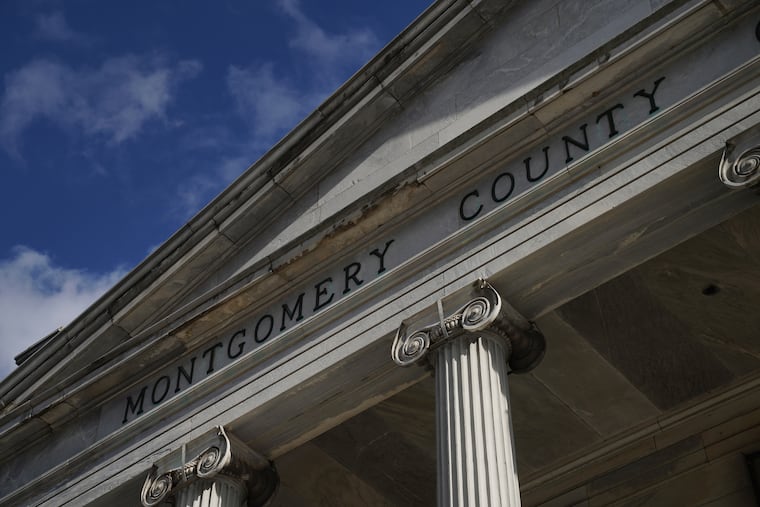
Lawyers for Susquehanna International Group and the plaintiffs, Peter Tan and Zhang Hao, announced the agreement Monday morning in the Montgomery County courtroom where, for the past week, both parties had argued the case before a jury.
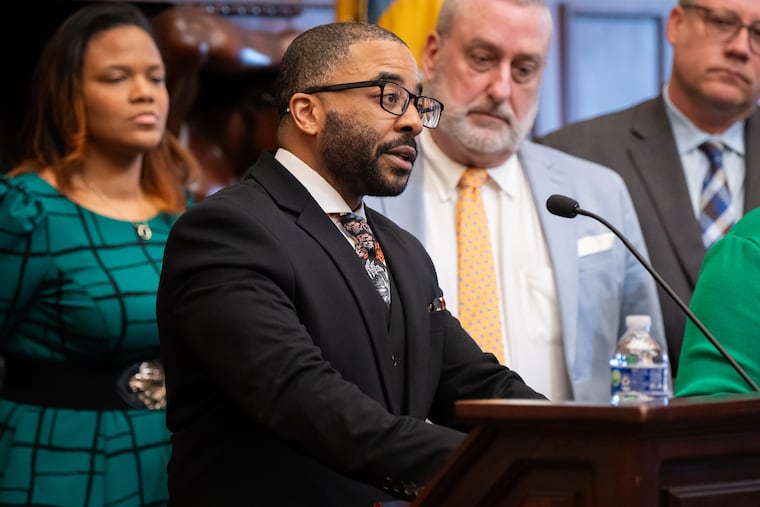
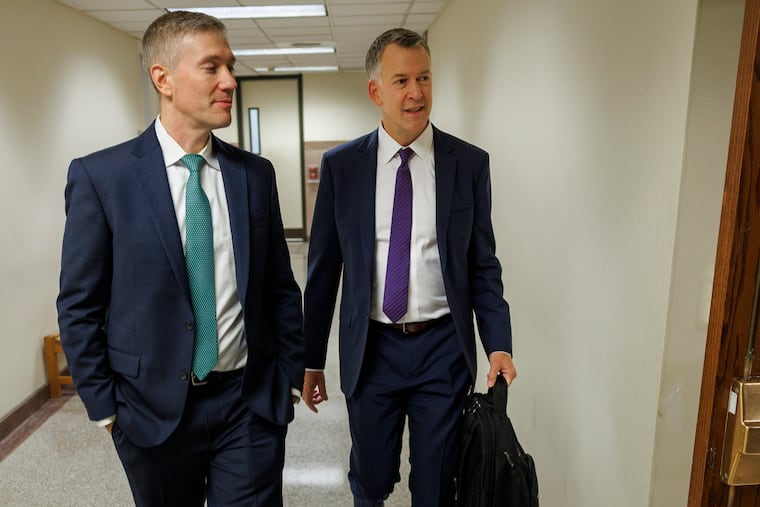
“There’s not really much I can say, other than we’re pleased that the case was resolved,” said Jacob Buchdahl, lead attorney for the plaintiffs with the law firm Susman Godfrey L.L.P.
News of the deal brought an abrupt end to what was expected to be another week of winding litigation. Though the jury did not deliver a verdict, Judge Steven C. Tolliver told the group they “still played a role” in resolving the dispute.
Plaintiffs Tan and Zhang, former contractors who helped connect Susquehanna to venture capital opportunities in China during the mid-2000s, alleged in a complaint that the technology powering a digital real estate company they procured for the firm, Kuxun, would go on to form the bedrock of TikTok’s parent company, ByteDance.
According to the plaintiffs, Susquehanna — the Wall Street giant founded by GOP megadonor Jeff Yass — quietly spun off Kuxun and its technology for its own benefit, misleading Tan and Zhang about the sale and ultimately cutting them out of a profit-sharing deal that today would be worth millions.
Susquehanna owns a roughly 15% stake in ByteDance. TikTok remains one of America’s most popular apps, with more than 130 million users per month.
Susquehanna’s lawyers vehemently denied those claims, downplaying the similarities between Kuxun’s powerful search engine technology and the algorithm ByteDance uses across a host of popular apps. They said the firm’s retention of the real estate company was not a secret, but rather a purchase that was negotiated.
“Our opening statement made clear that Plaintiffs’ case was based on a series of factual allegations that just were not true,” said Scott Edelman, lead trial counsel for Susquehanna and partner with Milbank.
Edelman’s team also underscored a roughly $400,000 buyout Susquehanna offered Tan and Zhang in 2018 for their involvement with the firm’s early Chinese investments (Zhang accepted the offer, according to Susquehanna’s attorneys, while Tan declined).
Still, unsealed documents including internal emails and memos cast light on Susquehanna’s early interest in Kuxun’s technology and the talent of one of its top engineers, Zhang Yiming.
After Kuxun’s sale, Susquehanna’s Chinese arm would go on to nurture Zhang Yiming’s talent at 99Fang, a short-lived digital real estate company. In 2011, Zhang Yiming approached higher-ups with the idea for ByteDance, which would use a similar deep-search functionality for news and entertainment rather than housing. Susquehanna invested a little more than $2 million in the idea.
Throughout the trial, attorneys for the plaintiffs sought to remind the jury of what they saw as strong connections between Zhang Yiming’s technology and the three companies. They said Susquehanna’s investment in 99Fang (and eventually ByteDance) meant their clients were still entitled to the profit-sharing agreement stemming from Kuxun.
Yass did not attend the proceedings, though top Susquehanna brass were present throughout. That included Arthur Dantchik, Yass’ longtime business partner, Susquehanna cofounder, and according to Forbes, one of the wealthiest 200 individuals in the country.
Dantchik’s sworn testimony offered rare public remarks from the multibillionaire.
“I deny all of these allegations entirely,” Dantchik told the court Friday, calling them “completely insulting and offensive to the reputation I’ve built up in 43 years of business.”
In Buchdahl’s assessment of the trial, the jury had been able to understand the connections in his argument despite the cases’ overall complexities, he said.
“I think it was apparent almost on its face,” Buchdahl said. “It’s really obvious the way Kuxun was transformed and then divided into 99Fang and then ByteDance.”
Buchdahl credited the jury’s participation for reaching the settlement — even if that outcome was achieved without a verdict.
“This case didn’t settle until Susquehanna was able to see a jury react to some of this evidence,” he said.
Edelman, representing Susquehanna, had a different view.
“The case settled as it became clearer and clearer over the course of a week of trial that Plaintiffs lacked the evidence to support those spurious allegations,” Edelman said. “In our view, the jury’s reactions to the evidence created a lot of discomfort for the Plaintiffs.”