U.S. stocks seesaw as global trade fears spark overseas rate cuts; Dow plunges 400 points
The trade war has bogged down two of the world's most powerful economic engines and threatens to stall global growth.
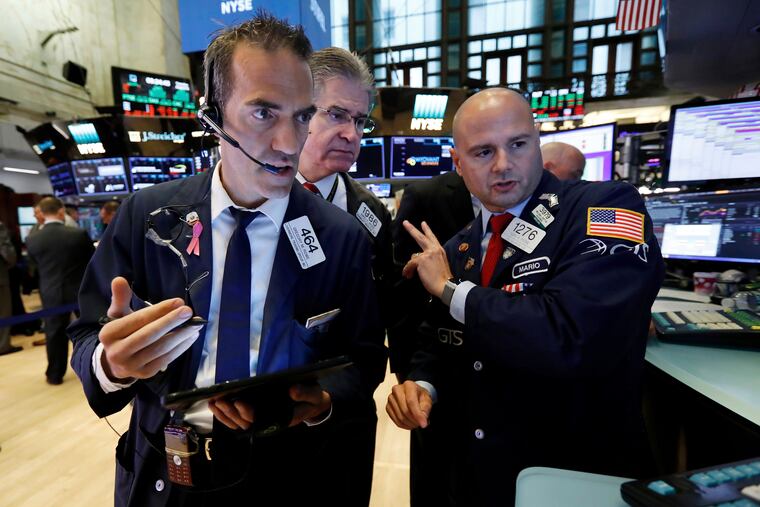
U.S. stocks plunged at open Wednesday, signaling another day of volatility on Wall Street as investors absorbed a spate of overseas interest rate cuts amid continued uncertainty over the U.S. trade war with China.
Central banks in India, Thailand and New Zealand announced greater-than-expected rate cuts Wednesday, following signals from the European Central Bank and the Federal Reserve toward monetary easing as policymakers around the globe try to mitigate the fallout from the trade war, which has bogged down two of the world's most powerful economic engines and is threatening to stall global growth.
The Dow Jones industrial average nosedived nearly 550 points after the Asian Pacific central banks announced their rate cuts. The Standard & Poor's 500 was off about 1.5 percent and the tech-heavy Nasdaq was down about 1 percent in early trading.
The news collided with worries about the downturn in the 10-year Treasury yield, which has fallen to its lowest level since October 2016 as investors flee to safe harbors like bonds and gold to dodge volatility from the trade war.
"The recent further narrowing of the 10-year versus 2-year yield curve possibly reflects the increasing likeliness of a 50-basis-point cut to the Fed funds rate in September, due to rising trade tensions and weakening EPS growth expectations," said Sam Stovall of CFRA Research.
It's been a brutal stretch for stocks, at a time of year that is notoriously tough on markets. Last week, after his chief trade negotiators returned from Beijing, President Donald Trump shocked the world by announcing tariffs on the remaining $300 billion in Chinese imports, starting at 10 percent on Sept. 1. Investors recoiled as the trade conflict that has dragged on for more than a year moved even further from resolution, spurring the sell-off that gave Wall Street its worst week of the year.
The carnage continued Monday after China struck back with its currency announcement, which officials from the nation's central bank characterized as a direct response to "unilaterism, trade protectionism" and the latest round of impending tariffs, prompting President Trump and the Treasury Department to label the nation a currency manipulator.
Allowing the yuan to depreciate makes Chinese goods cheaper for U.S. consumers, and American goods more costly in China. The move caused pandemonium, pushing the Dow to a 760-point drop, and the tech-heavy Nasdaq, which houses many companies with high exposure to China, into one of its worst-ever sessions. But investors found some reassurance after Chinese officials signaled that they would not allow the yuan to bottom out.
New Zealand's decision to slash rates by 0.5 percentage point sparked a 1.4 percent slump in its currency against the U.S. dollar, after the nation's central bank surprised economists with the major cut and hinted that it could employ unusual policy to ensure growth amid the growing global tensions. The Australian dollar also slumped in its wake.
Corporate earnings painted a grim picture too, as the Walt Disney Company, an entertainment powerhouse, reported weaker than expected earnings thanks to streaming service losses and falling theme park attendance. The company’s shares fell 4.5 percent in premarket trading.