Trump tanked EV sales, but car shoppers have found another way to save fuel
While electric vehicles have been hit hard by shifting policies and drivers’ doubts, sales of hybrids are up 80% since 2023. Carmakers are taking notice.
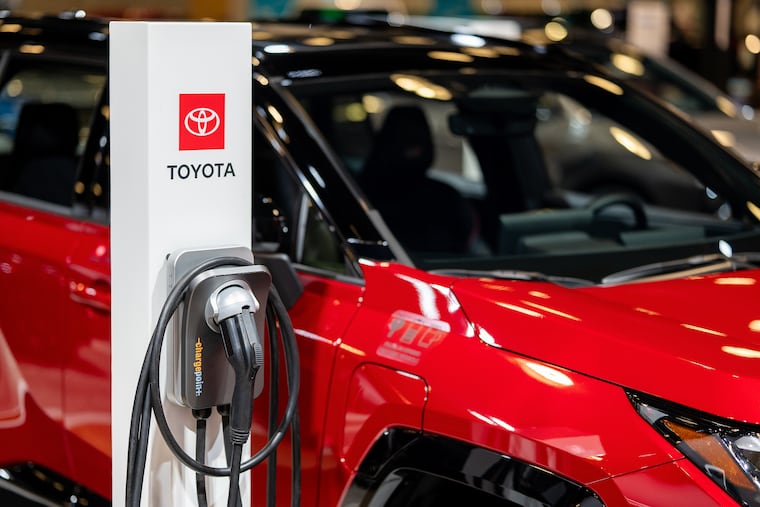
Toyota took heat for years for being slow to jump on the electric-vehicle bandwagon.
But the world’s largest automaker was planning later this year to showcase its revved-up EV ambitions with the debut of a new flagship Lexus EV. It was supposed to kick-start Toyota’s hopes of making the brand all-electric by 2035. Bye-bye, gas.
Then President Donald Trump killed off the $7,500 tax credit for buying or leasing a new EV, allowing the popular program to expire in September. The White House rolled back fuel economy standards. Auto loans got more expensive as interest rates shot up.
Within months, U.S. EV sales cratered — down 27% in the first quarter this year compared with 2025, said Cox Automotive.
As a result, automakers have been busy scrapping EV models and writing off billions in investments.
In May, Toyota abandoned its electrified Lexus “in light of the surrounding environment.” Honda canned three EV models for the American market and took a $9 billion EV-related write-down. Even all-electric Tesla mothballed its Model S and Model X vehicles. Stellantis said it would suffer a $26 billion charge due, in part, to “the cost of overestimating the pace of the energy transition.”
But automakers have not seen a surge in consumers buying traditional gas vehicles. Buyers instead are pivoting to the market’s surprising bright spot: hybrids.
Sales of hybrid vehicles have increased more than 80% from 2023 to 2026, to a pace of more than 2 million vehicles a year, according to Cox.
Hybrids — which use a mix of electric and gas power — made up a record high of 14.1% of new vehicle sales, nearly three times as much as EVs, in the first quarter this year.
The bulk of new cars and trucks sold still run on gas alone. But hybrids have more than doubled their market share over the past three years — taking gains from the shrinking share going to EVs and gas vehicles.
“Hybrids are definitely having their moment,” said Stephanie Valdez Streaty, director of industry insights at Cox.
The success of hybrids has received less attention than the politicized downfall of EVs, which can seem to reduce car-buying options to either environmentally conscious EVs or gas-guzzling behemoths. The future vs. the past.
But the rapid rise of hybrids shows that American car buyers are open to electrified vehicles while hedging their bets. They want better fuel efficiency without sacrificing the things they love about their cars and trucks, according to analysts.
“I think the future is still electric,” Streaty said. “The timeline has just shifted.”
Car buyers want both more miles per gallon and familiarity, said Joseph Yoon, a consumer insights analyst at Edmunds, an automotive research platform. They want a vehicle they already know. And they can’t afford to pay too much more for it. The average new vehicle costs about $50,000.
Yoon said Edmunds ran a small survey of car shoppers just before the EV tax credit expired and found that one of the main reactions was people wanting an electrified version of their favorite vehicle. With price a priority, that often meant a hybrid.
“For a lot of people, hybrids add a layer of fuel savings without changing anything else in their life,” Yoon said. “I think that’s a heck of a value proposition.”
Today, some hybrid models outsell traditional gas ones. A majority of Toyota Highlanders sold earlier this year were hybrids — same with Hyundai Sonatas and Honda CRVs.
“It’s the stealth rise of hybrids,” Yoon said.
The United States’ EV struggles are an outlier. Worldwide, about 25% of vehicles sold last year were EVs, said the International Energy Agency. In China, EVs amounted to more than half of new cars. By contrast, in the U.S., EVs accounted for less than 10% of sales for the entire year, boosted by the tax credits.
So far, the spike in gas prices caused by the war in Iran hasn’t boosted U.S. EV sales. Consumers have been looking and researching EVs more, Yoon said, but that hasn’t translated into more sales.
“It’s hard for us to say what’s going on,” he said.
Electric vehicles tend to be more expensive than gas and hybrid ones. The tax rebates are gone. Interest rates are high.
“Buyers are more focused on value than trying to get into a new platform,” he said.
Automakers, once full of plans for EVs, have been forced to change directions.
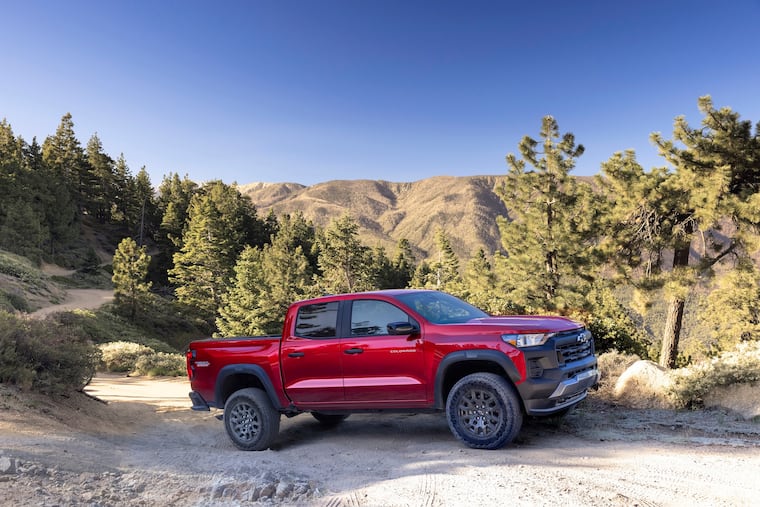
Ford replaced its fully electric F-150 Lightning with a hybrid model.
The long-delayed plan to launch an all-electric Ram 1500 pickup is gone, replaced by the promise of a hybrid truck.
“What we are registering is a higher interest on hybrids. This is the power train that is fastest-growing in the market, hybrids,” Antonio Filosa, CEO of Stellantis and owner of Ram, said on an April earnings call.
General Motors CEO Mary Barra said the automaker was scaling back its EV production because it was “operating in a U.S. regulatory and policy environment that is increasingly aligned with customer demand.” But Barra said GM wasn’t giving up entirely on EVs.
“We know EV drivers don’t often go back” to internal combustion engines, Barra said.
The popularity of hybrids has been a win for Toyota’s original strategy.
The automaker’s entire fleet has been slowly shifting to hybrid-only. Its Sienna minivan went that route in the 2021 model year. The Land Cruiser went hybrid with its 2024 model. The Camry followed the next year. The biggest switch came with the 2026 model of the RAV-4 — America’s best-selling compact SUV.
It is available only as a hybrid. Sales have held up.
“The conundrum for the industry is there is interest in electric vehicles,” said Stephanie Brinley, associate director at S&P Global Mobility. “We’re just not quite there yet.”