After nearly a half-century in college athletics, A-10 commish Bernadette McGlade is retiring
After 45 years as a college sports administrator, McGlade said the changes in the college athletics landscape motivated her decision to retire following the 2025-26 school year.
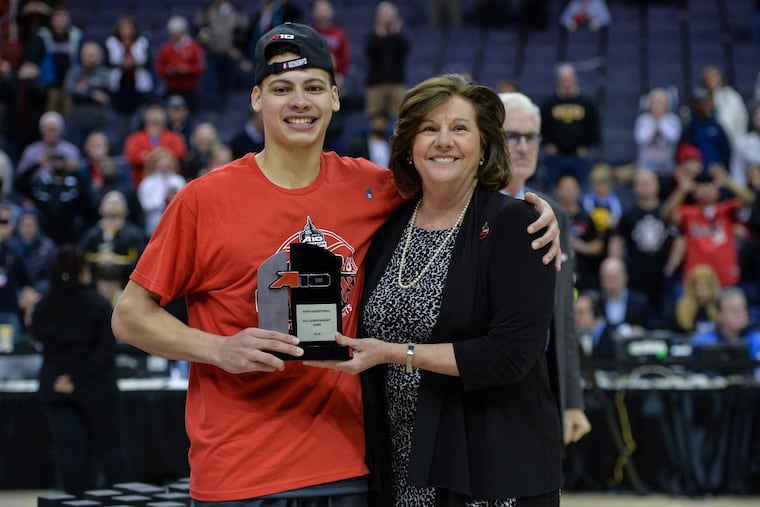
Bernadette McGlade is retiring from her role as commissioner of the Atlantic 10 conference, which includes Big 5 programs St. Joseph’s and La Salle, at the end of the 2025-26 school year.
McGlade, the longest-serving commissioner in conference history, oversaw the A-10’s growth into one of the premier mid-major basketball conferences, bolstered by the additions of George Mason, Virginia Commonwealth, Davidson, and Loyola-Chicago.
After 45 years as a college sports administrator, McGlade said the changes in the college athletics landscape motivated her to retire, to pave the way for a new figure to lead the conference through the next stage of evolution.
As a basketball-centric conference, A-10 institutions are adapting to the name, image, and likeness era, but McGlade said Thursday that the conference’s outlook and approach toward NIL is “tremendously positive.”
“In basketball, I think we’re set up well because we’ve had the commitment from all of our institutions that they are going to step up at whatever level it takes for them to be able to remain nationally relevant,” McGlade said.
» READ MORE: St. Joe’s run ends with loss to top-seeded North Carolina in the NCAA field hockey tournament
“That’s what it takes. You have to have the commitment institutionally, not only from a staffing standpoint, but the ability to have the infrastructure, the financial backing, the ability to schedule nationally, to recruit, and then to be able to provide your student athletes with the opportunities through NIL that every student athlete, quite frankly, is looking for today.”
Scheduling Power Four opponents is becoming increasingly difficult for the conference, harming its ability to remain a multi-bid league in March Madness, another obstacle the new commissioner will need to tackle.
McGlade is confident that given the member schools’ willingness to play “any time, anywhere,” that the conference will still find success in the future, but expressed interest in maintaining incentives for schools to schedule challenging mid-major opponents.
The NCAA has repeatedly considered expanding the tournament beyond its current 68 teams, but has not yet made the decision to do so. Just one men’s team from the A-10 made the tournament in 2025, the tournament champion VCU, who received an automatic bid.
McGlade is hopeful in the years to come that the NCAA will reach a position of greater stability with the structure of NIL and player payments, which will put the schools on closer financial footing.
The A-10 Presidents’ Council will begin the search for a new commissioner in January. When asked about the most important trait for the conference’s next leader, McGlade said it’s important for the new commissioner to have a clear idea of what the direction of the A-10 should be.
“You have to be resilient,” McGlade said. “In this business, there are a lot of great things … Being able to see those opportunities and take advantage of them when you have the chance to advance your membership, and the goals and the values that you have set for the league is really important.”
» READ MORE: Follow the Inquirer's complete coverage of college sports right here!